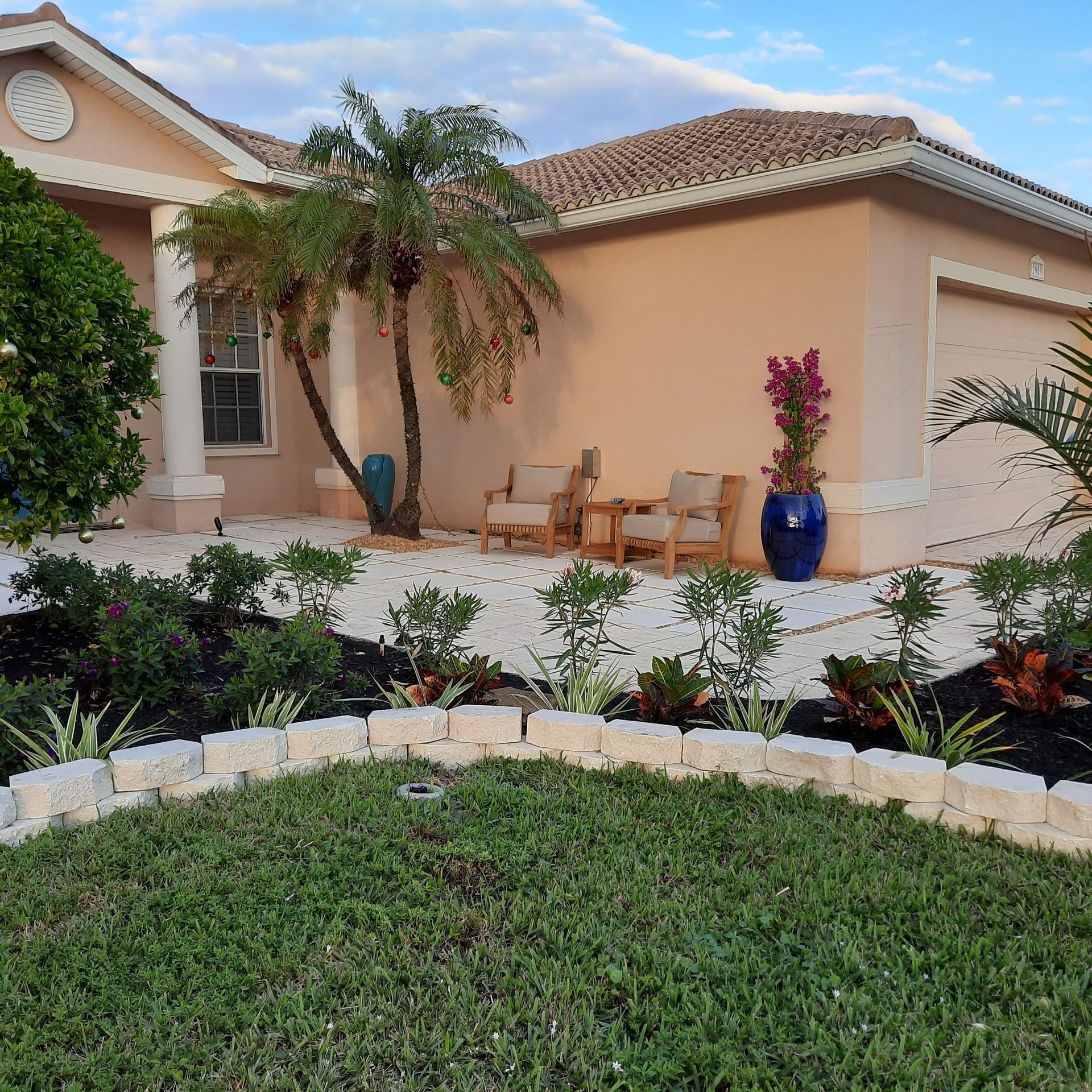



Best Drought-Tolerant Plants for Cape Coral Front Yards
Cape Coral sun can turn a thirsty front yard into a weekly chore. The right plant mix keeps the entry bright without constant watering, and it works better in sandy soil, too.
If you're looking for Cape Coral drought-tolerant plants , focus on varieties that stay tidy, handle heat, and still give your home curb appeal. Good landscaping in this area starts with plants that can take a long stretch of dry weather after they settle in.
What Cape Coral front yards ask of a plant
A front yard plant in Southwest Florida has to do more than survive. It needs to handle full sun, afternoon heat, wind, sandy soil, and occasional salt drift near coastal streets.
It also needs to look good from the road. A plant that grows too wide, flops over, or asks for constant pruning can make the whole yard feel messy fast.
The best front-yard plants in Cape Coral are the ones that still look neat after a dry spell.
Mature size matters just as much as water use. A small shrub that becomes a large thicket will crowd walkways, hide windows, and create more work later. That is why the best choices are the ones that fit the space from the start.
If your front bed needs a clean layout, professional landscape design and installation can help match plant size, sun exposure, and drainage before anything goes in the ground.
The best drought-tolerant plants for Cape Coral front yards
A good front yard uses layers. Tall plants add structure, mid-size shrubs add shape, and low plants soften the edges. The right mix keeps the yard interesting without turning it into a maintenance project.
| Plant | Mature Size | Sun Needs | Maintenance | Bloom or Foliage Interest | Best Use | Notes |
|---|---|---|---|---|---|---|
| Coontie | 2 to 3 ft. tall, 3 to 5 ft. wide | Part sun to full sun | Very low | Evergreen, fern-like foliage | Foundation, accent | Native, drought-tolerant once established |
| Firebush | 4 to 8 ft. tall, 4 to 6 ft. wide | Full sun to part shade | Low to moderate | Orange-red blooms, pollinator appeal | Accent, informal screen | Great color through the warm season |
| Dwarf yaupon holly | 3 to 4 ft. tall, 3 to 5 ft. wide | Full sun to part shade | Low | Dense evergreen form | Foundation, border | Good salt tolerance, tidy shape |
| Dwarf Simpson's stopper | 4 to 6 ft. tall, 3 to 5 ft. wide | Full sun to part shade | Low | Glossy leaves, small white flowers | Foundation, accent | Native and well suited to coastal conditions |
| Muhly grass | 2 to 3 ft. tall and wide | Full sun | Low | Pink fall plumes, fine texture | Border, mass planting | Adds movement without much water |
| Beach sunflower | 1 to 2 ft. tall, 3 to 6 ft. spread | Full sun | Low | Yellow flowers, silver-green leaves | Groundcover, border | Salt tolerant and useful near streets |
| Frogfruit | 2 to 4 in. tall, spreads widely | Full sun | Low | Tiny white blooms, pollinator value | Groundcover | Native, good for filling open spaces |
| Society garlic | 1 to 2 ft. tall and wide | Full sun | Low | Purple flowers, narrow leaves | Border | Works well in sunny front beds |
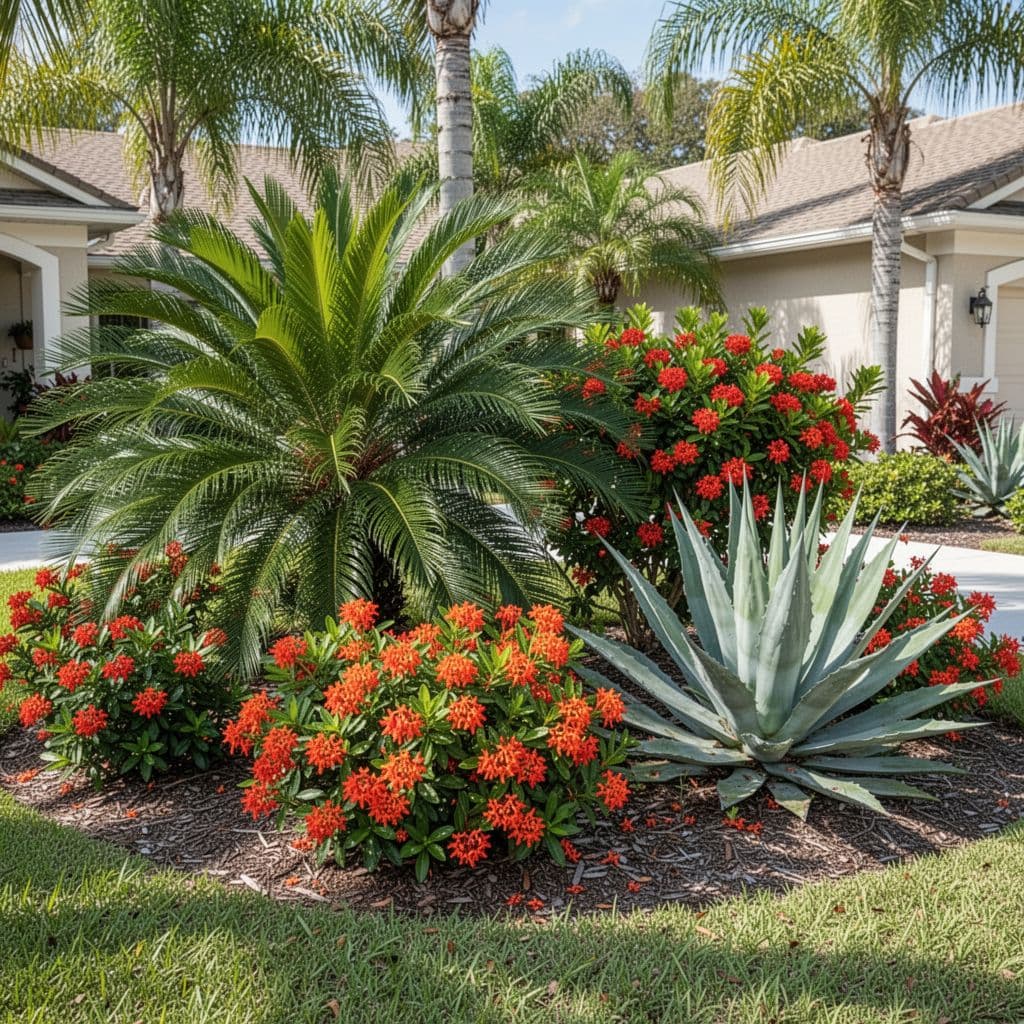
A bed built around these plants can still feel layered and full. The trick is to repeat shapes instead of scattering one of everything across the yard.
Coontie and dwarf yaupon holly give you a strong base near the house. Firebush adds color, while muhly grass and beach sunflower soften hard edges. Frogfruit works well where you want a low, living mat that helps cover bare soil.
For a more sculpted look, a single agave or two can work as an accent near a corner bed. Keep spiky plants away from walk paths and spots where kids run.
How to layer plants so the yard looks finished
A front yard looks better when each plant has a job. Tall plants belong near corners or behind lower beds. Mid-height shrubs work well near windows or porch edges. Low growers fill the front line and keep the bed from feeling empty.
A simple layout might use these groupings:
- Foundation plants : Dwarf yaupon holly, dwarf Simpson's stopper, or coontie near the house.
- Accent plants : Firebush or agave in spots where you want a focal point.
- Border plants : Muhly grass, society garlic, or beach sunflower along the front edge.
- Groundcover : Frogfruit in open areas that need coverage without much watering.
This kind of planting keeps the yard neat, but it also helps with heat. Taller plants give shade to the soil below, and that slows moisture loss. In sandy Cape Coral soil, that matters more than people think.
If the beds need a full refresh, keep the planting plan tied to the rest of the front yard. A driveway, porch, and mailbox area all affect how the landscape reads from the street. Strong landscaping design makes the whole front of the home feel connected.
Keeping the entry low-water and low-fuss
Even the best plant list needs a little support. Drip irrigation helps young plants settle in, and a fresh mulch layer keeps roots cooler. In Cape Coral, mulch also helps sandy soil hold moisture a bit longer between rains.
Hardscape matters too. If a concrete company is handling a new driveway edge, walkway, or apron, ask for room around the beds. Tight concrete edges can squeeze roots and leave no space for mulch or groundcover.
Paver areas need attention as well. Regular paver cleaning keeps the hardscape from looking dull beside clean planting beds, and it helps the front entry feel cared for. That matters when the goal is a polished yard with less water use.
Some homeowners add a strip of artifical turf in a narrow side area or tight path where grass never does well. That can reduce mowing, but it works best as a small support feature. The main front yard still looks better with living plants that can handle the heat.
Good Cape Coral front yards are usually simple, not crowded. A few strong plants, clean edges, and the right groundcover do more than a packed bed of fussy shrubs ever will.
Conclusion
Cape Coral front yards do best with plants that can handle sun, sandy soil, and dry stretches without losing their shape. Coontie, firebush, muhly grass, dwarf yaupon holly, Simpson's stopper, beach sunflower, and frogfruit all fit that job well.
The strongest yards usually share one trait, they look planned, not patched together. When you match plant size, light needs, and salt tolerance to the site, Cape Coral drought-tolerant plants can keep the front of the home sharp long after the rain stops.