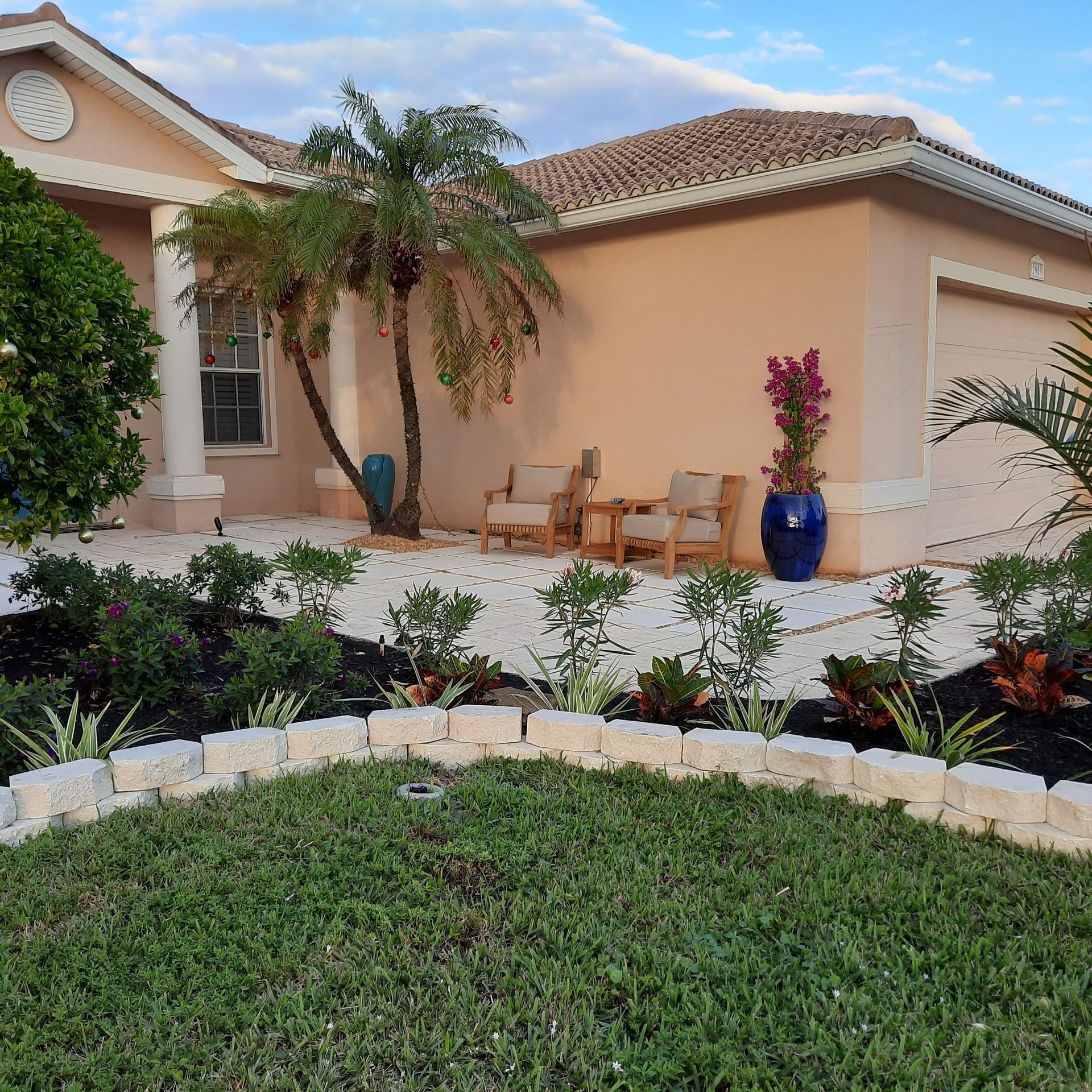



Best Cape Coral Plants for West-Facing Front Yards
West-facing front yards in Cape Coral take the hardest part of the day. By late afternoon, the sun bakes the wall, the mulch, and the planting bed.
If your front yard looks fine in the morning but tired after lunch, the problem is usually plant choice, bed size, or both. The best Cape Coral plants for this exposure stay neat, hold their color, and handle reflected heat from concrete, pavers, and stucco.
Good landscaping on this side of the house starts with restraint. A professional landscape design and installation plan helps the yard fit the light instead of fighting it.
Why west-facing front yards are so demanding in Cape Coral
Afternoon sun is stronger than morning sun, and west-facing beds get the full blast. That heat hits leaves, but it also bounces off driveways, sidewalks, and front walls.
A plant can survive the open sun and still struggle next to a hot foundation. Small foundation beds dry out fast, especially in sandy soil. Wind makes it worse. So does a narrow strip of mulch with no room for roots.
That is why the best choices are usually compact shrubs, tough native plants, and low growers with dense foliage. They handle stress better because they lose less water and stay in scale with the house.
When a concrete company has already poured the driveway or front walk, the planting strip should stay wide enough for airflow and easy cleanup. Tight beds look clean for a season, then turn into constant pruning jobs.
A west wall acts like a heat trap. If a plant is already cramped, that extra heat shows up fast.
Best Cape Coral plants for west-facing front yards
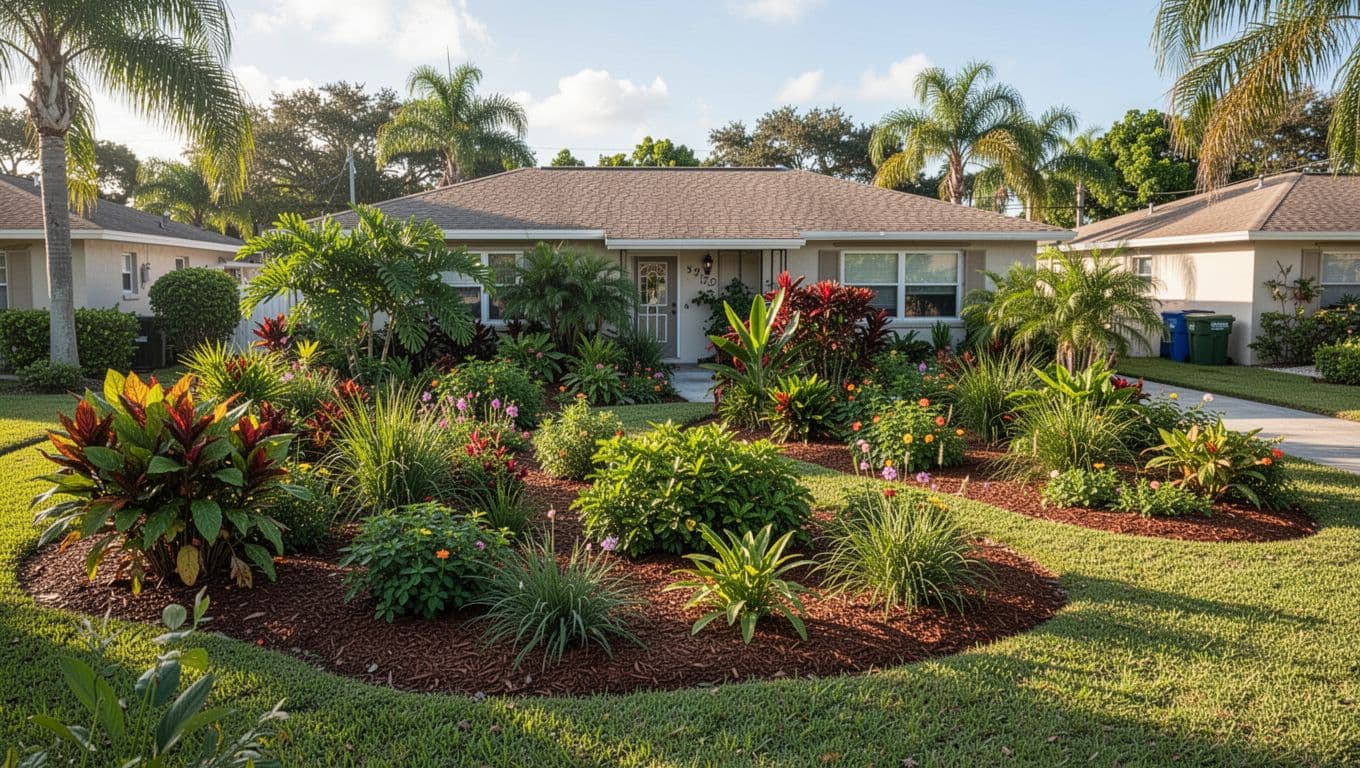
These plants handle full sun well, but each one fits a different kind of front yard.
| Plant | Mature size | Why it works in west sun | Maintenance |
|---|---|---|---|
| Simpson's stopper | 8 to 12 feet tall, 5 to 8 feet wide with pruning | Native, glossy leaves, small white flowers, and good heat tolerance | Low to moderate |
| Dwarf yaupon holly | 3 to 5 feet tall and wide | Dense shape, strong sun tolerance, and a clean hedge look | Low |
| Coontie | 2 to 3 feet tall, 3 to 4 feet wide | Low profile, tough in full sun, and great under windows | Very low |
| Muhly grass | 2 to 3 feet tall and wide | Soft texture, dry-spell tolerance, and a light look near hardscape | Low |
| Firebush | 4 to 8 feet tall, 4 to 6 feet wide | Bright color, pollinator appeal, and strong heat tolerance | Moderate |
| Little John bottlebrush | 3 to 5 feet tall, 4 to 6 feet wide | Compact shape and bright blooms near walks or corners | Low to moderate |
| Thryallis | 4 to 6 feet tall and wide | Long bloom time and solid performance in full sun | Moderate |
For tight foundation beds, coontie , dwarf yaupon holly , and muhly grass are the safest bets. They stay compact and do not crowd windows as fast.
Need a little height near a corner or garage edge? Simpson's stopper gives structure without feeling heavy, and firebush brings color without turning into a giant shrub. Both need room, so they work best where the bed is wider.
Little John bottlebrush is a smart middle-ground plant. It gives you color, but it stays smaller than many flowering shrubs. Thryallis is another good pick if you want a bright front bed that can take hard afternoon light.
How to keep the bed sized right
A plant that looks perfect in a nursery pot can become a problem in a small front bed. Size at maturity matters more than size at purchase.
A simple rule helps:
- Use coontie or dwarf yaupon holly in beds under 3 feet deep.
- Use Little John bottlebrush , thryallis , or muhly grass in beds around 3 to 5 feet deep.
- Save Simpson's stopper and firebush for wider beds, corners, or spaces away from windows.
That spacing matters even more near pavers and concrete. If your front walk already uses stone or pavers, leave a clean edge so trimming stays easy and paver cleaning does not become a chore. A narrow border also keeps mulch from washing into joints.
In very tight side strips, artifical turf, shell, or rock can make more sense than forcing a shrub into a space that will never fit it. The same idea applies to tiny foundation beds. A plant that wants six feet of width does not belong in an 18-inch strip.
Match the plant's mature width to the bed, then give it a little breathing room.
That rule keeps the front yard neat longer and cuts down on constant pruning.
Watering and upkeep during the first year
New plants need deep watering while roots spread. In Cape Coral's sandy soil, a quick splash is gone fast. Water deeply two or three times a week at first, then reduce it as the plant settles in.
Morning watering works best. It gives the roots time to absorb moisture before the afternoon heat peaks. Once the plants establish, many of these choices can handle longer gaps between watering, especially if the bed is mulched well.
Mulch helps, but keep it a few inches back from trunks and stems. Piled mulch holds moisture against the plant and can cause problems. A clean mulch ring also makes the bed look sharper.
Pruning needs vary by plant. Dwarf yaupon holly and coontie usually stay easy. Muhly grass looks best when cut back before fresh spring growth. Firebush and thryallis may need more shaping if they start to stretch.
If you want the lowest upkeep possible, choose plants that stay in scale without frequent trimming. That is where good plant selection beats constant maintenance. A small amount of planning now saves a lot of work later.
A front yard that still looks good at 4 p.m.
The best west-facing front yards in Cape Coral do not rely on one flashy plant. They use compact, heat-tough choices that stay within the bed and keep their shape through the hottest part of the day.
For most homes, the strongest mix is coontie , dwarf yaupon holly , muhly grass , Simpson's stopper , firebush , Little John bottlebrush , and thryallis . Those plants cover low borders, small hedges, texture, and color without fighting the site.
Pick the plant for the bed size first, then fit the rest of the landscaping around it. That is what keeps a west-facing front yard looking clean, balanced, and ready for Cape Coral heat.