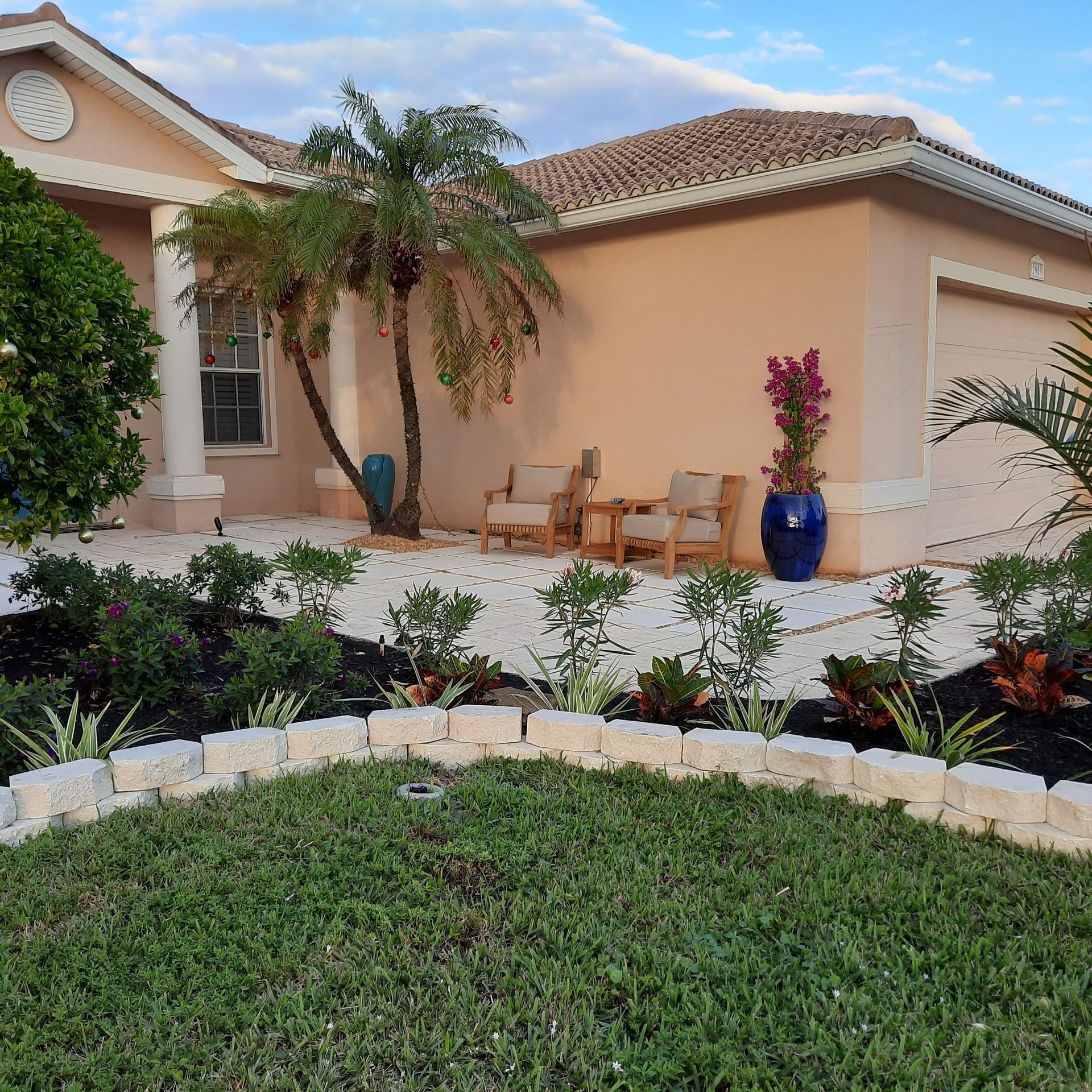



Best Cape Coral Plants for Decorative Rock Beds
Decorative rock beds can look sharp in Cape Coral, but the wrong plants make them feel hot, crowded, and hard to manage. The best Cape Coral plants for these beds stay neat, handle sun and sandy soil, and keep their color when rain is scarce.
That matters because rock reflects heat and shows every design mistake. A good plant choice adds shape and contrast without turning your yard into a full-time job.
What decorative rock beds need in Cape Coral
Cape Coral yards deal with bright sun, fast-draining soil, and long dry stretches. Rock beds add another layer of stress because they hold heat and make the area feel more exposed. Plants in these beds need to cope with all of that without demanding constant water or heavy pruning.
The best choices also have clear form. Round shrubs, upright accents, and low mounds work better than loose, sprawling plants. They keep the bed looking clean, and they make the stone look intentional instead of empty.
Rock beds also work best when the plants repeat. A few well-placed groups often look better than a mix of everything at once. That kind of simple structure is a big part of good landscaping in Southwest Florida.
Fewer plant types, repeated with purpose, usually look better than a bed full of one-off plants.
If you want a layout that fits your home, professional landscape design and installation can help place plants, edging, and drainage before the rock goes down.
Best Cape Coral plants for decorative rock beds
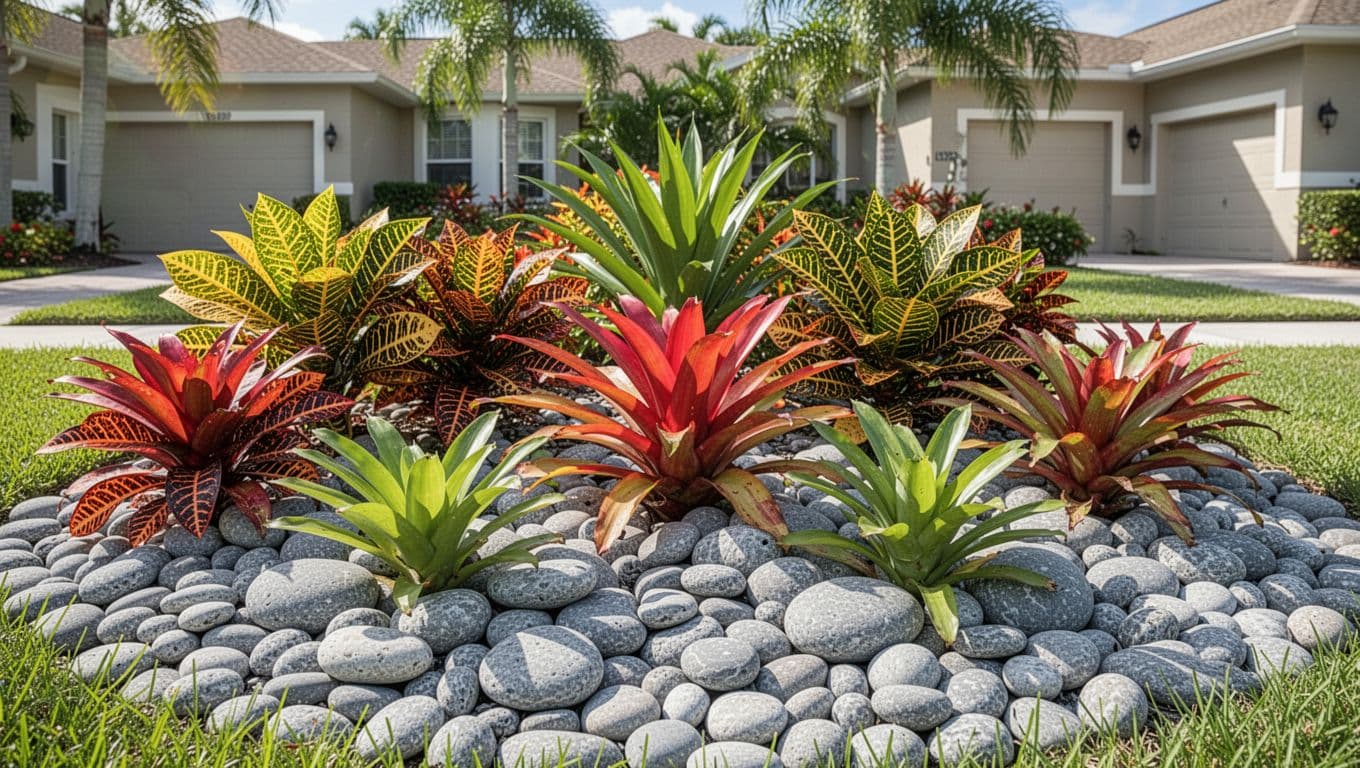
The strongest rock beds mix structure, color, and restraint. They do not need a dozen plant types. They need the right ones placed with care.
| Plant | Sun | Mature size | Maintenance | Best use |
|---|---|---|---|---|
| Croton | Full sun to part sun | 3 to 6 ft | Low to medium | Bold color against gray rock |
| Silver buttonwood | Full sun | 6 to 10 ft | Low | Tall accent and coastal feel |
| Dwarf yaupon holly | Full sun to part sun | 4 to 6 ft | Low | Evergreen structure |
| Firebush | Full sun to part sun | 4 to 8 ft | Low to medium | Seasonal color and pollinators |
| Coontie | Sun to part shade | 2 to 3 ft | Low | Native texture and ground cover |
| Dwarf ixora | Full sun to part sun | 2 to 4 ft | Medium | Bright clusters near entry beds |
| Bromeliads | Part sun | 1 to 3 ft | Low | Sculptural accents |
| Society garlic | Full sun | 1 to 2 ft | Low | Edging and soft purple blooms |
The table gives a quick snapshot, but the real trick is matching each plant to the bed's job. Some plants should anchor a corner. Others should soften the edge or break up a long stretch of stone.
Full-sun anchors that hold the bed together
Silver buttonwood is one of the best choices when you want a light, airy look. Its silvery leaves stand out against darker rock, and it can handle Cape Coral sun with ease. It works well as a small tree or tall shrub, so it gives the bed height without feeling bulky.
Dwarf yaupon holly brings a more formal shape. It stays compact, trims well, and keeps its leaves year-round. That makes it a good fit for front yards where the goal is clean lines and low fuss. It also pairs well with pale rock because the dark green foliage creates strong contrast.
Firebush adds movement and color. The orange-red flowers draw the eye, and the shrub works well in a sunny pocket that needs a little life. It can grow larger than people expect, so give it room. Used well, it adds energy without taking over the bed.
Color and texture for part sun pockets
Croton is a favorite for a reason. Its leaves bring red, orange, yellow, and green into one plant, which looks great beside gray or white stone. It usually does best with some protection from the harshest afternoon sun, so part sun is the safer bet in many Cape Coral yards.
Bromeliads fit rock beds because they look neat even when they are small. Their shape is bold, almost architectural, and that makes them ideal near entry beds, palms, or shaded corners. They do not need much care once planted, and they add color without making the bed feel crowded.
Coontie is another strong choice. It is native to Florida, slow-growing, and easy to live with. Its compact size helps it disappear into a design when you want texture instead of bright blooms. In a rock bed, that quiet look can be a strength.
Dwarf ixora gives you smaller flower clusters and a tidy shape. It needs steady irrigation to look its best, so it fits beds that already have a reliable watering setup. When it is healthy, it gives rock beds a polished, tropical feel.
Edging plants that make the bed look finished
Edging matters as much as the main plants. A sharp border keeps rock from spilling into the lawn, walkway, or driveway. It also helps the bed read as a designed space instead of a loose strip of stone.
Society garlic works well for that job. It stays low, blooms with soft purple flowers, and has a neat habit that suits narrow edges. It is a simple way to soften a hard line without creating extra work.
Dwarf natal plum can also work in the right spot, especially where you want a dense, glossy green plant with a little more presence. Keep it away from tight walk paths because the thorns can be a problem. Used with care, it gives a rock bed a strong, coastal feel.
A bed with edging plants, accent shrubs, and one or two color plants feels complete. It also works better next to patios, paver paths, and pool decks.
How to keep rock beds neat through the year
Rock beds look clean when the plant care stays simple. The goal is not to fuss over them every week. The goal is to keep the bed tidy enough that the stone and the plants both stand out.
A few habits make the biggest difference:
- Water at the root line instead of spraying the whole bed. That keeps rocks drier and cuts down on weeds.
- Prune lightly and often. Small trims look better than one big cutback.
- Pull weeds early, before roots spread under the stone.
- Keep enough space around each plant so it can hold its shape.
- Refresh the bed after storms, since wind can move rock and dump debris into the pockets.
If you already have hardscape in the yard, plan the plant bed around it. A concrete company may handle the patio or driveway, but the plant spacing still needs to work with the finished edges. The same goes for pavers. During paver cleaning , it helps to clear leaves and loose debris first so the surface stays neat and the rock does not slide into the joints.
Rock beds also pair well with modern yards that use stone, concrete, and even artifical turf . In that kind of layout, plants should stay compact and deliberate. A few strong shapes look better than a crowded mix that competes with the clean lines.
When the bed starts to feel off, it usually means one of three things. The plants are too large, the spacing is too tight, or the edging is weak. Fix those, and the whole yard looks better.
Cape Coral rock beds work best when the plants stay disciplined
The best decorative rock beds in Cape Coral are simple, not sparse. They use plants that can handle heat, hold their shape, and add contrast without constant work.
Croton, coontie, bromeliads, firebush, silver buttonwood, dwarf yaupon holly, and a few well-placed edging plants can turn plain stone into a clean front yard. When the plants fit the climate and the bed size, the whole design feels easier to live with.
That is the real goal with Cape Coral plants in rock beds. They should make the yard look finished, even on the hottest days.