


Best Cape Coral Plants for North-Facing Front Beds
A north-facing front bed in Cape Coral can look lush all year, but only if you choose the right plants. The wrong mix gets thin, stretched, or washed out fast, especially in bright shade and humid heat.
The good news is that Cape Coral front bed plants do not need full sun to look polished. With the right blend of color, texture, and height, you can make a shady entry feel calm, full, and welcoming.
Why north-facing front beds need a different plant mix
North-facing beds get softer light than the rest of the yard. In Cape Coral, that often means filtered sun, bright shade, and a few stronger rays in the morning or late afternoon. That light is enough for many plants, but it is not enough for sun-lovers that depend on long, hot exposure to hold color and bloom well.
Heat still matters here. Even without direct all-day sun, the bed can dry out fast near walls, driveways, and concrete. That is why good landscaping in this part of Southwest Florida starts with plants that stay full without constant fuss. If the bed needs a full refresh, custom landscape design and installation can help you match plant size, spacing, and curb lines before anything goes in.
In a north-facing bed, texture often matters more than flowers.
That means broad leaves, layered shapes, and neat growth habits usually win. You want plants that make the front of the house look finished, not crowded or tired.
Cape Coral front bed plants that handle bright shade
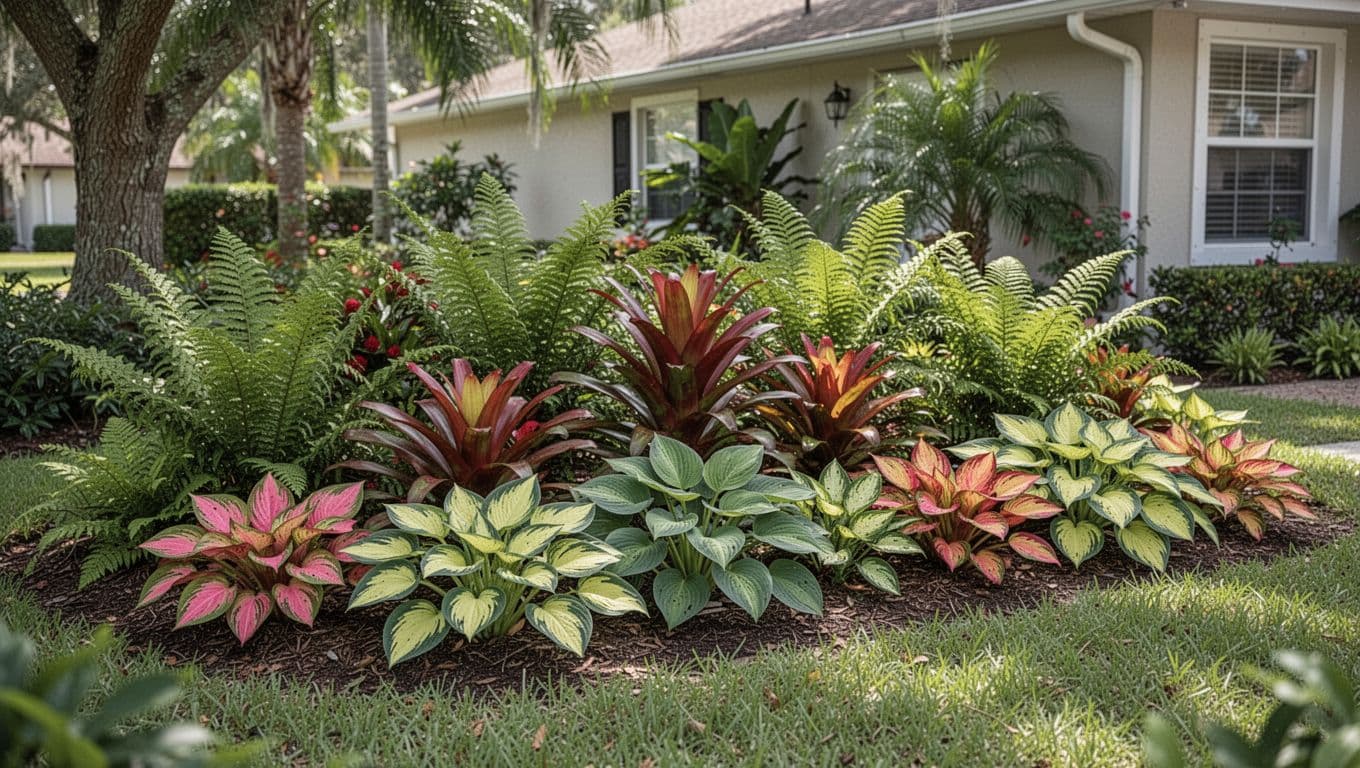
The best results usually come from mixing a few plant types, not filling the bed with just one shrub. A layered look gives the front yard more depth and keeps the bed interesting from the street.
| Plant | Light fit | Mature size | Maintenance | Why it works |
|---|---|---|---|---|
| Bromeliads | Bright shade to filtered light | 1 to 3 ft | Low | Bold color, tight shape, easy to cluster |
| Foxtail fern | Bright shade | 2 to 3 ft tall and wide | Low to moderate | Soft texture, neat mound, fills space well |
| Philodendron 'Xanadu' | Shade to part shade | 3 to 4 ft tall and wide | Moderate | Glossy leaves and a full, polished look |
| Dwarf schefflera | Bright shade | 4 to 6 ft | Moderate | Upright shape and dense foliage |
| Variegated shell ginger | Bright shade | 4 to 6 ft | Moderate | Big leaves and a tropical backdrop |
| Coontie | Part shade | 2 to 4 ft | Low | Native, compact, and tough in heat |
Bromeliads are one of the easiest ways to add color without making the bed look busy. They stay compact, handle filtered light well, and work near the entry where you want a clean first impression. Because they grow in tidy rosettes, they fit well around walkways, porch corners, and small accent spaces.
Foxtail fern brings a softer look. It likes bright shade and makes a rounded mound that stays attractive without constant pruning. The texture feels light, almost like a fountain of green. That makes it useful when you want the bed to look full without heavy shrubs taking over the space.
Philodendron 'Xanadu' is a strong choice when you want broad leaves and a richer, fuller look. It handles shade well and usually stays at a manageable size for front beds. The plant does need enough room to spread, so it works best when it has a clear edge and a simple layout.
Dwarf schefflera adds height without looking stiff. Its glossy leaves catch the light, which helps in shaded areas. It can handle Cape Coral conditions well if it gets good drainage and the space is not packed too tightly. A little pruning keeps it from getting bulky.
Variegated shell ginger gives the bed a tropical backdrop. Its large leaves make smaller plants look even better in front of it. This plant works best when you have a little more room, because it can spread into a fuller clump over time. It is a good choice when you want the bed to feel layered and not flat.
Coontie is one of the toughest low-profile options for Southwest Florida. It stays compact, handles part shade, and needs very little once established. It is also a smart pick if you want a plant with a natural look that does not steal attention from the rest of the bed.
For narrow edges, dwarf mondo grass can finish the look without fuss. It stays low, repeats clean lines, and works well as a border near stepping stones or a front walk. It is especially helpful when you want the bed to look trimmed even between full cleanups.
How to place them near concrete, pavers, and turf
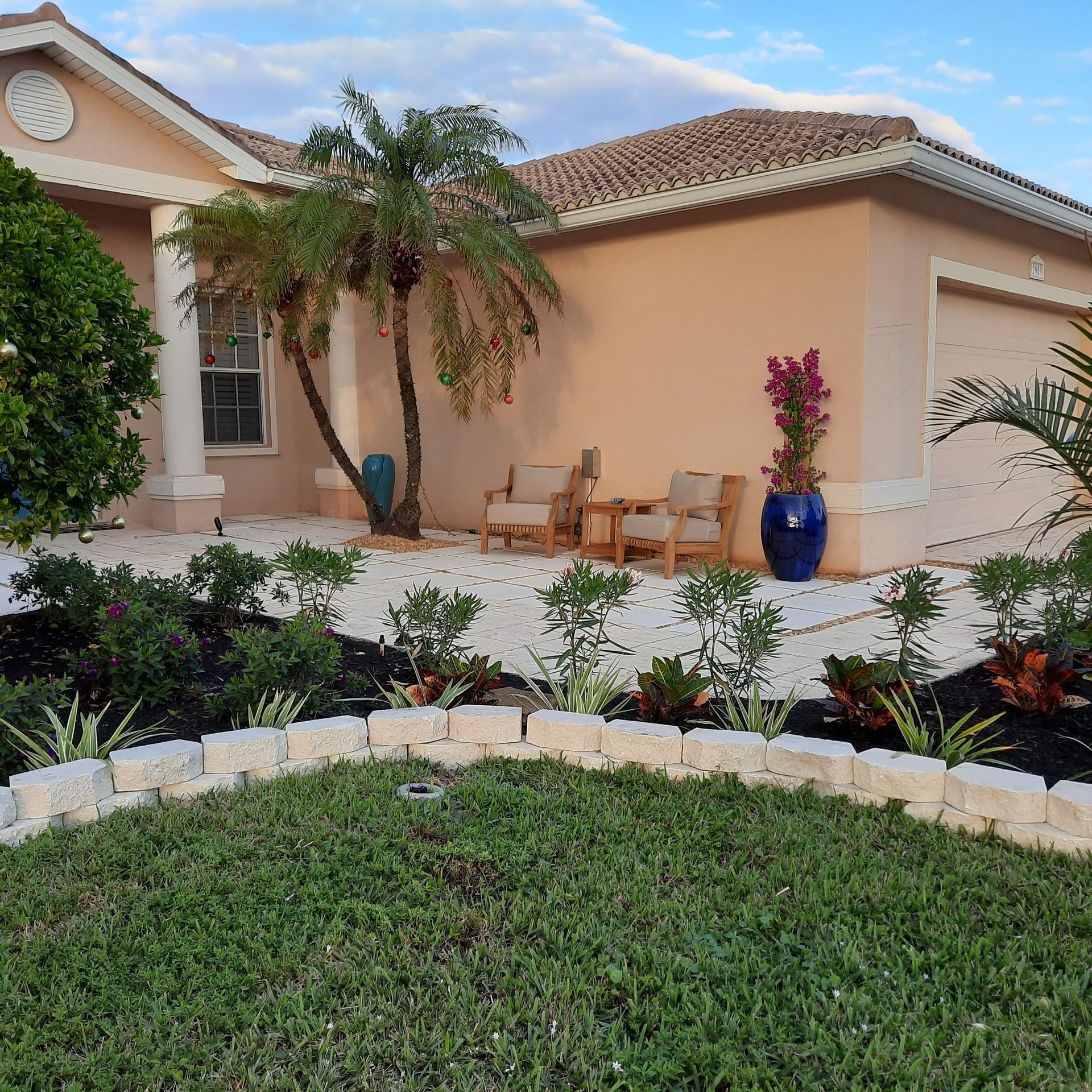
A strong plant list still needs good placement. The most attractive front beds usually repeat the same plants in small groups, then use one or two taller anchors near the corners. That keeps the bed from looking scattered.
If you are working with a concrete company on a new border or front path, leave enough room for roots, irrigation, and trimming. Tight beds look neat for a few months, then feel cramped. Wider planting pockets make maintenance easier and help the front yard age well. For bigger projects that tie beds to edges and walkways, residential landscape and paving solutions can keep the hardscape and plant layout working together.
Some homeowners also use artifical turf in narrow side strips where grass struggles. That can reduce mowing and make the front yard cleaner at a glance. Even then, the planting bed should carry the color and texture near the entry, since that is what people notice first.
The goal is balance. Let the taller plants sit back near the house, keep lower plants near the edge, and leave a clear line along the walk or driveway. That shape makes the whole front yard feel intentional.
Simple maintenance that keeps the bed looking sharp
North-facing beds are easier to manage when you keep the routine simple. Trim plants before they spill into the walkway. Remove yellow leaves as soon as they show up. Refresh mulch so the bed stays neat and the soil holds moisture longer.
Irrigation matters too. Shade does not mean the bed never dries out. Walls, pavers, and concrete can push heat back into the planting space, so check for dry spots after long hot stretches. A slow, deep watering schedule usually works better than short sprays.
Paver cleaning also matters if your front bed sits beside a paver walk or driveway. Clean pavers make the plants look better, and healthy plants make the hardscape look more finished. The two should work as one frame.
A quick seasonal check helps as well. If one plant starts outgrowing the rest, cut it back or replace it before the bed loses its shape. Small fixes are easier than a full reset later.
Conclusion
The best Cape Coral front bed plants for a north-facing yard are the ones that stay full in bright shade and hold their shape in heat. Bromeliads, foxtail fern, philodendron, dwarf schefflera, shell ginger, coontie, and dwarf mondo grass all bring something useful to the table.
If you keep the layout simple and the maintenance steady, a shady front bed can look just as polished as a sunny one. The right mix turns that north-facing space into one of the strongest parts of the curb appeal.