


Cape Coral Front Yard Plants for East-Facing Beds
East-facing front yards in Cape Coral get a useful mix of light. They catch soft morning sun, then cool off before the afternoon heat peaks.
That pattern gives you room to use color, texture, and structure without punishing every leaf. The right mix of Cape Coral front yard plants can make a front entry feel polished and still keep maintenance low.
What east-facing light means in Cape Coral
Morning sun is gentler than west-facing heat, but it still gives plants enough energy to bloom and hold color. In Cape Coral, that matters because sandy soil dries fast and reflected heat from pavement can stress the wrong choices.
East-facing beds also get a little mercy from the house itself. By midday, the front yard often shifts into partial shade, which helps plants keep their shape and stay cleaner longer. That is why so many good landscaping plans for this part of Southwest Florida blend sturdy foliage with a few strong bloomers.
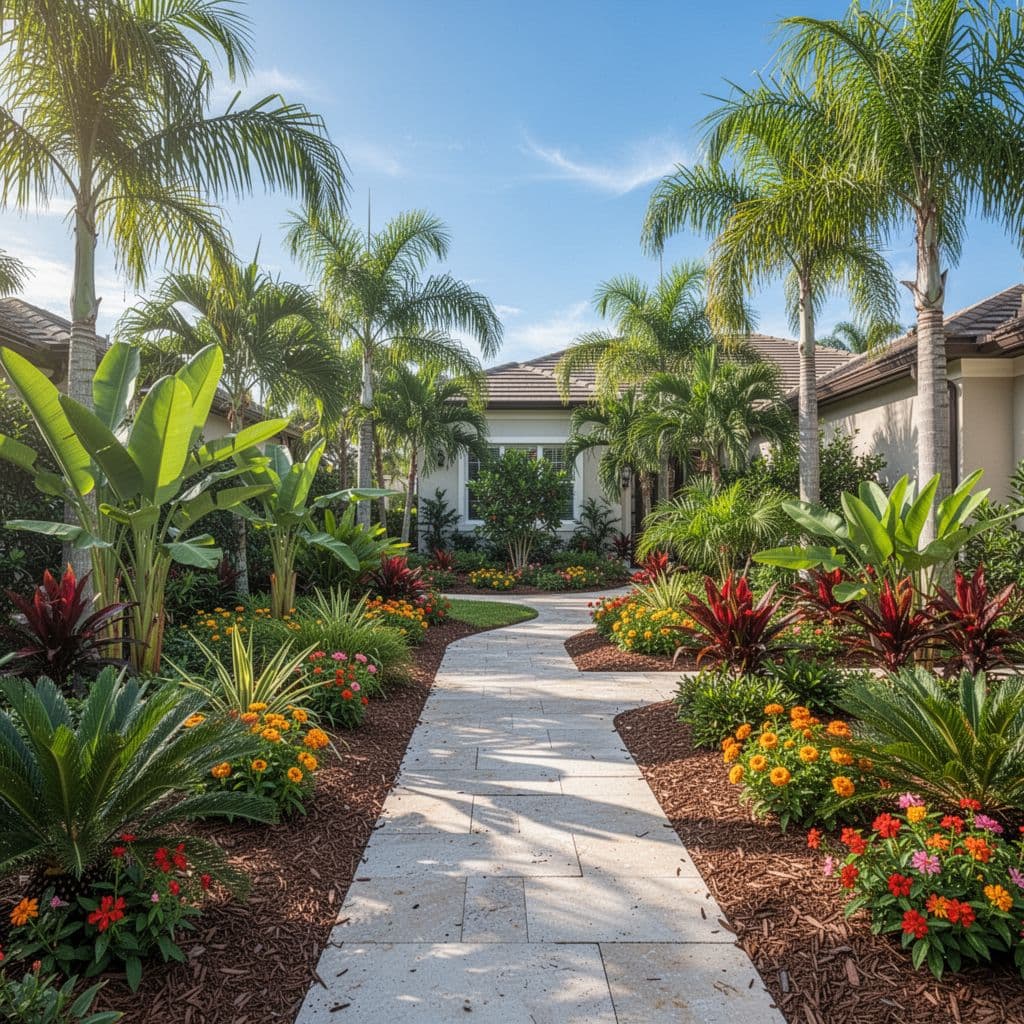
Best plants for morning sun and afternoon shade
A front yard can look busy fast if every plant fights for attention. The smarter move is to build around a few plants that already like the light pattern you have.
Dwarf ixora
Dwarf ixora is one of the easiest ways to add steady color near the front walk. It usually stays around 2 to 4 feet tall and wide, so it fits under windows and along narrow beds without taking over.
It likes regular moisture when it is getting established, then settles into a manageable routine. In an east-facing yard, the morning sun helps it bloom well, while the afternoon shade protects the glossy leaves from stress. Use it as a low hedge or a repeating mass plant for a clean, finished look.
Firebush
Firebush brings stronger height and more movement. Most home landscape varieties reach about 4 to 6 feet, and pruning can keep them tighter if you want a smaller profile.
It handles heat well once rooted in, and it takes morning sun without the harsh exposure of a west wall. The orange-red flowers draw hummingbirds, which adds life to the front yard without needing extra decoration. Place firebush toward the back of a planting bed or near a corner where you want a focal point.
Croton
Croton gives you bold foliage when flowers are not enough. Many types grow 3 to 6 feet tall and wide, and the leaves can carry yellow, red, orange, and green at the same time.
Morning light helps the colors stay strong, while afternoon shade keeps the leaves from fading or crisping. Croton needs a little more attention than the toughest native shrubs, especially with watering and cold snaps, but the payoff is high. Use one or two plants as accents, not a whole wall of them.
Foxtail fern
Foxtail fern softens hard edges in a way few plants can match. It usually tops out around 2 to 3 feet tall and wide, with bright, plume-like fronds that look neat near pavers or concrete.
It likes bright light but does well when the afternoon sun backs off. Too much direct heat can thin the color, so east-facing exposure is a good fit. Water it when the top of the soil dries, and trim away tired fronds at the base. It works best near entry paths, around mailboxes, or beside stone borders.
Coontie
Coontie is a tough native choice that fits Cape Coral well. It stays compact, often 2 to 4 feet tall and wide, and it handles sandy soil and dry stretches with less fuss than many tropical plants.
Because it tolerates partial sun, east-facing beds suit it well. The plant brings a low, layered look that helps anchor taller shrubs and palms. Use coontie where you want a calm base layer, especially near driveways or under taller accent plants.
Pentas
Pentas brings color in clusters that read well from the street. Most plants grow 1.5 to 3 feet tall and wide, which makes them good for the front edge of a bed or a spot near a walkway.
It performs well in bright light, and east-facing yards give it enough sun to bloom without the punishing heat of afternoon exposure. Keep it watered during dry spells and pinch off spent blooms so it keeps producing. Pink, red, purple, and white varieties all work well in Cape Coral front yard plants plans.
Simpson's stopper
Simpson's stopper is a smart choice when you need a fuller backbone plant. It can grow 6 to 12 feet tall, but it handles pruning well, so you can shape it into a hedge, screen, or tall foundation shrub.
The plant tolerates morning sun and afternoon shade without looking fragile. It also brings small flowers and berries that add detail without clutter. Use it at the back of a bed when you want height, privacy, or a little structure behind lower flowering plants.
How to layer a front-yard bed without crowding it
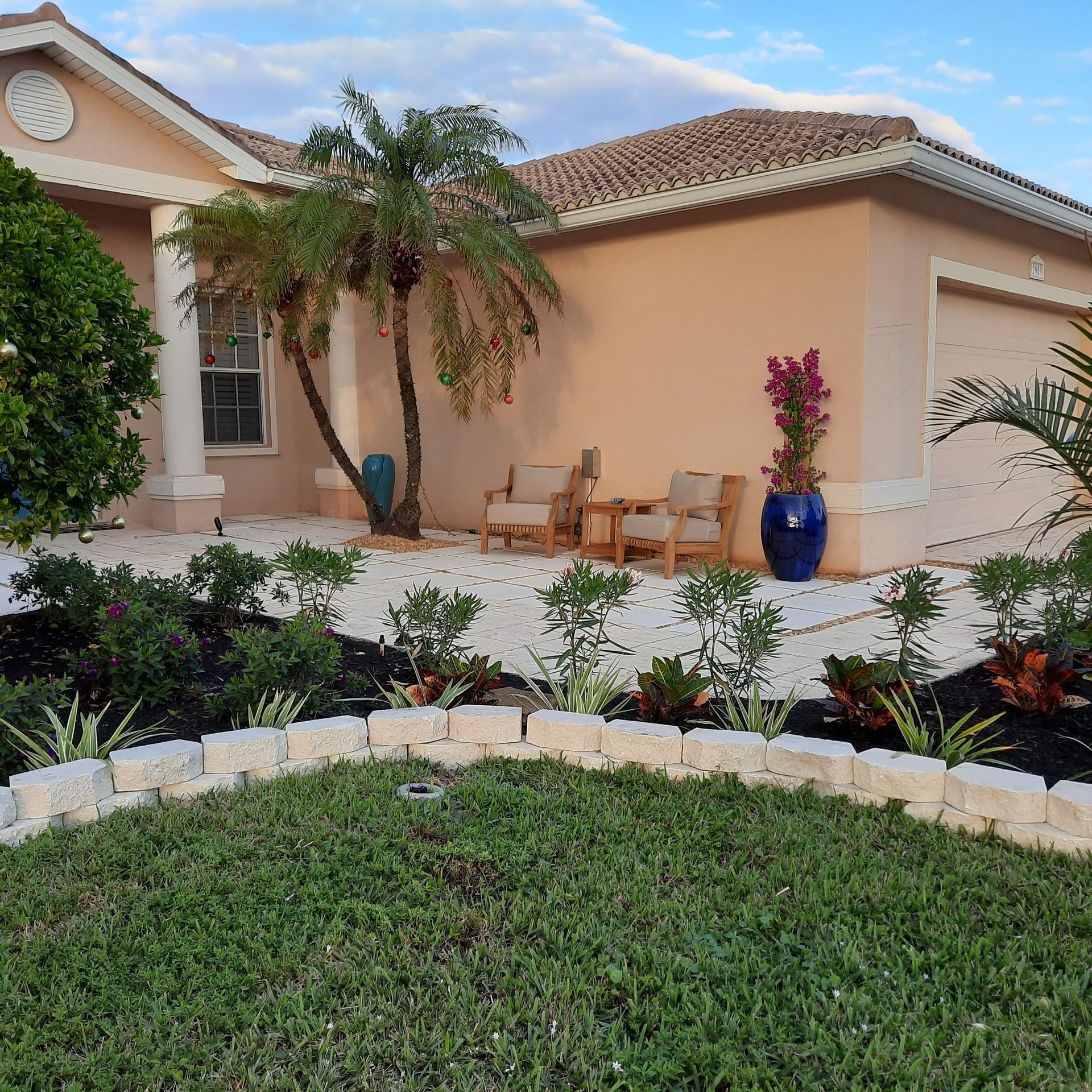
Good beds feel layered, not stuffed. Start with the tallest plants near the house or at the back of the bed, then place mid-size shrubs in the middle and low plants along the edge.
Spacing matters because plants grow faster in Cape Coral than many homeowners expect. Give small shrubs room to spread, and leave enough air between plants so the bed does not turn into a tight wall of leaves. As a general rule, keep low plants a foot or two apart, and give medium shrubs a few feet of space so they can fill in cleanly.
Color works best when it has a pattern. One dark green shrub, one flowering plant, and one bold foliage accent often look better than a mix of everything at once. Repeating the same plant in two or three spots also helps the front yard read as one design instead of several random pockets.
Pavers, concrete, and turf that frame the planting beds
Plants look better when the hard edges around them stay neat. A good concrete company can pour a clean border, walkway, or driveway edge that makes the planting bed stand out instead of spill over.
If your yard already has pavers, regular paver cleaning keeps the entry from looking dull or stained. That matters in Cape Coral, where irrigation, mulch, and road dust can settle fast. Clean pavers make green foliage and bright blooms look sharper.
Some homeowners also mix plant beds with artifical turf to cut down on mowing and watering. That can work well, but the edge needs to stay crisp so the yard does not feel pieced together. For larger front-yard projects, custom landscape design and installation can help match the bed shapes, drainage, and plant choices. If you need the whole front yard planned at once, professional landscaping services can bring the beds, hardscape, and irrigation into one layout.
Conclusion
East-facing yards give Cape Coral homeowners a real advantage. The light is bright enough for color, but gentle enough to protect leaves and blooms through the hottest part of the day.
The strongest Cape Coral front yard plants for this exposure are the ones that stay tidy, handle local heat, and fit the scale of the bed. Dwarf ixora, firebush, croton, foxtail fern, coontie, pentas, and Simpson's stopper all bring something useful to the front yard.
When the planting plan matches the light and the edges stay clean, the whole yard feels settled. That kind of landscaping does more than look good, it makes the front of the home feel cared for every day.