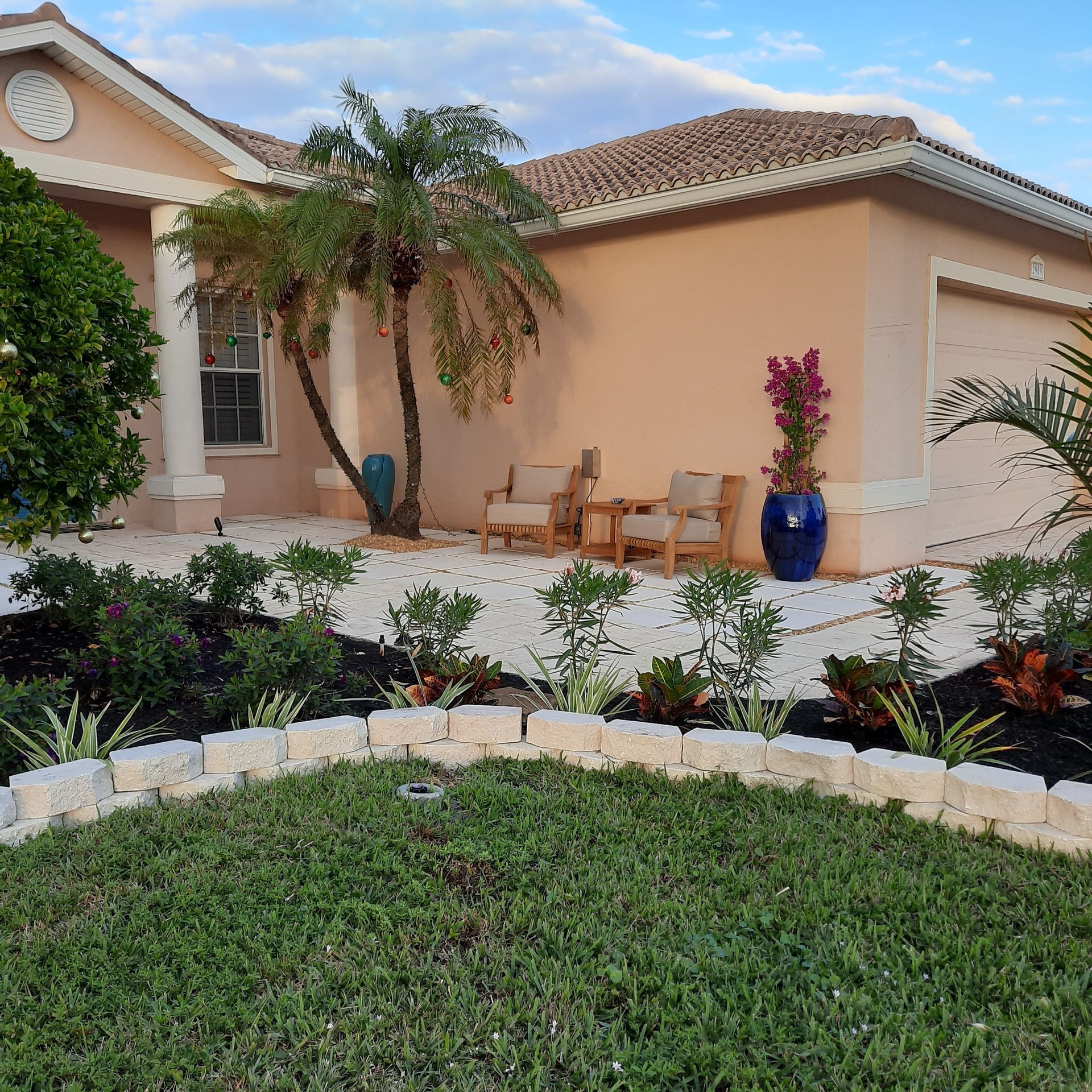



Artificial Turf Pile Height vs. Face Weight
Artificial turf pile height measures blade length above the backing. Face weight measures the amount of turf yarn per square yard. Homeowners should compare these separate specifications alongside the backing, infill, drainage, and intended use.
A lawn that looks lush in a sample may behave differently under daily foot traffic or regular pet cleanup. Choosing for your household starts with understanding what each specification tells you, and where its usefulness ends.
Key Takeaways
- Pile height describes the length of the grass blades, which affects the lawn's profile and how the fibers move.
- Face weight describes yarn quantity, excluding the backing and added infill.
- Appearance, comfort, and wear depend on additional features, including fiber construction and the installed surface beneath the turf.
- A useful comparison includes the exact product, backing, infill, base preparation, and drainage plan.
These details belong together in your landscaping plan, even though they measure different parts of the finished lawn.
What Artificial Turf Pile Height Tells You
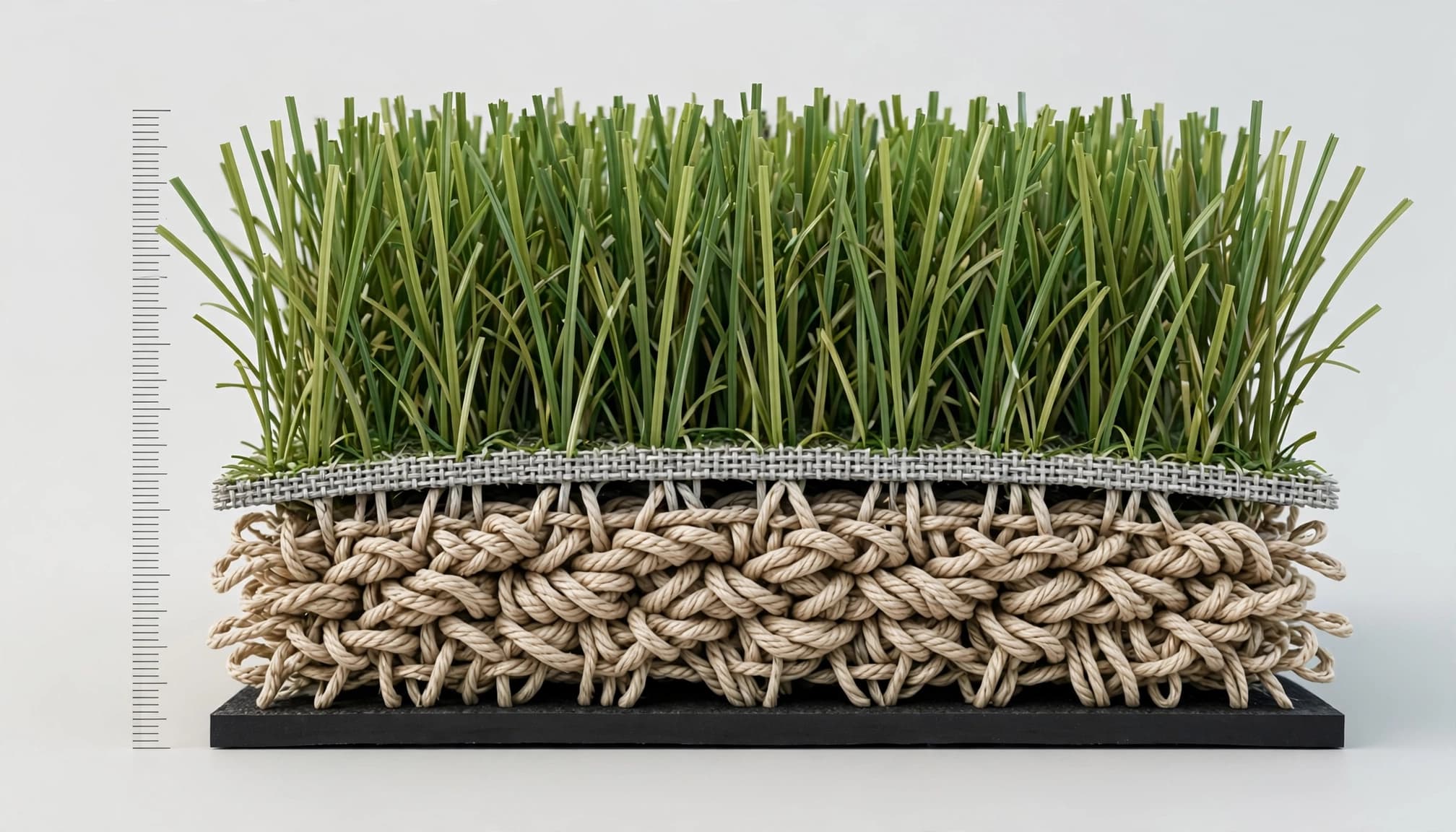
Pile height is the distance between the turf backing and the tips of the upright grass blades. Manufacturers commonly express it in inches or millimeters.
It describes blade length, not the thickness of the entire installed system. Base material, cushioning, and infill are separate components.
How blade length affects appearance and feel
Longer blades create a taller lawn profile, while shorter blades give the surface a more closely trimmed appearance. However, color variation, blade shape, and the curled fibers near the backing also influence realism.
Pile height affects how much blade material can bend under your foot. Yet softness also depends on yarn stiffness, infill, and any cushioning beneath the turf.
Judge appearance with the sample lying flat rather than standing upright in your hand. The installed viewing angle gives you a better sense of texture and visible backing.
What height means for upkeep and wear
Longer blades have more length available to bend or lie over along frequently traveled routes. Periodic brushing can help reposition fibers, using the care method suited to the product.
Shorter turf still collects leaves, dust, and pet waste. A low profile doesn't remove the need for cleaning.
For durability, consider how the fibers recover after compression and resist wear. Blade length alone doesn't establish either characteristic.
What Face Weight Measures
Face weight is the weight of the turf yarn per square yard, usually expressed in ounces. It excludes the backing and any infill added during installation.
The number describes material in the turf face. It doesn't measure the weight of the finished lawn system.
Separate face weight from total weight
Product sheets may list both face weight and total weight. Total weight includes backing , so the two figures aren't interchangeable.
Keep these labels consistent when comparing options. A total-weight figure on one sheet and a face-weight figure on another describe different quantities.
Also, don't confuse either measurement with the amount of infill. Infill sits among the fibers after installation and has its own material and application requirements. Adding infill doesn't change the product's listed face weight.
Use yarn quantity as one part of the comparison
Face weight provides context about how much yarn a product contains. Actual surface coverage also depends on how that yarn is constructed and arranged.
For appearance, inspect the sample for visible backing and an even finish. For comfort, consider the flexibility and texture of the fibers.
Wear performance involves yarn properties and how securely the backing holds the tufts. Meanwhile, cleaning depends on access through the fibers and the installed drainage system. A yarn-weight figure doesn't answer those questions by itself.
Match the Turf to Your Household's Daily Use
Choose the purpose of each area before choosing its specifications. A decorative front lawn has different demands than a dog run beside the back door.
Family lawns and frequently traveled areas
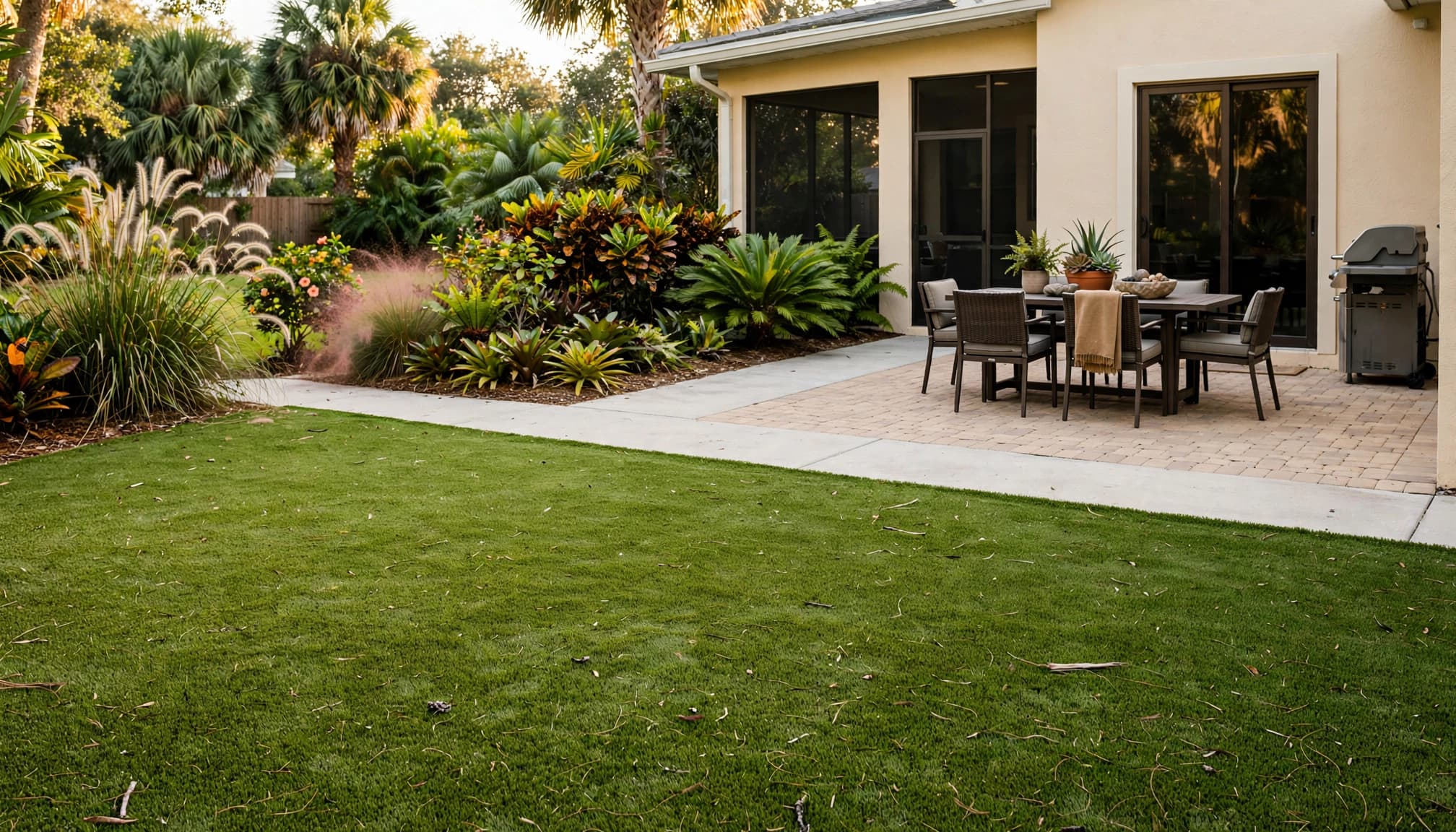
For a lawn used for casual play, compare comfort, traction, and how the surface responds to repeated movement. The area near a gate or patio entrance deserves particular attention because traffic concentrates there.
An ornamental lawn can place more emphasis on visual texture. However, furniture legs and regularly used routes still compress fibers, so access and furniture placement belong in the design.
For play equipment with fall hazards, ordinary landscape turf isn't automatically a safety surface. Impact protection requires a system designed for that purpose, including the appropriate cushioning underneath.
Pet areas and easy cleanup
For pets, prioritize waste removal and the route that rinse water takes through the system. Turf fibers, backing, infill, and the base all affect that routine.
A sample that looks appealing indoors won't reveal whether an installed dog run will drain properly. Likewise, a product described as pet-friendly still needs waste removal and washing.
Place pet areas where you can reach them with a hose and remove solid waste promptly. Keep the cleaning routine practical for everyday use, rather than choosing solely for appearance.
Compare What Goes Beneath the Grass
The finished surface depends on preparation below the backing. Even carefully selected turf won't correct an uneven base or a low spot that holds water.
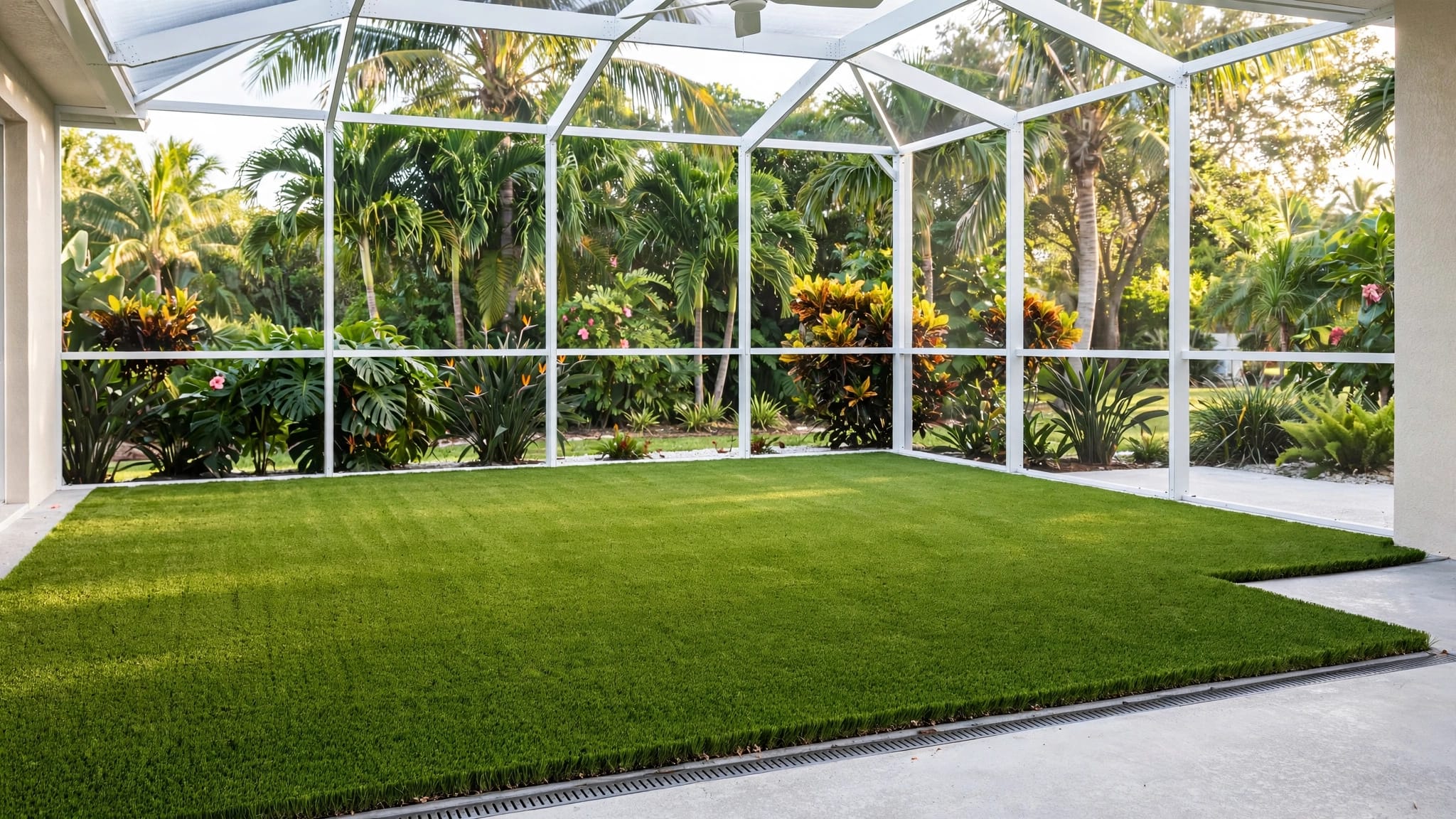
Our approach to artificial turf base and drainage includes these installation factors alongside the visible grass.
Base preparation and water movement
A common base build is 3 to 4 inches in normal areas. However, runoff, damp shaded areas, and low spots near a lanai can require a different approach.
Compacted aggregate provides support, while grading directs water toward an appropriate outlet. Permeable turf backing can let water through, but the layers beneath it must also allow water to move away.
Include these details when comparing turf installation proposals. Otherwise, two prices may cover substantially different preparation work.
Concrete and paver transitions
As a landscaping and concrete company, we consider how lawn areas meet neighboring hard surfaces. Finished elevations affect drainage and the transition between turf and paving.
When installing artificial turf over concrete, water needs a route across the slab to an edge or drain. Permeable backing doesn't make solid concrete absorb rainfall.
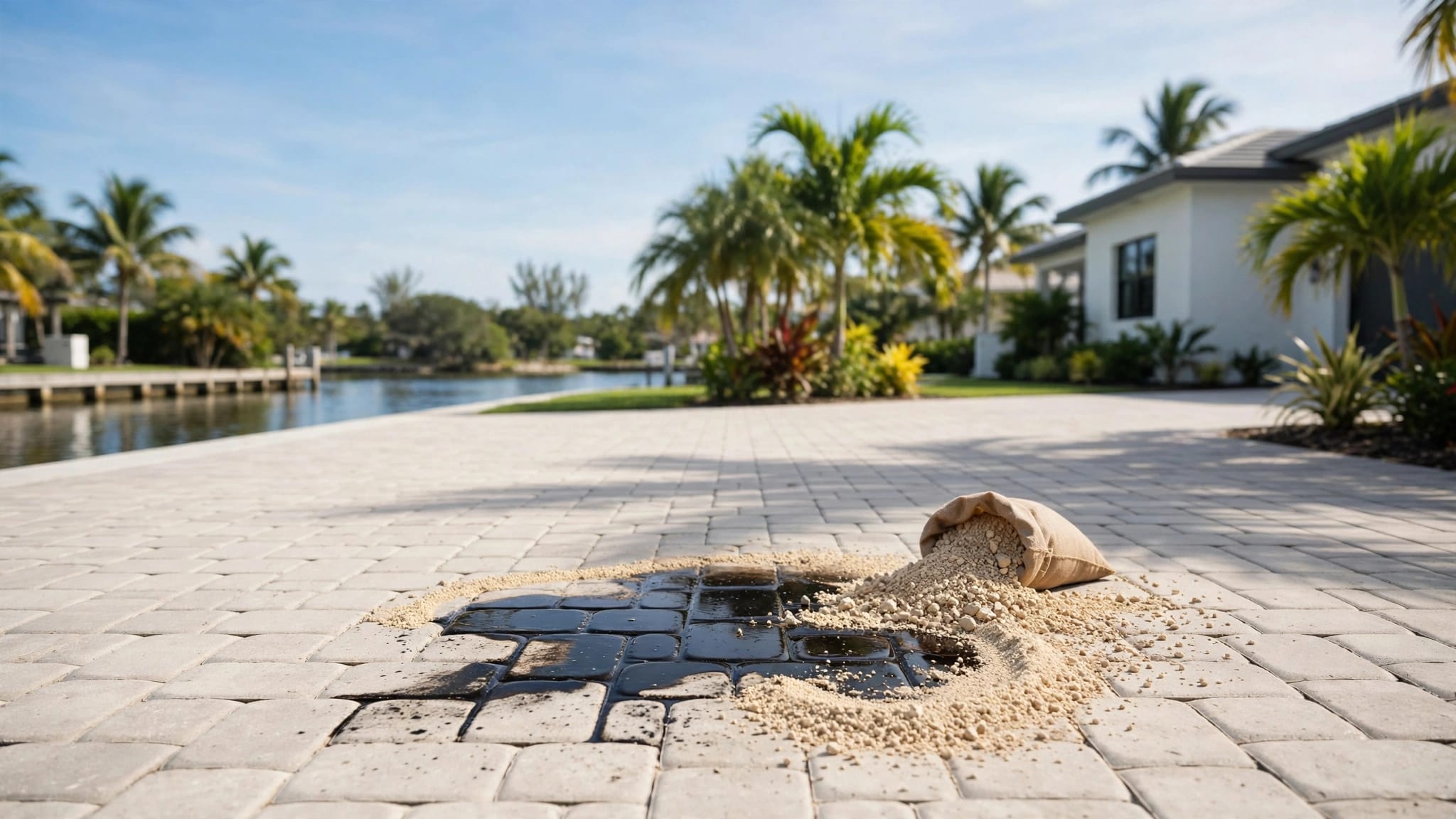
Existing ponding needs correction before turf covers the slab. If adjoining pavers need cleaning, schedule that work before the turf installation so the border remains accessible.
Put the Specifications Side by Side
Compare written product information using the same fields. A description such as "premium grass" doesn't identify the materials included in a quote.
This comparison keeps the visible surface separate from the installation beneath it.
| Comparison field | What the specification should identify |
|---|---|
| Product | Exact turf name or product code |
| Pile height | Blade length and measurement unit |
| Face weight | Yarn weight per square yard |
| Backing | Construction and drainage design |
| Infill | Material and application requirements |
| Base and grading | Materials, preparation, and water route |
| Finishing details | Seams, perimeter fastening, and transitions |
The takeaway is comparable scope . A lower price can reflect different preparation or finishing work, rather than a better price for the same installation.
Include these fields when specifying turf in a landscape plan. That gives the design and installation documents a shared description of the intended surface.
Samples help answer a different set of questions. Lay them flat in daylight, view them in both directions, and compare texture under gentle hand pressure. Turf blades have a direction, so the same sample can appear lighter or darker depending on your viewpoint.
Treat samples as a way to assess appearance and immediate feel. They can't establish long-term wear or demonstrate how your yard will drain.
Frequently Asked Questions
Does taller turf automatically feel softer?
Taller blades can bend more, but softness also depends on fiber stiffness, texture, and support beneath the surface. Pile height doesn't describe all those properties.
Compare the feel of the full sample rather than judging by blade length alone. Also, distinguish softness from cushioning. A soft-feeling fiber doesn't establish impact protection for a play area.
Can the specifications predict how much maintenance a lawn needs?
They provide useful context, but they don't describe the full maintenance routine. Nearby trees affect debris, pets create cleanup needs, and concentrated foot traffic can leave fibers lying over.
Plan for leaf removal, occasional rinsing, and brushing appropriate to the product. Pet areas also need prompt solid-waste removal. Neither pile height nor face weight eliminates these tasks.
Is landscape turf suitable for a putting green?
Putting surfaces have different performance requirements than a general-purpose lawn. Ball roll depends on a purpose-designed surface and a properly prepared base.
A landscape product's blade length or yarn weight doesn't establish putting performance. Treat a putting green as its own surface selection and installation project.
Choose for the Finished Yard
Artificial turf pile height and face weight answer different questions about the material. The strongest choice pairs the appearance you want with construction suited to your household's use.
Compare the complete system , including backing, infill, base preparation, and drainage. Then judge samples for the qualities you can see and feel, without asking either specification to predict the entire lawn's performance.
For your next turf project, start with the area's daily purpose and a clearly defined installation scope. That creates a more useful comparison than choosing the largest number on a product sheet.