


Can You Install Artificial Turf Over Concrete in Cape Coral?
Yes, you can install artificial turf over concrete in Cape Coral when the slab is sound and water has a way to leave the area. A patio or lanai can become a green, low-maintenance space without removing all the existing concrete.
The key is to plan for drainage before installation . Cape Coral's heavy summer rain makes the route water takes beneath and around the turf especially important.
Which Concrete Areas Are Suitable for Artificial Turf?
Artificial grass can work over a stable concrete surface that fits the way you use your yard. It can be part of a larger landscaping plan or a small update to an existing patio.
Patios, lanais, and walkways
A concrete patio or screened lanai can be a good candidate when water flows away rather than collecting in low spots. Turf can also cover a small walkway or sitting area where you want a softer-looking surface than bare concrete.
Consider door clearances and transitions to adjoining surfaces. The finished turf shouldn't interfere with doors or create an unexpected step at the edge.
Pool decks and pet areas
Turf can be used near a pool or in a pet area, but both locations need extra planning. Pool splash-out and pet rinsing add water, so the drainage route needs to handle more than rainfall.
Direct sun can make synthetic grass hot under bare feet. For a poolside area, consider shade and how people will travel between the pool and the house.
A badly cracked, shifting, or sunken slab is a poor candidate for a cover-up. A concrete company can assess whether repair or replacement makes more sense before you choose a finish.
How Does Drainage Work Over Concrete?
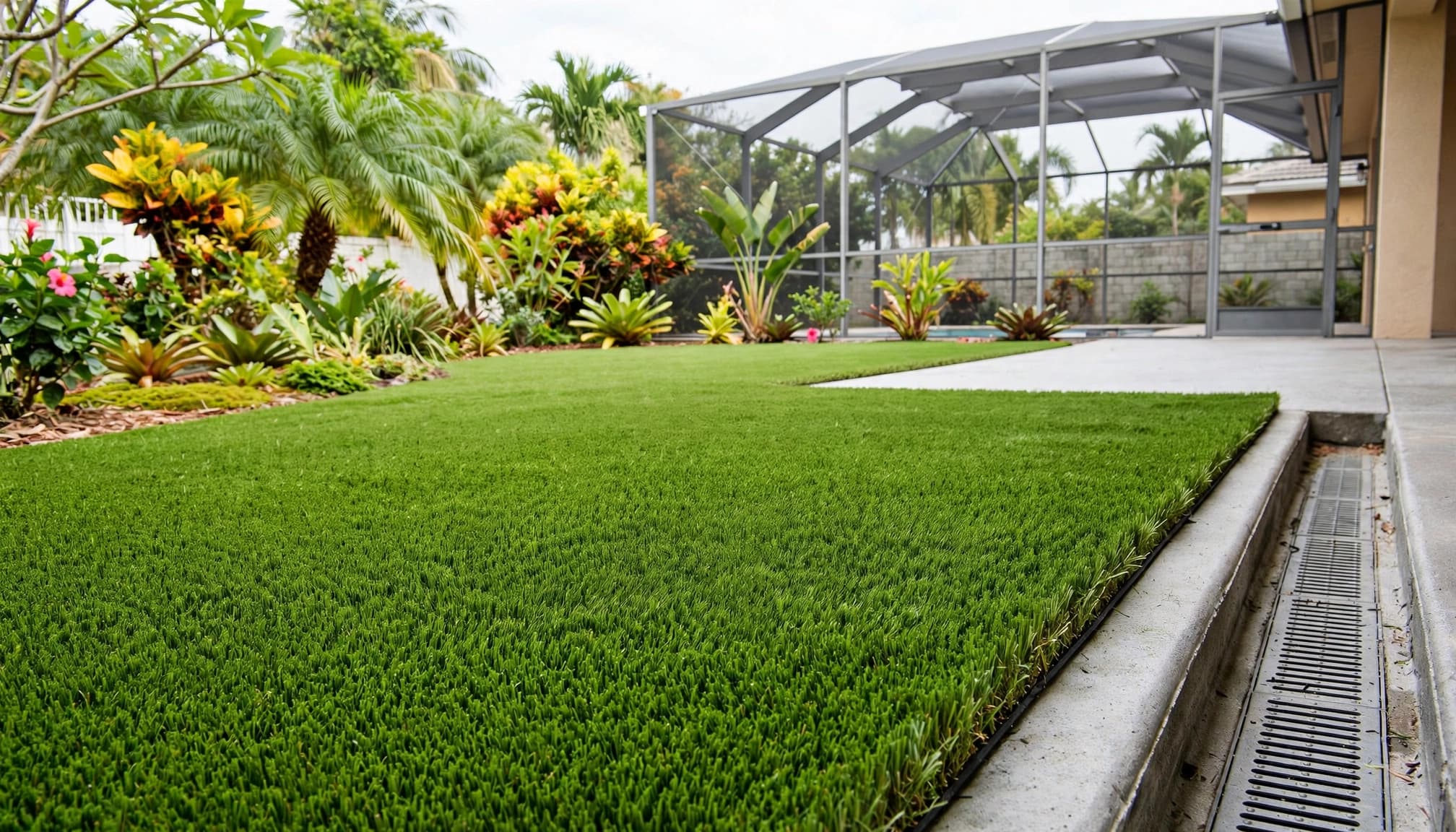
Rain can pass through a permeable turf backing, but solid concrete beneath it doesn't absorb that water. It needs a route across the slab and out at an edge or drain. Without one, moisture can remain trapped beneath the turf.
Give water a clear exit
The existing slope should direct water away from the house toward an appropriate outlet. Depending on the layout, that could mean an open edge or a drain connected to a suitable discharge point.
The outlet matters as much as the turf itself. Water shouldn't be directed under a slab or onto a neighboring property. Our guide to drainage options for turf and hardscape explains how edge drains can help manage runoff.
Address ponding before adding turf
A low spot that holds water after rain won't disappear under artificial grass. Likewise, a downspout that empties onto the patio can overwhelm an otherwise workable drainage route.
Correct the underlying problem before installing the turf. Narrow side yards and areas below a pool deck or lanai deserve particular attention because runoff can collect there.
What Does the Installation Process Involve?
A successful project starts with the whole surface, not just the grass you see on top. The main steps are:
- Assess the concrete's condition, surrounding grades, door clearances, and existing drainage.
- Plan where rain and rinse water will exit, including any drainage improvements the site needs.
- Select turf with a backing suited to the area and its expected use, such as foot traffic or pets.
- Lay the turf and finish the seams, perimeter, and transitions to neighboring surfaces.
- Inspect the completed area for a flat appearance, secure edges, and an unobstructed water route.
If the turf meets an older paver patio, schedule paver cleaning before the turf work. Grime and debris along the border are easier to remove while the full edge is accessible.
For a larger project, plan drainage and major hardscape work before the final turf installation. That order helps protect the finished surface from construction traffic.
Benefits and Drawbacks of Turf Over Concrete
Artificial turf can give a plain slab a greener appearance without the mowing or regular lawn irrigation that natural grass requires. It's useful in small outdoor areas where growing grass would otherwise mean removing the concrete.
The trade-off is that the slab still affects how the area performs. Turf over concrete can feel firm underfoot, and the fibers can become hot in direct sun. It also needs regular cleaning, especially where pets spend time.
When another surface may be better
If the concrete has major movement or persistent ponding, repairing or replacing the slab may be a better first investment. Pavers or a resurfaced concrete patio may also suit an area where you prefer a hard, easy-to-sweep finish.
For a larger lawn, removing the slab and installing turf over a prepared aggregate base may be preferable. A common soil-based installation uses 3 to 4 inches of compacted base in normal areas. That's not a specification for covering concrete. Our guide to Cape Coral artificial turf costs explains how base and drainage work affect a project.
Keeping Artificial Grass Clean in Cape Coral
Remove leaves and other debris before they collect along the edges. Brush flattened blades gently with an approved tool, and keep drainage openings clear after storms.
For pet areas, pick up solid waste promptly and rinse as needed. Use cleaning products compatible with the turf, and pay attention to lingering odors. They can point to residue or water that isn't leaving the area.
Frequently Asked Questions
How much does artificial turf installation cost?
For a standard landscape area in Cape Coral, the published range is about $8 to $18 per square foot installed. That range isn't a concrete-overlay quote. The slab's condition, access, and drainage work can change the price.
Does turf make concrete feel soft?
The grass fibers add a softer surface, but the concrete underneath remains firm. For an area used for play or frequent barefoot traffic, consider how that firmness and sun exposure will affect comfort.
Plan the Drainage Before the Greenery
Artificial turf can refresh a concrete patio or lanai, provided the slab is suitable and water has a clear way out. Solving ponding first helps protect both the turf and the surrounding outdoor space.
We offer artificial grass installation and free estimates for Cape Coral homeowners considering their options.