


When Can You Drive on New Concrete in Cape Coral?
You can drive on new concrete once it has gained enough strength to support your vehicle without damage. The timing depends on the concrete mix, the weather, and the weight it will carry.
For a Cape Coral driveway, follow the project-specific curing instructions your concrete company provides. The surface may look dry well before it's ready for a car, so plan for alternative parking while the slab gains strength.
When is new concrete ready for traffic?
Concrete hardens through a chemical process called hydration. As that process continues, the slab gains strength. A surface that feels firm underfoot can still be vulnerable to tire marks, chipped edges, and cracks under a vehicle.
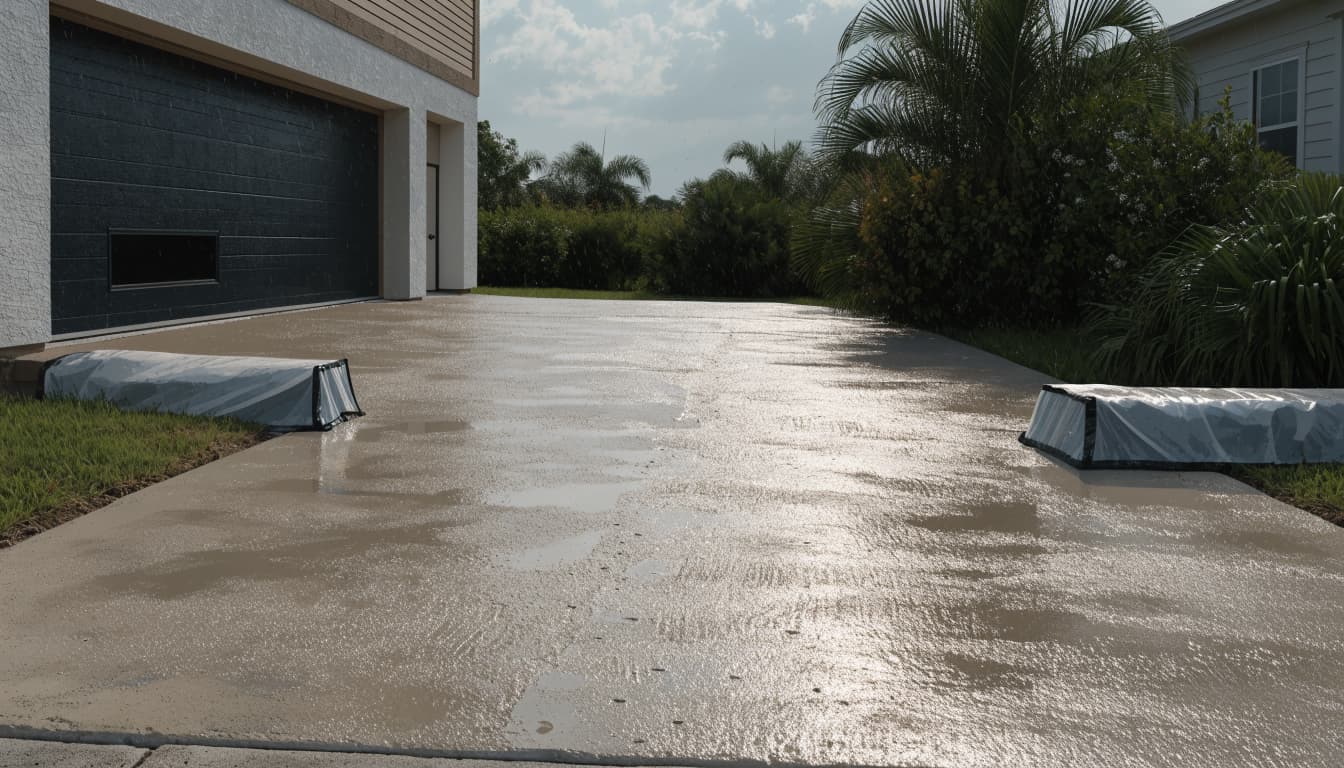
Foot traffic comes first
Light foot traffic is usually allowed before vehicle traffic. Even then, wait until your installer says the surface is ready. Shoes, pet paws, bicycle tires, and dropped objects can leave marks in concrete that hasn't hardened enough.
Keep children and pets away from the pour during the initial curing period. A barrier at the driveway entrance also helps delivery drivers and visitors avoid stepping onto it.
Passenger vehicles need more strength
A car or small SUV puts much more weight on the slab than a person does. Once your driveway is approved for passenger vehicles, drive slowly and avoid sharp turns while the vehicle is stationary.
The edges deserve extra care because they have less support than the center of the slab. Keep tires on the driveway rather than cutting across a corner, especially if the adjacent soil hasn't settled.
Why heavier vehicles may need a longer wait
Moving trucks, concrete delivery trucks, dumpsters, and loaded trailers can place much greater stress on a driveway than a family car. Their weight may also be concentrated on fewer contact points. Giving the slab more time to gain strength can reduce the risk of damage.
More curing time doesn't change the driveway's design capacity. A slab built for ordinary residential traffic may not be suitable for a heavily loaded truck, even after it has gained strength. Thickness, reinforcement, and the support beneath the concrete all affect what it can carry.
If you're scheduling deliveries or other work, arrange for heavy vehicles to remain on the street when practical and permitted. That also keeps equipment away from the fresh edges and landscaping beside the drive.
How Cape Coral weather affects concrete curing
Heat, humidity, and sudden rain can all affect a new pour. Their effects aren't identical, though, and the right protection depends on the conditions when the concrete is placed.
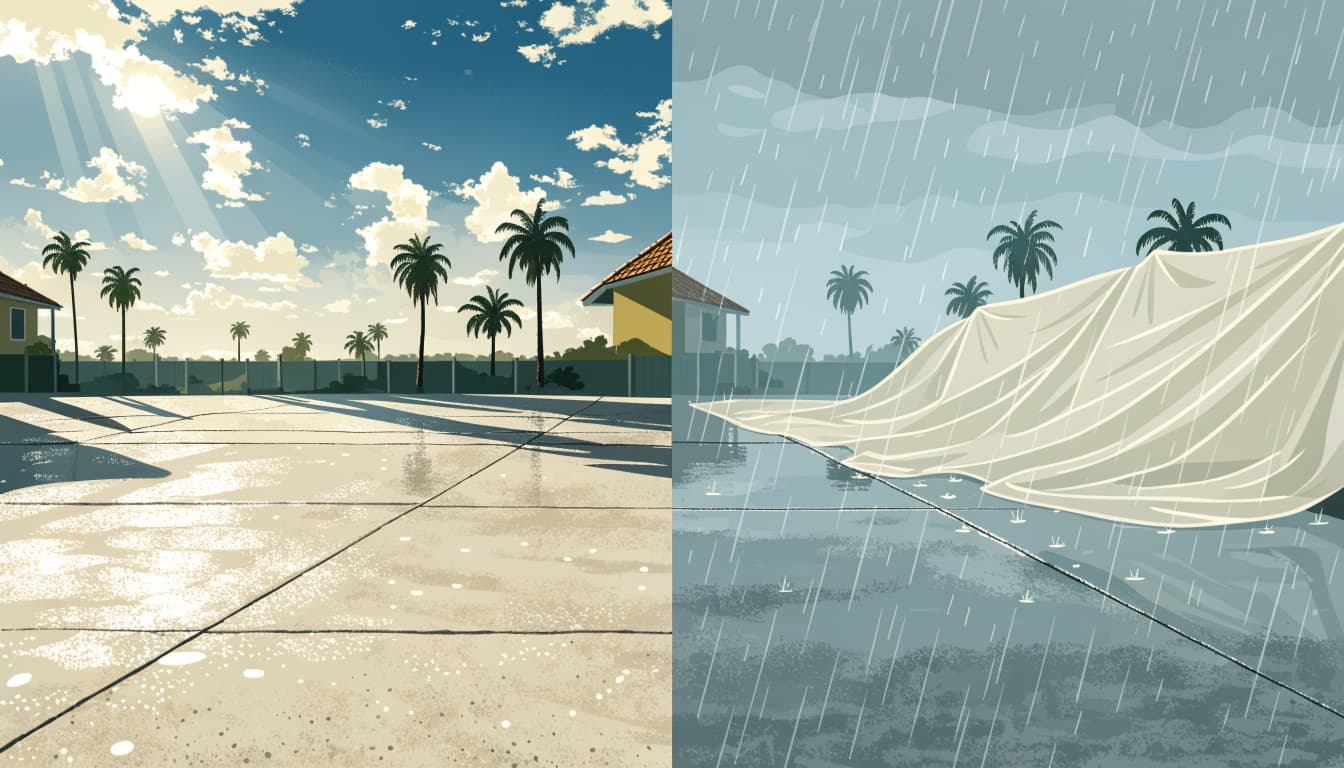
Heat and sun can dry the surface too quickly
Direct sun, warm air, and wind can pull moisture from the surface before the concrete has developed adequate strength. When the top dries too quickly, it can be more prone to surface cracking.
Humidity can slow evaporation, but it doesn't replace a curing plan. The installer may use a curing product or another method suited to the slab and conditions. Leave that treatment in place as directed rather than assuming that a dry-looking surface is ready for traffic.
Heavy rain can damage a fresh finish
A sudden downpour can mark or wash the surface of concrete that hasn't set. It can also interfere with finishing work. Crews may protect a pour from rain or adjust the schedule when storms threaten.
Later in the process, moisture helps concrete cure. That doesn't mean a homeowner should flood the driveway or spray a freshly finished surface. Follow the care method provided for your project.
Our guide to concrete installation in Cape Coral covers other local conditions that affect driveway work.
Protect your driveway while it cures
Arrange parking before the pour and leave the barriers in place until the driveway is ready for use. Make sure household members know which walkway or entrance to use. If you expect a delivery, give the driver a safe place to stop away from the slab.
Don't drag bins, furniture, tools, or ladders across fresh concrete. Also avoid setting down pots or other heavy objects. Even small items can leave marks while the finish is still vulnerable.
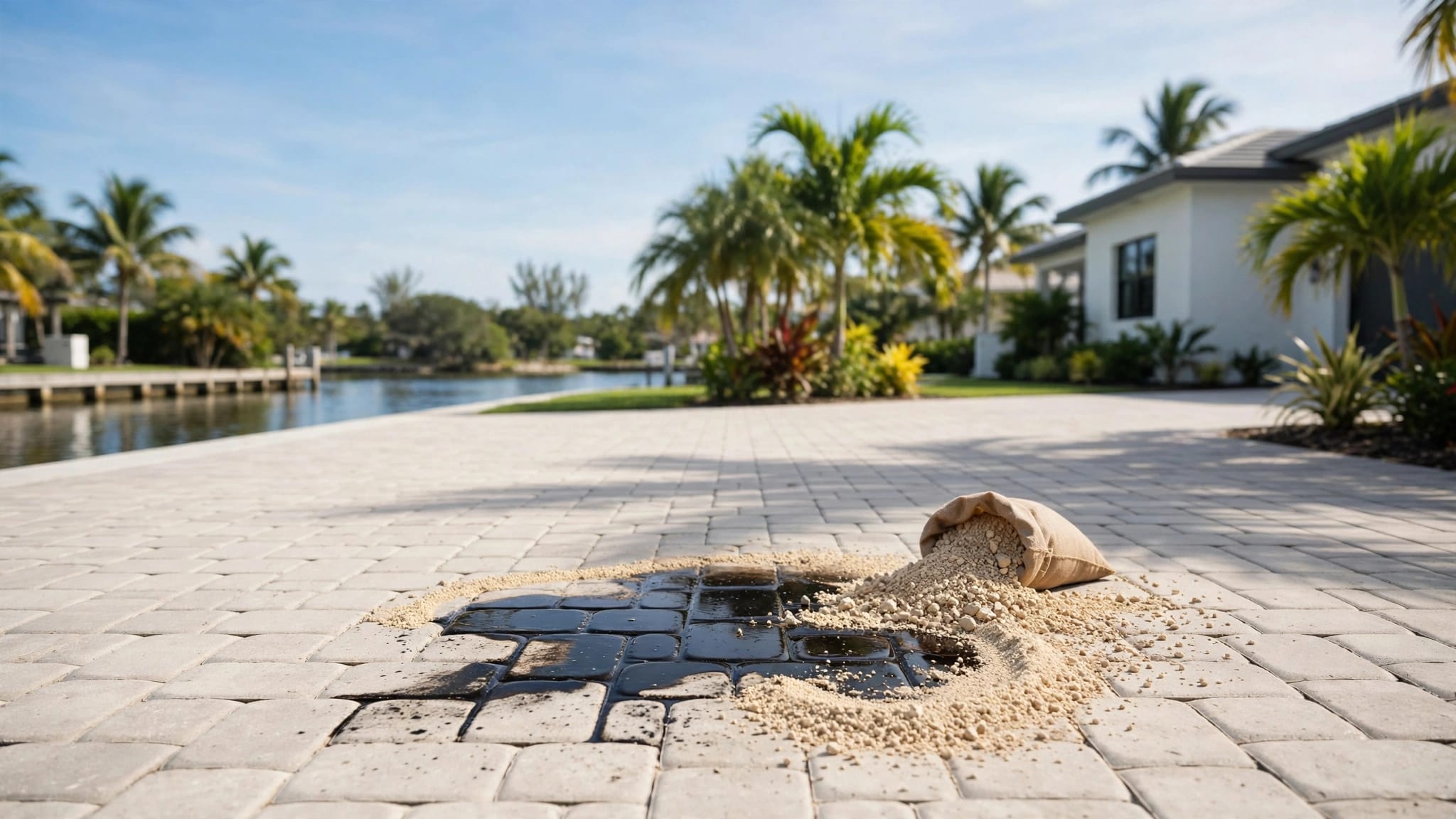
Keep irrigation and drainage in mind as well. Follow any moisture-curing instructions, but don't let sprinklers repeatedly soak the finished driveway as part of your normal watering schedule. Persistent dampness can contribute to spotting and algae.
Once the surface is ready for routine care, sweep away debris and clean oil or fertilizer spills promptly. Our driveway replacement guide has more information on planning and protecting a new slab.
Coordinate other outdoor work around the pour
A new driveway often shares space with landscaping, irrigation lines, or a paver walkway. Schedule nearby work so crews don't need to roll equipment or pile materials across the curing concrete.
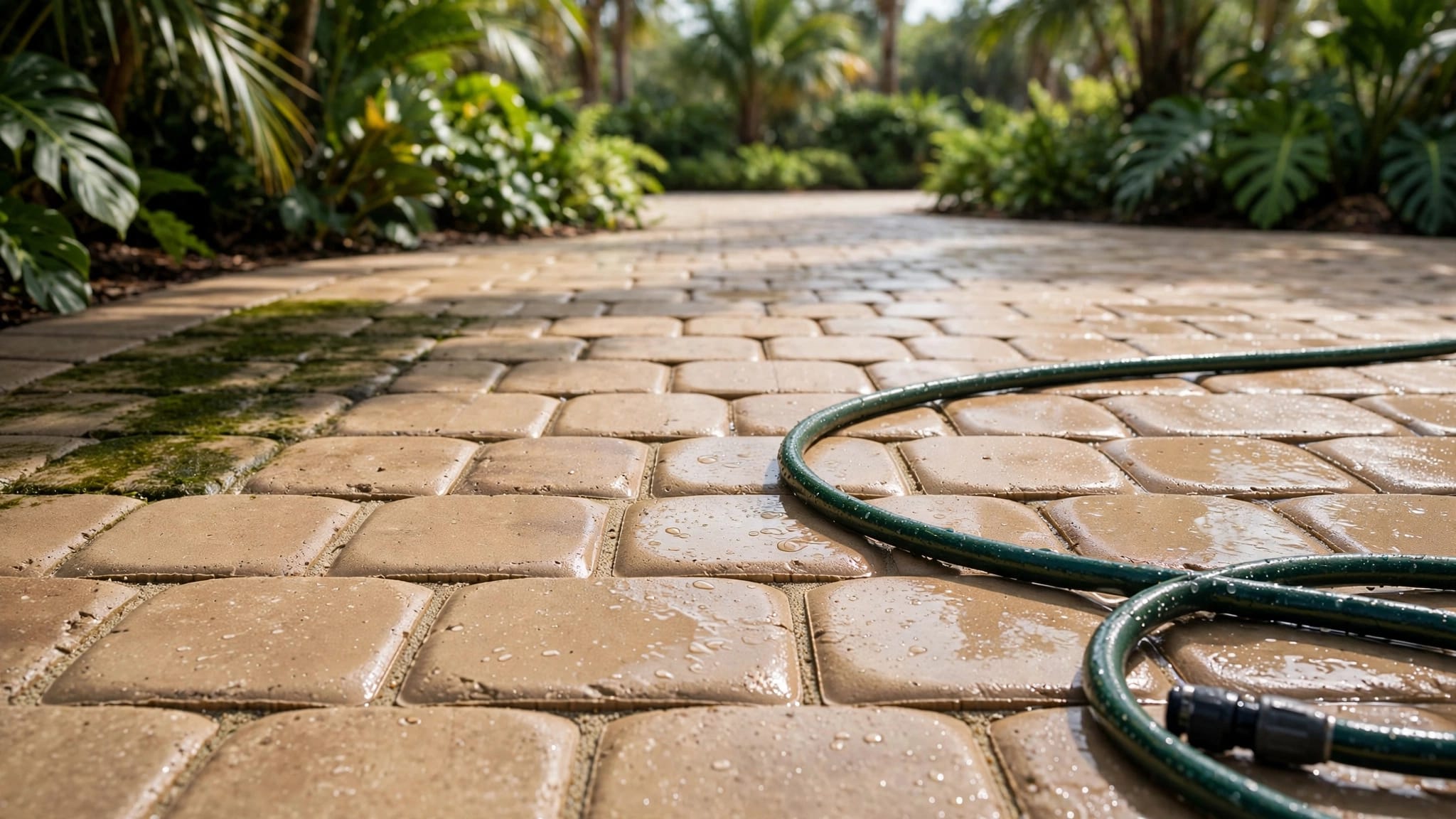
For example, installing artificial turf after the concrete work can keep soil and installation equipment off the new finish. If you're planning paver cleaning beside the driveway, protect the slab from cleaning products and avoid directing wash water onto fresh concrete.
Good drainage matters after construction, too. Keep planting beds and soil from trapping water against the driveway edge, and direct runoff away from the house. These details help protect the area supporting the concrete as well as the surface you see.
Give your driveway time to gain strength
The safest time to drive on new concrete depends on the slab and the vehicle. Foot traffic generally comes first, while cars and heavier loads require more strength.
Keep the driveway protected, follow its curing instructions , and plan other outdoor work around it. A little patience after the pour helps protect the finish and the investment underneath it.