


Permeable Pavers in Cape Coral, When They Work, When They Don’t, and What They Cost
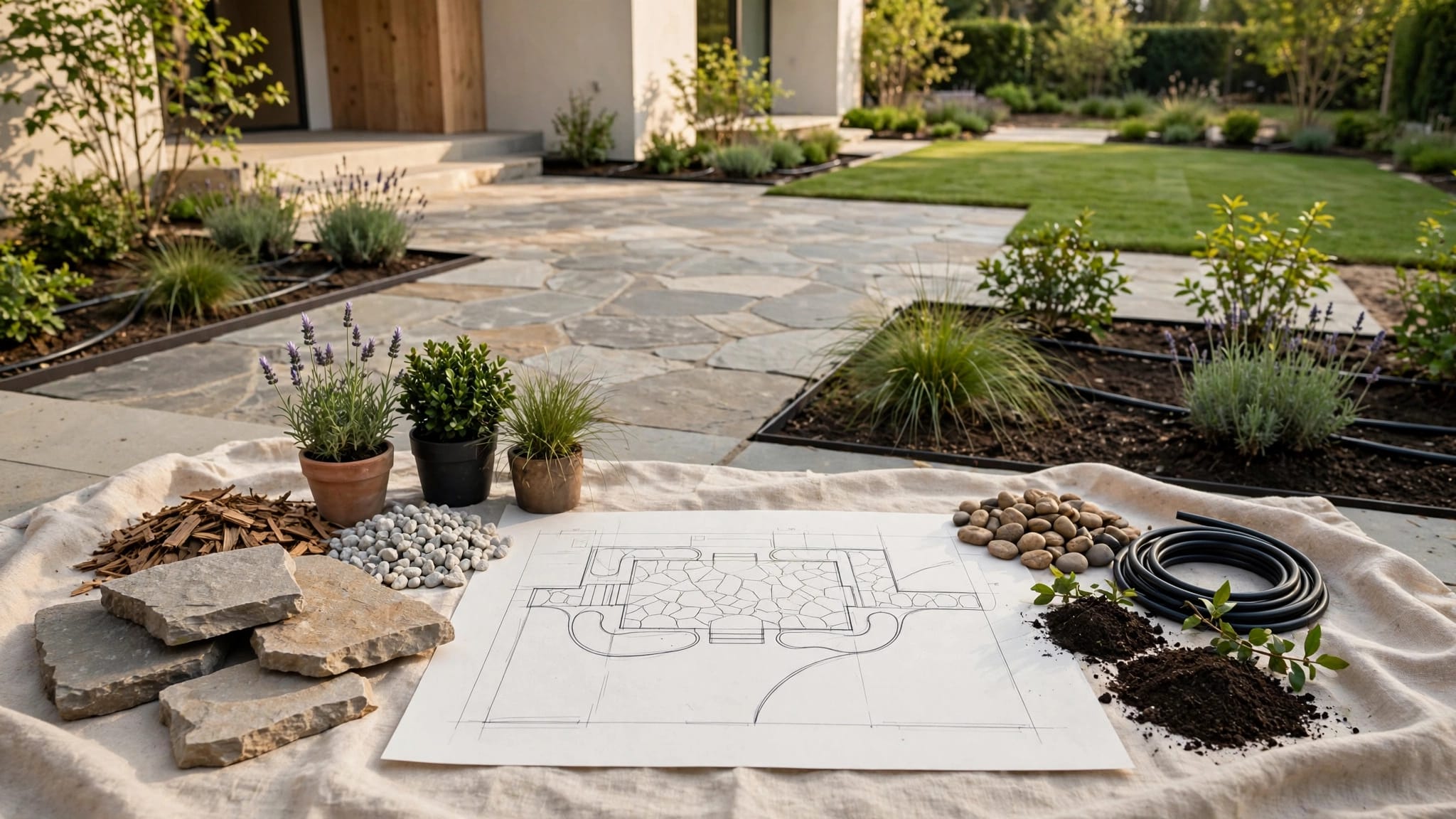
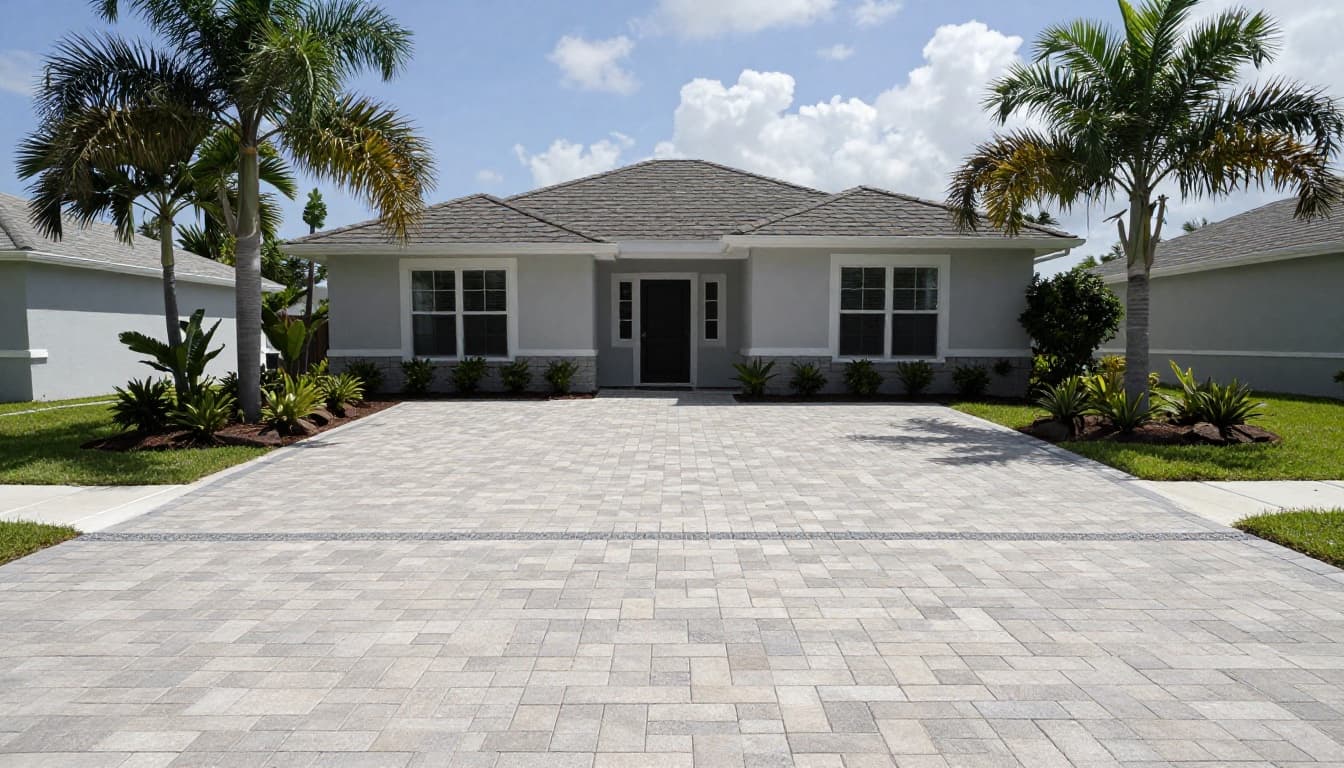 Permeable pavers on a Cape Coral-style driveway and walkway, created with AI.
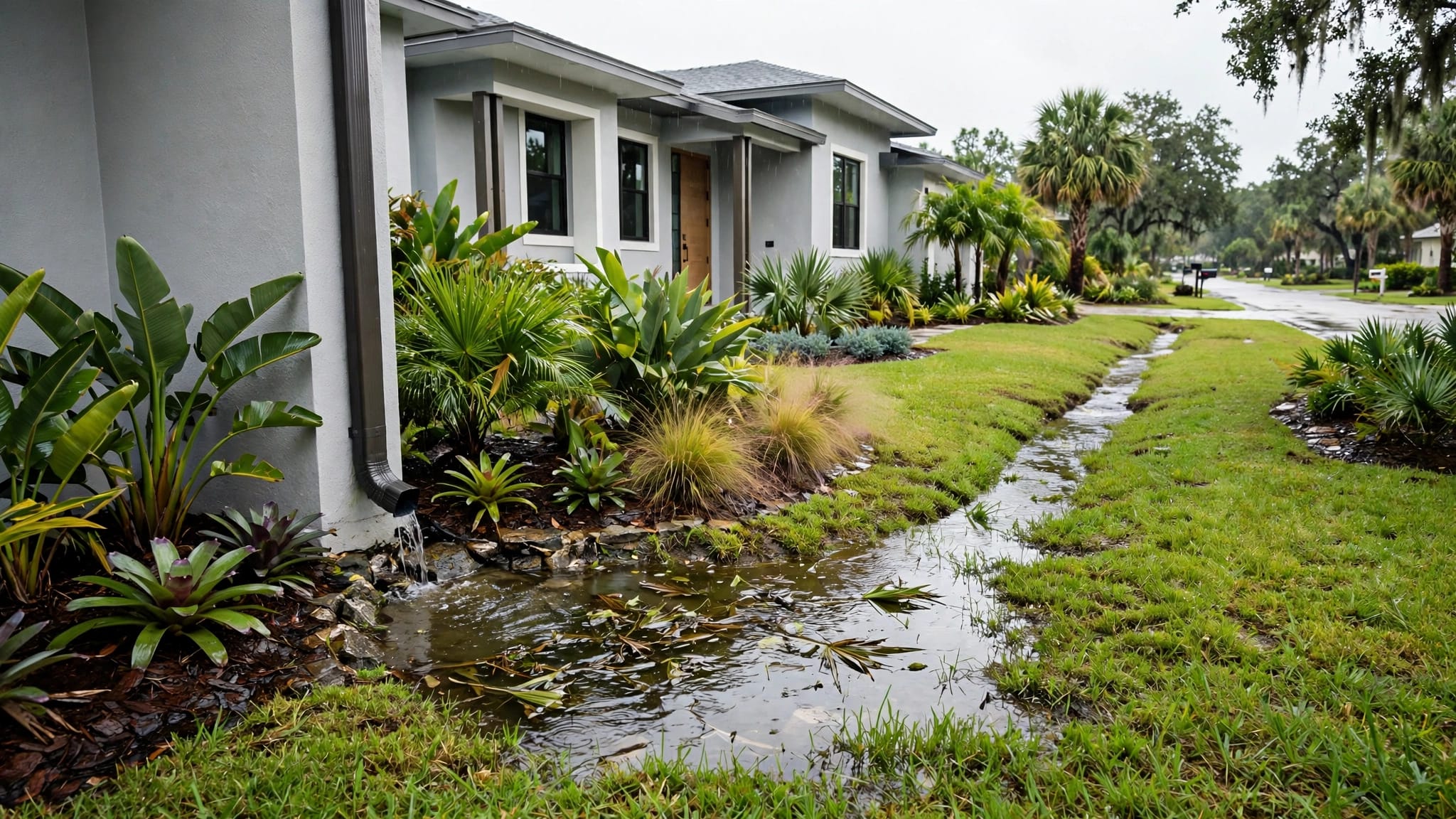
Cape Coral gets rain that can feel like someone tipped a bucket over the neighborhood. Add flat lots, canal systems, and a high water table, and it’s no surprise homeowners look for hardscape options that don’t send water racing toward the garage.
That’s where permeable pavers cape coral projects come in. They’re designed to let rain pass through the surface and temporarily store it in the stone base below, instead of shedding it like a traditional slab.
Still, permeable systems aren’t magic. Done right, they can reduce puddling and runoff on your property. Done wrong, they clog, sink, or stay wet. This guide breaks down when they’re a smart choice in Cape Coral, when they’re not, and what you can expect to pay in 2026.
How permeable pavers actually drain in Cape Coral (and what permits tend to require)
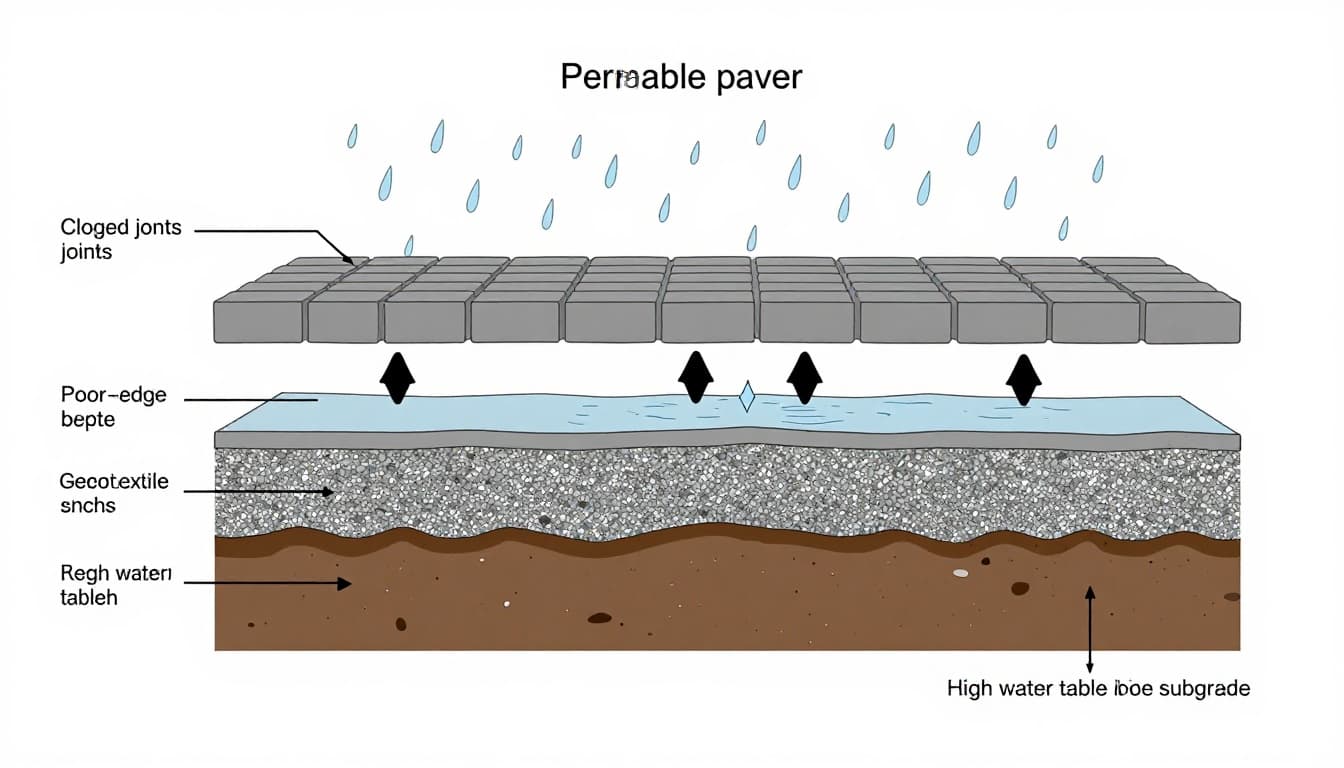 Cross-section of a typical permeable paver build-up and common failure points, created with AI.
Permeable interlocking concrete pavers look similar to regular pavers, but the joints are filled with small, clean stone (not standard sand). Rain slips through those joints into a bedding layer and then into a thicker open-graded base . Think of that base like a gravel “battery” that holds water for a while, then releases it into the soil or an underdrain if the site needs one.
Cape Coral’s challenge is that “release it into the soil” part depends on your yard. Some lots infiltrate well, others sit over shallow groundwater or compacted fill. That’s why reputable installers follow the same design logic you’ll see in UF/IFAS technical guidance on permeable pavement systems, including base depth, aggregate type, and maintenance planning.
On the permitting side, Cape Coral typically treats driveway additions or replacements as a permitted project, and permeable pavers are usually handled under the same umbrella as hardscape work. The city’s own Residential Permit Guidelines for driveway addition or replacement (PDF) outlines common submittal items like a site plan, scope dimensions, and inspections. Rules can change, so confirm current requirements before ordering materials.
Permeable surfaces can also support broader stormwater goals, which is why programs like Florida Water Star’s permeable surface criteria focus on reducing runoff where it falls.
When permeable pavers work well here (and when they don’t)
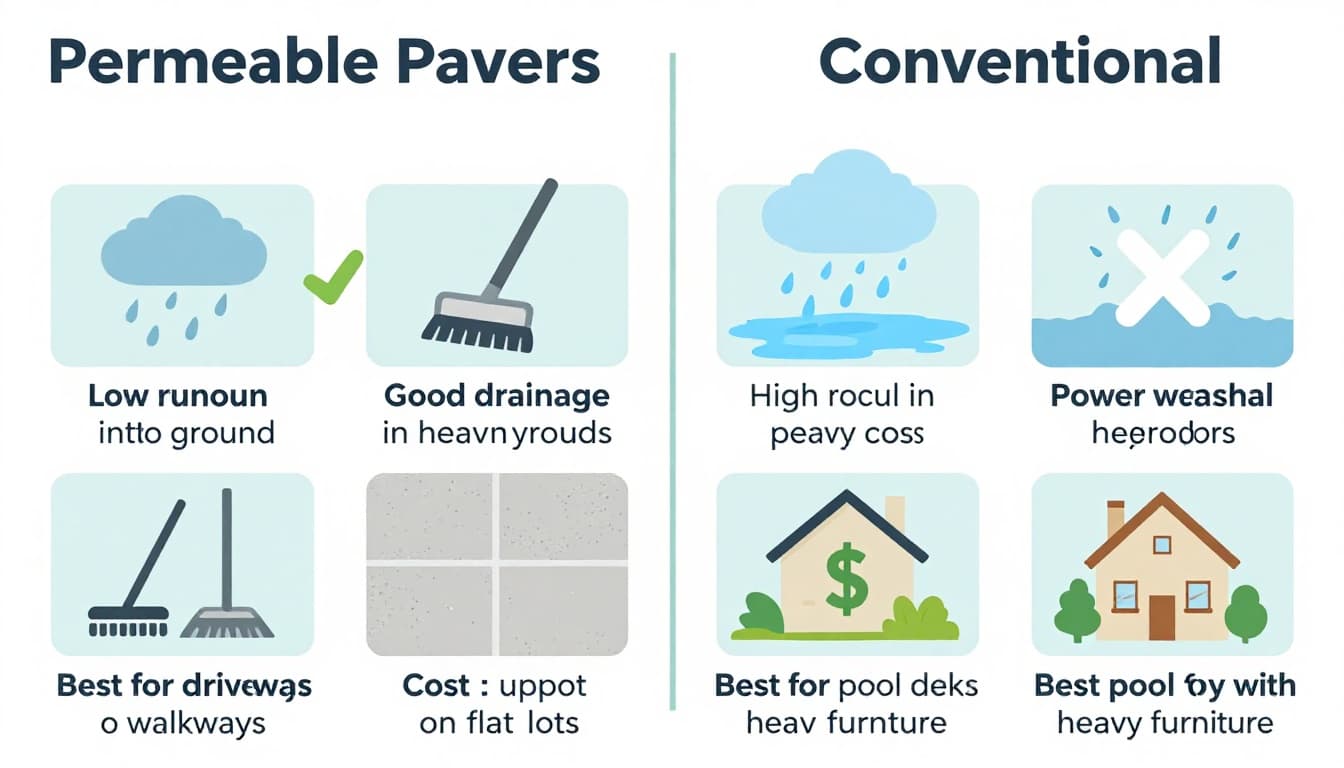 Quick comparison of permeable vs conventional surfaces for Cape Coral conditions, created with AI.
Permeable pavers shine when they’re matched to the site. In Cape Coral, that usually means managing fast downpours without creating a slip-and-slide across the driveway, and without pushing runoff toward the canal-side swales.
They tend to work best on lightly sloped or nearly flat areas where you want less surface water, like a driveway that currently ponds at the apron, a walkway that stays muddy, or a patio that dumps water against the lanai. They also pair nicely with Florida-style landscaping that uses rock beds, palms, and drainage-friendly planting zones.
Where they struggle is just as important. If your groundwater sits high for long periods, the base reservoir can’t “empty” quickly. If fine sand and yard debris aren’t kept out of the joints, the surface clogs and starts acting like regular pavers. And during extreme tropical rain events, no paver system should be sold as flood-proof. Site grading, overflow routing, and sometimes engineering decide how water behaves when it’s coming down sideways.
Works/Doesn’t Work decision matrix for Cape Coral
| Situation | Works well | Doesn’t work | What to do instead or add |
|---|---|---|---|
| Flat driveway that puddles after summer downpours | Yes | No | Verify base depth, add overflow path |
| Lot near canals with frequent high groundwater | Sometimes | Often | Consider underdrain, or conventional with proper slope |
| Heavy vehicle loads (work truck, boat trailer) | Yes, if designed for it | No, if base is thin | Specify thicker open-graded base and compaction |
| Shaded areas with lots of leaf litter | Risk | Yes, if not maintained | Plan regular sweeping and vacuuming |
| Tight courtyard/pool deck with sunscreen oils | Sometimes | Risk | Choose slip-safe surface, commit to maintenance |
What permeable pavers cost in Cape Coral (driveway vs patio/pool deck)
In 2026, most homeowners in Southwest Florida will see installed permeable paver pricing land in a wide band, mainly because base work is the job . The pavers are the visible part, but excavation depth, stone volume, and hauling drive the number.
National cost references still line up with local quotes as a starting point, with common installed ranges often cited at about $10 to $30 per square foot, depending on design and conditions, as summarized by Angi’s permeable pavers cost data and HomeAdvisor’s permeable pavement cost overview. Cape Coral sites can swing higher when you need deeper base build-ups, underdrains, or demolition and disposal.
Typical installed ranges (2026) you can budget around
| Area | Typical installed cost per sq ft | Why the range moves |
|---|---|---|
| Driveway | $12 to $30 | Deeper base for vehicles, more excavation and disposal |
| Patio | $8 to $20 | Lighter loads, often less base depth |
| Pool deck | $10 to $25 | Drainage detailing, slip concerns, tight access by screen cages |
The variables that change the price fastest in Cape Coral:
- Demolition and haul-off : Removing an old slab can add real cost, especially with limited access.
- Base thickness and stone type : Driveways often need a much thicker reservoir than patios.
- Underdrains : Some lots need a daylight outlet or tie-in plan so the base can drain down between storms.
- Site access : If crews can’t get a skid steer through a gate, you’ll pay for hand work.
- Paver type and edge restraint : Premium shapes, tumbled finishes, and stronger edge restraints raise totals.
If you’re comparing to a traditional slab, it helps to review local concrete expectations too, including Cape Coral concrete driveway cost considerations. If you want bids from one crew that can handle both, look for an established concrete company that also understands drainage and base specs.
Contractor vetting checklist (what to ask before you sign)
A solid permeable install is less about the brochure and more about the crew’s habits.
- ICPI/PICP familiarity : Ask if they’ve installed permeable interlocking concrete pavement systems, not just standard pavers.
- Written base spec : Get the layer depths and aggregate sizes in writing.
- Compaction method : They should compact in lifts and explain how they avoid crushing open-graded stone.
- Edge restraint plan : Weak edges lead to spreading and joint failure.
- Infiltration reality check : Ask how they confirm the site can drain, and when they recommend an underdrain.
- Overflow routing : Where does water go in a cloudburst, and will it avoid the garage?
- Maintenance handoff : They should explain joint stone top-offs, vacuuming, and paver cleaning without blasting out the joints.
- Warranty clarity : Settlement coverage should be spelled out, not implied.
Permeable pavers also have to fit your whole yard plan. If you’re mixing hardscape with pet areas, rock beds, or artifical turf , coordinate elevations so water doesn’t get trapped at the seams. For turf options and grading help, see artificial grass and sod options.
Conclusion
Permeable pavers can be a great fit in Cape Coral when the base is built correctly and the site can actually drain between storms. The same surface can be frustrating when joints clog, edges fail, or groundwater sits too high. Treat permeable pavers cape coral projects like drainage projects that happen to look good, and you’ll make better choices. If you’re getting quotes, ask for base specs, overflow routing, and a simple maintenance plan before you commit.