


Best Low-Maintenance Cape Coral Full Sun Plants
Cape Coral yards bake under relentless sun. You want color and green without daily watering or endless weeding. Full sun spots demand tough plants that handle heat, salt spray, and sandy soil.
These Cape Coral full sun plants thrive on neglect once established. They draw butterflies and fit Florida-friendly rules. Homeowners save time and water with options like beach sunflower or muhly grass.
Pick the right ones, and your landscape stays sharp year-round. Let's look at top choices and simple setup tips.
Why Full Sun Plants Suit Cape Coral Yards
Cape Coral sits in USDA zone 10b. Summers hit triple digits, winters stay mild. Sandy soil drains fast, so roots hunt deep for moisture. Coastal winds add salt stress.
Low-maintenance plants fix this. They need little fertilizer or pruning. Most attract pollinators, boosting local bees and butterflies. Drought tolerance means weekly checks, not hoses.
You cut bills too. Less water fits city rules during dry spells. Pair them with clean hardscapes for a pro look. Check HOA guidelines first, since some restrict heights or spreads.
These picks avoid invasives. They root well in our conditions and fill beds without fuss.
Top Low-Maintenance Cape Coral Full Sun Plants
Start with natives. They match our ecosystem best. Here's a lineup of reliable performers.
Beach sunflower spreads low at 2 to 4 feet. Yellow daisy blooms pop year-round. It loves dry sand and shrugs off salt. Butterflies flock to it, and it fills bare coastal edges fast.
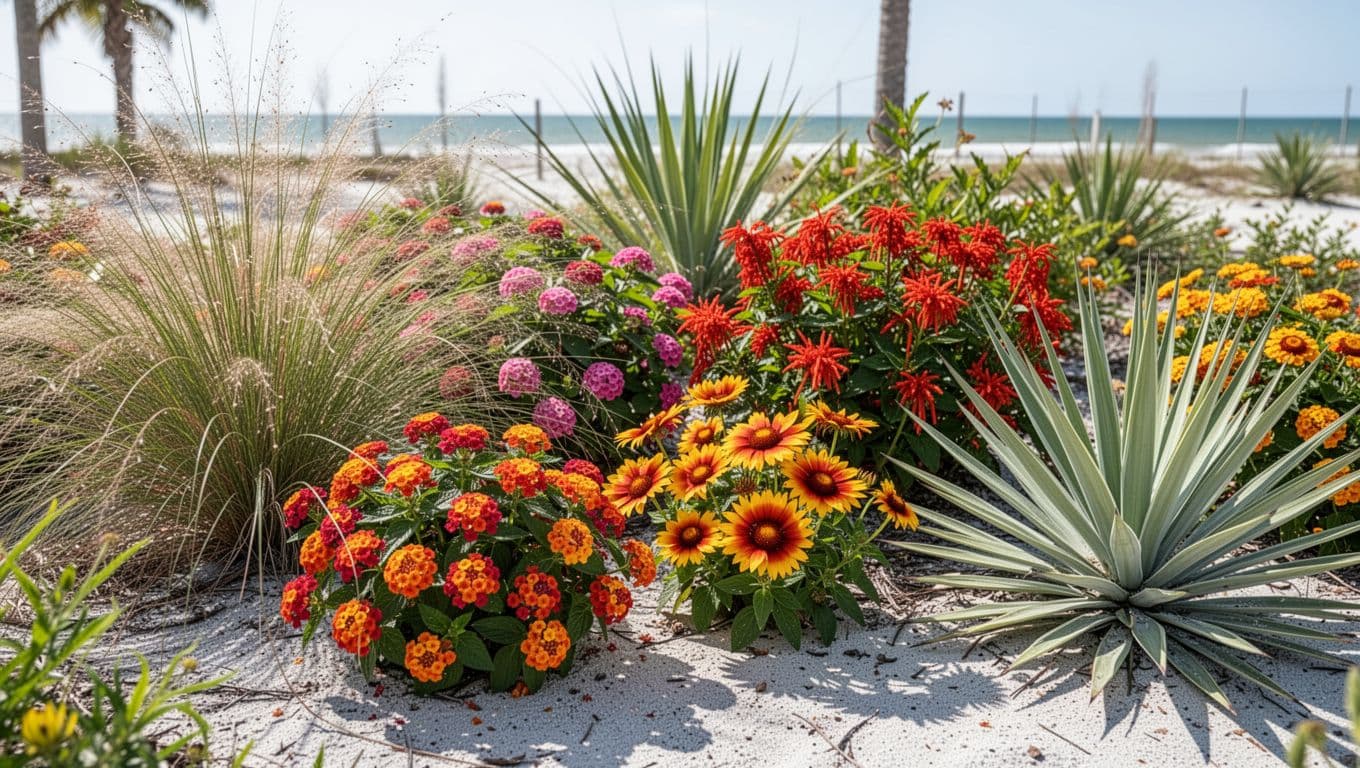
Pink muhly grass hits 3 feet. Fluffy pink plumes dance in fall sun. Green blades wave the rest of year. No fertilizer needed; it hates wet feet and sandy spots alike.
Scarlet sage grows 2 to 3 feet. Red tubular flowers hum all season. Hummingbirds love them. It bounces back from drought in our full sun.
Blue porterweed reaches 3 to 5 feet. Blue-purple spikes draw bees nonstop. Sandy soil suits it fine. Trim once a year if leggy.
Sea purslane stays under 1 foot as groundcover. Pink blooms on succulent leaves handle extreme salt and dry. Perfect for tough front beds.
Yellow bells shrub towers 6 to 10 feet. Trumpet flowers glow yellow into frost. Evergreen leaves stay put. Cut back lightly after bloom.
Dwarf morning glory creeps at 1 foot. True blue flowers open mornings. Super dry-tolerant in blazing sun.
Walter's viburnum fills 6 to 12 feet. White spring clusters feed pollinators. Berries follow for birds. Dry sand works well.
All these stay compact or spread controlled. Find them at local nurseries like those in Fort Myers.
Photo by Tiểu Bảo Trương
Planting and Care Tips for Cape Coral Gardens
Plant in early spring or fall. Dig holes twice as wide as roots. Mix in compost if soil packs tight, but skip for pure sand.
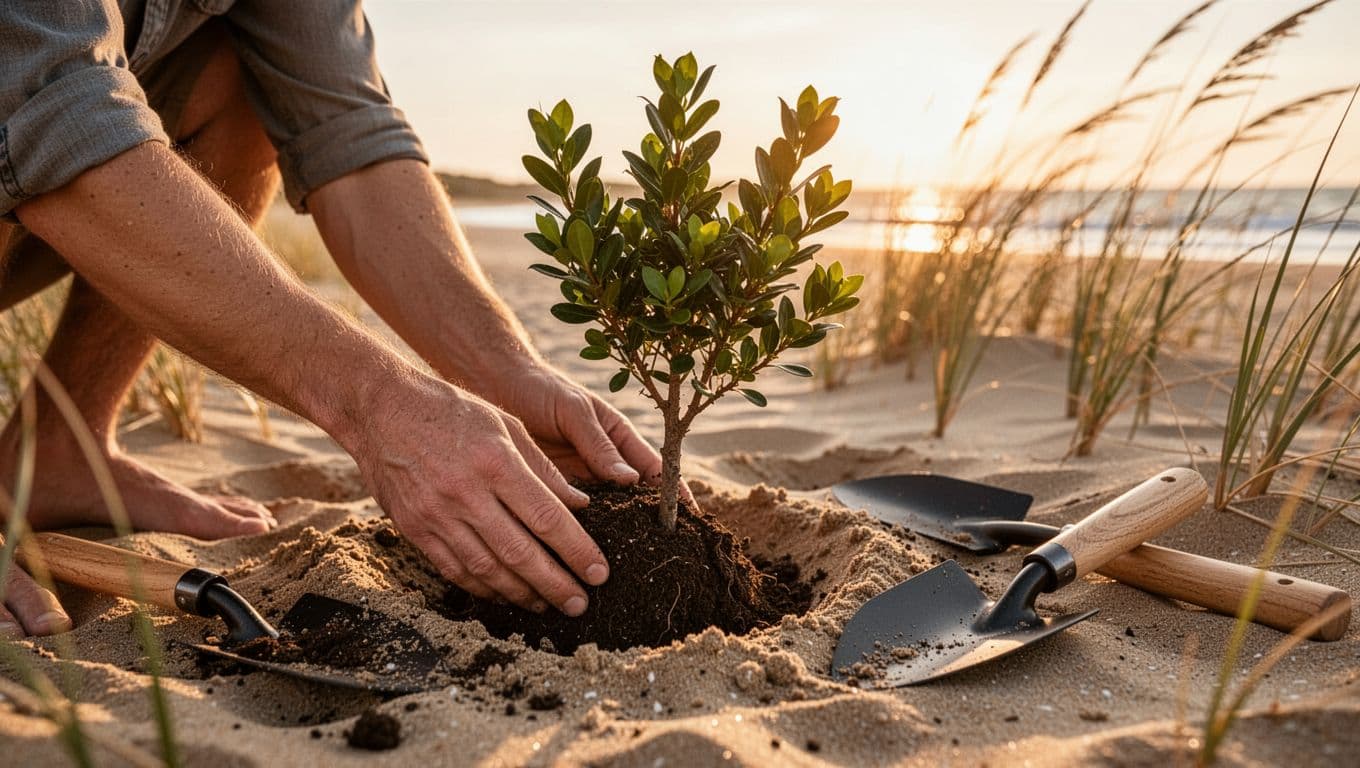
Water new plants weekly for two months. Then taper off. Most need rain only during long dries. Mulch 2 inches deep with pine bark to hold moisture.
Prune spent blooms or tips after flushes. This keeps shapes tidy. No heavy feeding; our soil leaches nutrients quick.
Watch for salt buildup near roads. Hose leaves monthly in summer. These plants resist most pests, so skip sprays.
Space them right. Groundcovers like sea purslane go 12 inches apart. Shrubs need 4 to 6 feet. Group for pollinator magnets.
Integrating Plants with Hardscapes and Turf
Plants shine next to clean surfaces. Paver cleaning keeps edges sharp around beds. Grime from mulch fades fast, so reseal every two years. Check paver cleaning and resealing costs in Cape Coral for local quotes.
Artificial turf pairs perfect in sunny play zones. It stays green without water fights. No clippings mix into beds. See artificial turf installation cost in Cape Coral to budget.
Concrete slabs anchor patios. A concrete company ensures slopes drain away from plants. Avoid pooling that drowns roots.
Landscaping ties it together. Grade yards first for flow. Full sun plants frame paver installation and repair without weeds cracking joints.
This setup cuts work. Turf handles traffic; plants add color.
Mistakes Cape Coral Gardeners Often Make
Crowd plants too tight. They compete for water and flop. Give air flow to fight fungus.
Overwater adults. Roots rot in our sand. Let soil dry between soaks.
Ignore salt. Inland spots fare better, but coasts need rinses.
Plant invasives by mistake. Stick to Florida-friendly lists.
Skip HOA checks. Some ban certain heights.
Fix these, and your yard thrives.
Low-maintenance Cape Coral full sun plants transform hot spots into easy beauty. Beach sunflower and muhly grass lead with color and pollinators. Plant smart, care light, and pair with turf or pavers for polish.
Ready for a lush yard? Grab plants from a local nursery. Or call pros for full landscaping . Your sun-soaked space waits. What will you try first?