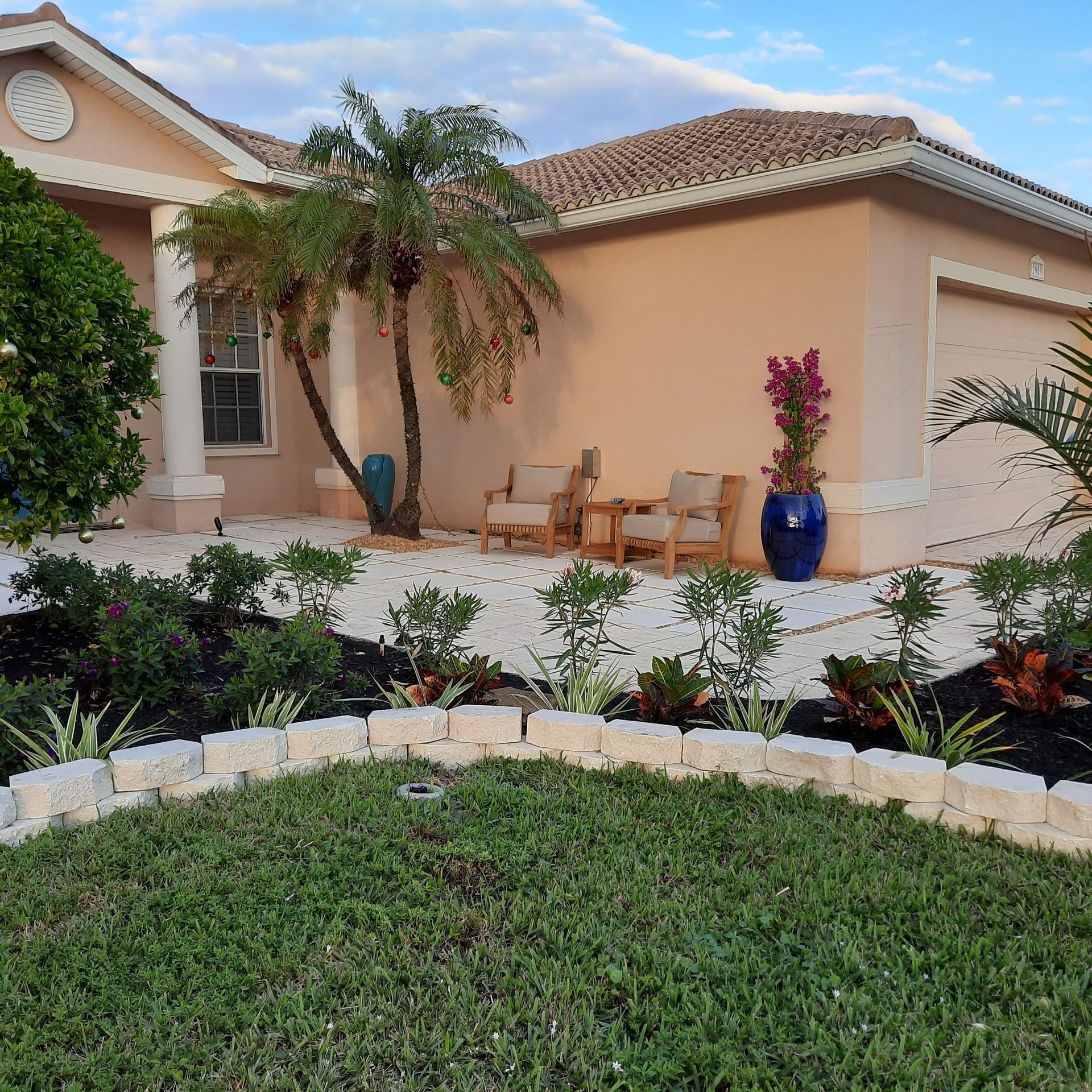



Best Dwarf Palms for Cape Coral Pool Areas
Pool decks in Cape Coral take a beating from sun, salt, wind, and splash. The wrong palm can crowd a lanai, drop fruit on the deck, or throw more shade than you wanted. The right one keeps the pool edge clean and still gives that Southwest Florida look.
If you are choosing dwarf palms for Cape Coral , focus on size, litter, and how the plant behaves after a few years. A small palm can still become a problem if it spreads too wide or sheds all summer. The best picks stay neat, handle heat, and fit the flow of a backyard that already has pavers, concrete, and maybe a screened cage.
What makes a poolside palm work in Cape Coral
Your pool area changes the rules. Water, chlorine splash, full sun, reflected heat, and tight walkways all punish the wrong plant. In Cape Coral, you also deal with sandy soil, salty air in some neighborhoods, and storm-season wind. That means a pretty palm at the nursery may not be the right palm for the deck.
The best pool-friendly palms are compact, slow enough to keep up with your yard, and easy to clean around. They should stay clear of the waterline, leave room for maintenance, and avoid heavy fruit drop. Frond drop matters too, because a pile of old leaves around a drain looks sloppy fast.
A palm that fits the space at year ten is a better buy than one that only looks right on day one.
If you are budgeting a full landscaping refresh, Cape Coral palm tree installation costs can help you compare small starts with mature specimens.
Best dwarf palms for Cape Coral pool areas
These five palms are the best mix of size, looks, and day-to-day ease for Southwest Florida pool spaces.
| Palm | Mature size | Growth habit | Sun | Maintenance | Litter | Cold tolerance | Pool fit |
|---|---|---|---|---|---|---|---|
| Pygmy date palm | 6-10 ft tall, 6-8 ft wide | Single or clumping, arching crown | Full sun to part shade | Medium | Moderate, fruit can drop | About 25-30 F | Strong, with room |
| Dwarf palmetto | 4-8 ft tall, 5-8 ft wide | Low clump, fan leaves | Full sun to part shade | Low | Low | 0 F and below | Excellent |
| European fan palm | 8-15 ft tall, 8-12 ft wide | Clumping, multi-trunk | Full sun | Low to medium | Low to moderate | About 10-15 F | Good, set back |
| Needle palm | 3-6 ft tall, 5-8 ft wide | Slow clump, fan leaves | Sun to shade | Low | Low | 0 F and below | Very good |
| Saw palmetto | 3-10 ft tall, 6-10+ ft wide | Spreading native clump | Full sun to part shade | Low | Moderate, berries and fronds | About 10-15 F | Fair, best on edges |
The cleanest choices are dwarf palmetto and needle palm. The most tropical-looking one is the pygmy date palm, but it needs a bit more care.
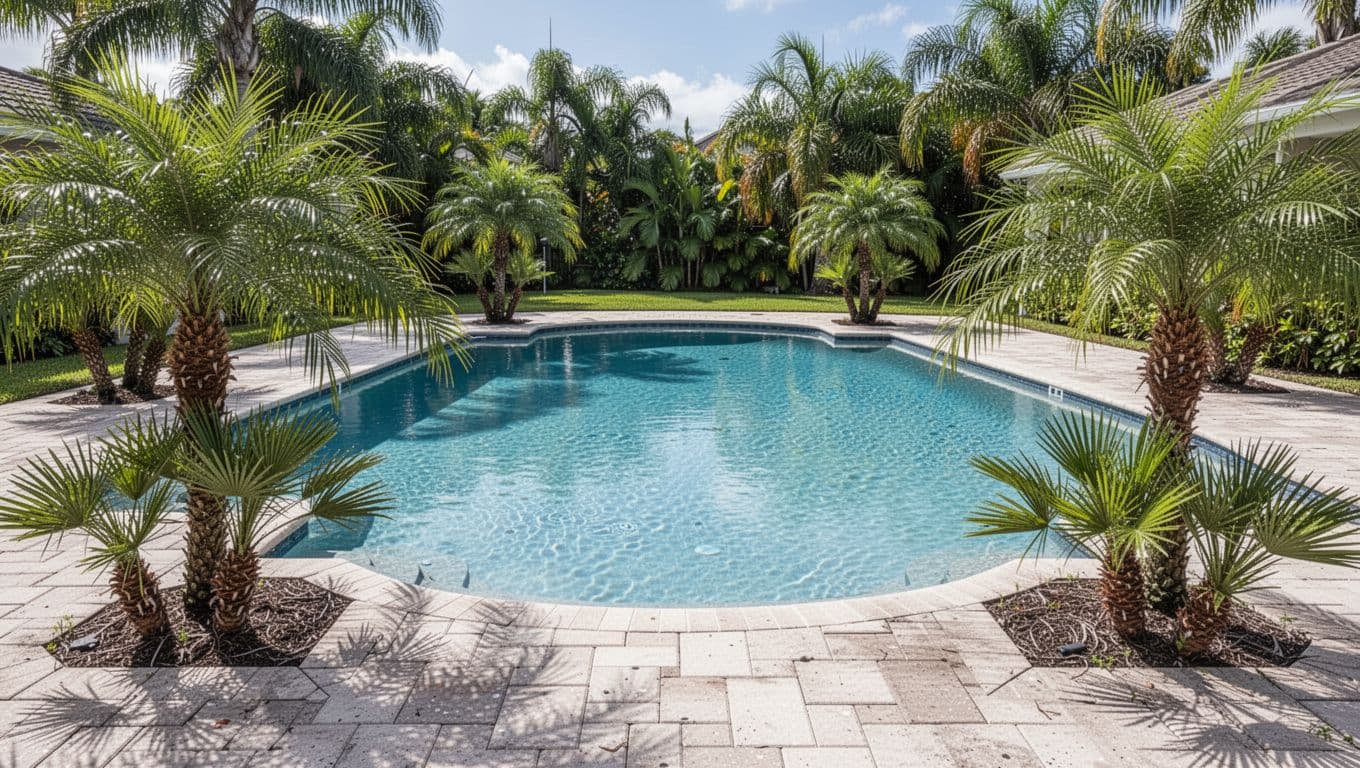
Pygmy date palm
Pygmy date palm is the classic small tropical palm for Southwest Florida. It usually reaches 6 to 10 feet tall and about 6 to 8 feet wide, with arching feather fronds and a slim trunk. That shape looks great near a pool, but it does carry a few tradeoffs.
Female plants can drop fruit, and the trunks have sharp spines near the base. Give it full sun to part shade and some room away from foot traffic. Maintenance is moderate because you will prune dead fronds and keep an eye on pests.
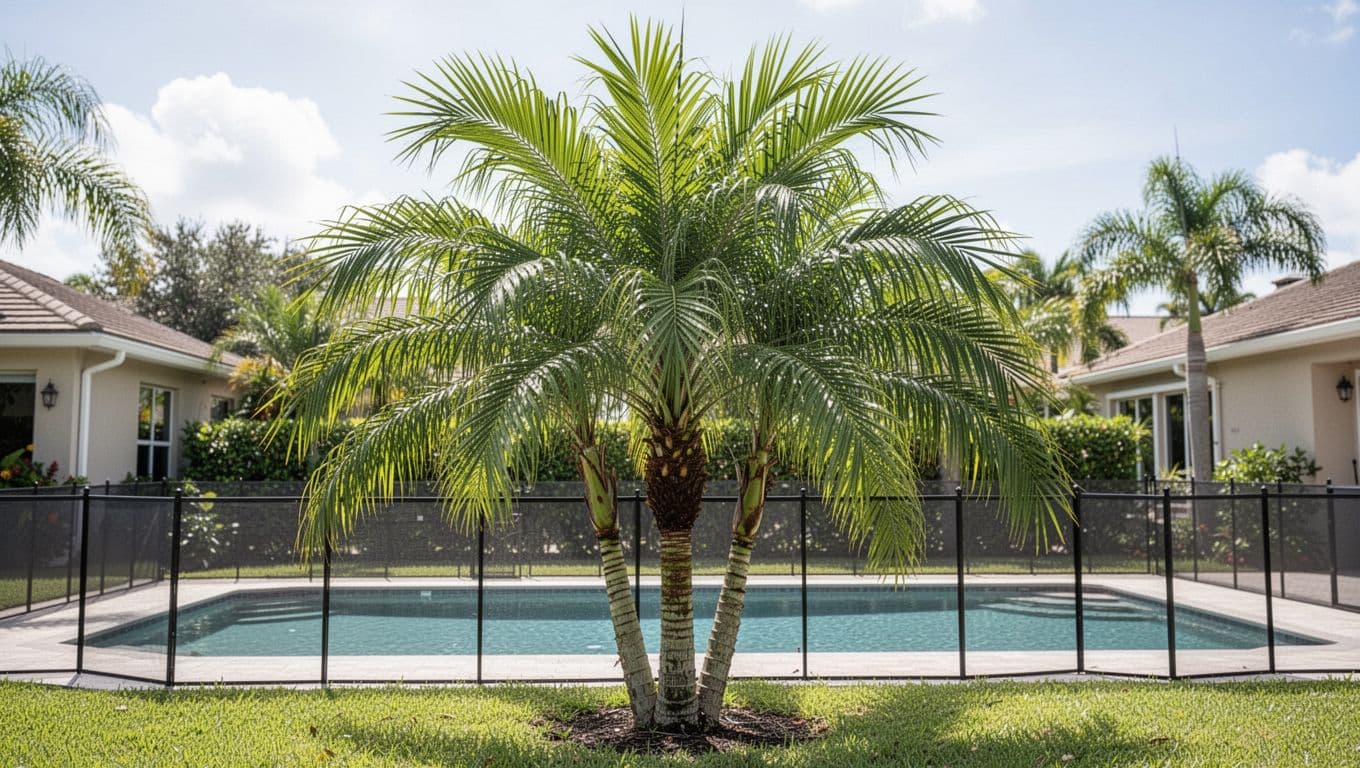
Cold tolerance is solid for Cape Coral, usually around 25 to 30 F. That makes it a practical choice for rare cold snaps. UF/IFAS note on pygmy date palm also points out that it dislikes salt spray, so it is better on the protected side of a lanai than on a fully exposed edge.
For pool areas, it is a strong fit when you want a lush look without a tall canopy. Just keep fruit away from the water and from bare feet.
Dwarf palmetto
Dwarf palmetto is one of the safest choices for a pool edge. It stays low, usually 4 to 8 feet tall, and forms a broad fan of blue-green leaves. The plant is slow, tough, and happy in full sun or part shade.
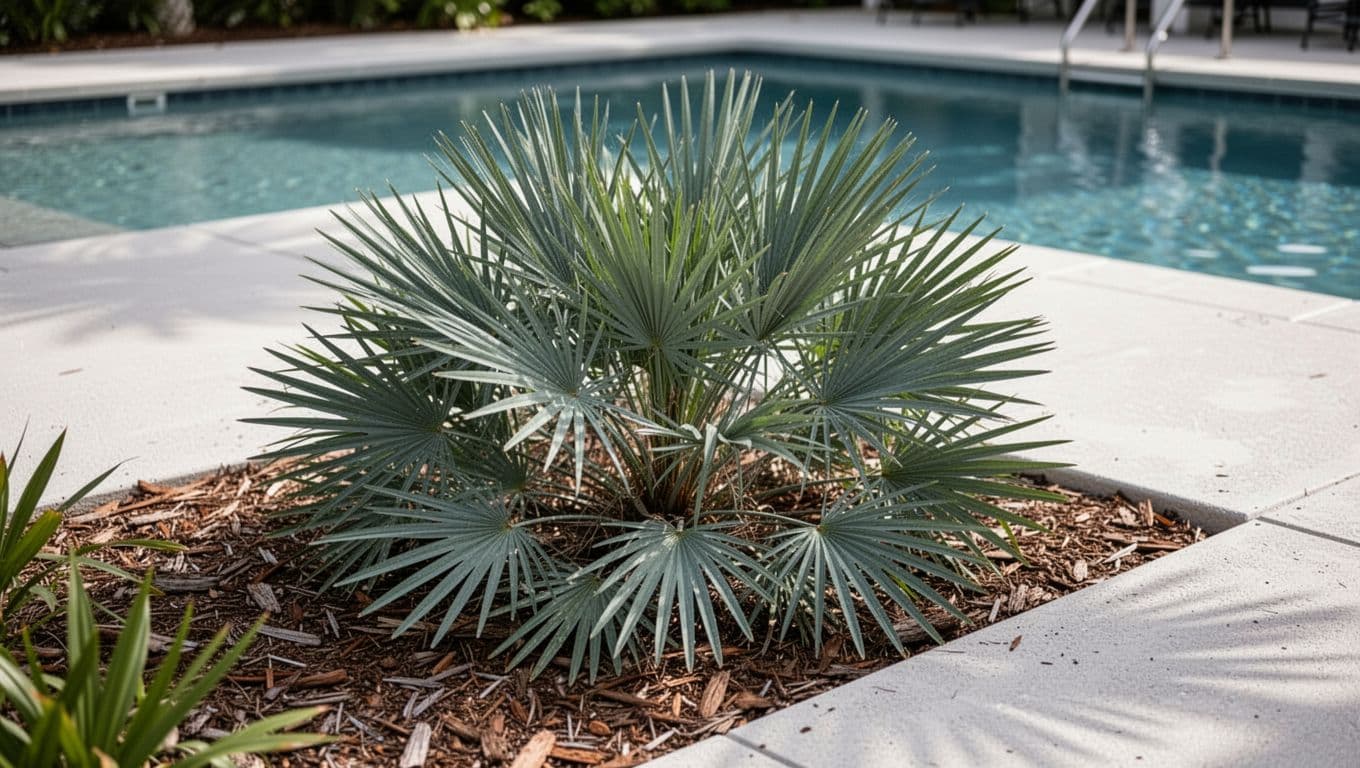
That makes it a smart match for tight spots near a lanai or beside a concrete deck. Maintenance stays low, and litter stays light. You will mostly deal with old fronds now and then.
Its biggest strength is also its biggest style tradeoff. Dwarf palmetto looks tidy and natural, but it does not give the lush tropical feel some homeowners want. Even so, it is one of the best palms for homeowners who want a clean pool area without much fuss.
European fan palm
European fan palm fits well when you want a fuller look without a giant crown. It grows in clumps, often reaching 8 to 15 feet tall and 8 to 12 feet wide. The fan-shaped leaves give it a different texture than feather palms.
It handles full sun well and needs only medium care. Litter is usually light, though female plants can drop seed clusters. The main drawback is the spiny leaf stems. Those teeth can scratch if the plant sits too close to a walkway.
This palm works best when it has breathing room. Put it where the fronds can spread without brushing pool furniture or the cage. It is a good fit near pools, just not the best choice for a narrow path.
Needle palm
Needle palm is small, slow, and tough. It rarely tops 6 feet, and it spreads in a low clump. The leaves are fan-shaped, and the plant can live in sun or shade.
That makes it useful for corners that never seem to hold much else. Maintenance stays low, and litter stays low too. It also has excellent cold tolerance, which is nice for the occasional freeze.
The drawback is right in the name. The petioles are spiny, so it is not a palm you want brushing against bare skin. It also grows slowly, so patience is part of the package. Still, for a narrow poolside bed, it is a very strong fit.
Saw palmetto
Saw palmetto is a Florida native that works well in the right spot. It can stay short, but it also spreads wide, sometimes more than 10 feet across. That wide habit makes it better for open edges than tight pool corners.
It likes full sun to part shade and asks for little once it settles in. Maintenance is low, but litter can be moderate because of berries and older fronds. The leaf stems also have sharp edges.
This is a good choice if you want a native look and have enough room for it to spread. It is less ideal right next to a pool deck where cleanup matters every week. Think of it as a border plant, not a tight accent.
How to place dwarf palms around a pool deck
The palm is only part of the plan. Placement matters just as much. Give each plant enough room for mature width, not just the size it had in the pot. That extra space keeps fronds out of walkways and makes cleanup easier.
If the hardscape needs work, handle it first. A cracked slab or sinking edge should go to a concrete company before planting starts. If you already have pavers, plan Cape Coral paver cleaning and resealing costs before the beds go in, because paver cleaning is easier before fresh mulch, irrigation, and new roots get in the way.
Some homeowners pair palms with artifical turf to keep mowing out of the pool zone. If that's part of your plan, artificial turf installation cost in Cape Coral helps you compare it against mulch and stone. That mix can work well, but only if you pick palms with light litter and easy access for sweeping.
Good poolside landscaping is simple. Keep the canopy open, leave space for maintenance, and place the messier palms where cleanup is easy. That rule saves time later.
Conclusion
Cape Coral pool areas look best when the palms stay small enough to respect the deck. Dwarf palmetto gives you the cleanest, lowest-care result. Pygmy date palm gives you the richest tropical look. European fan palm, needle palm, and saw palmetto fill niche spots when you want a native, compact, or tougher option.
The safest choice is the one that matches your space, your cleanup routine, and the way your yard gets sun. If a palm fits the site on day one and still fits five years later, you made the right pick.