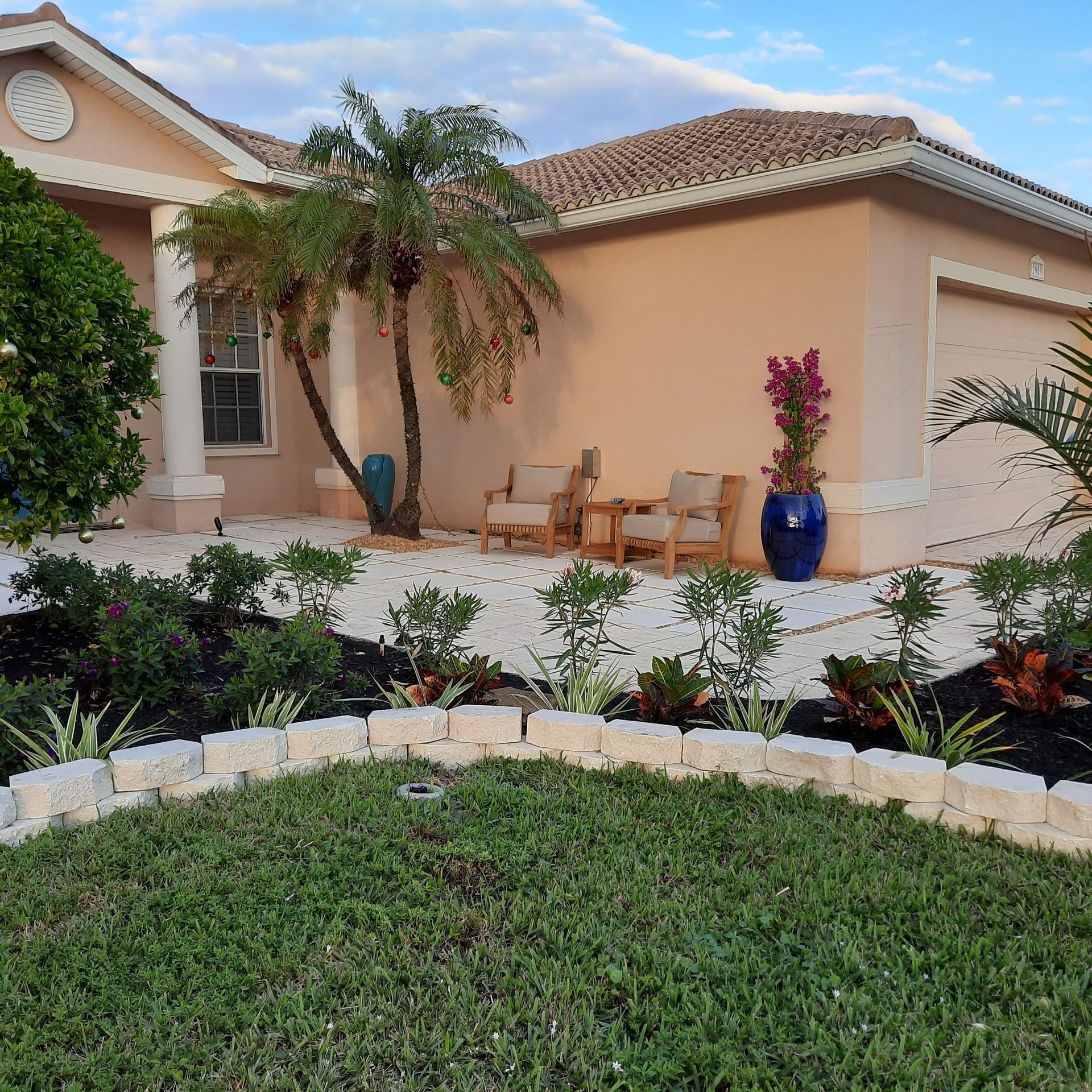



Best Cape Coral Plants to Hide Pool Equipment
Pool equipment does its job, but it rarely improves a backyard. A pump, filter, or heater can break up a clean patio view fast, especially when it sits beside the pool deck. The right Cape Coral privacy plants can hide that clutter and still keep the area easy to service.
Cape Coral yards need plants that handle full sun, wind, salt, and heat. They also need to stay neat, because pool areas show every dropped leaf and every messy root decision. Good landscaping around equipment should look finished without boxing the machinery in.
What pool equipment screening in Cape Coral really needs
Before you buy anything, look at the pad, the fence line, and the space behind the equipment. A plant screen has to do three jobs at once. It should hide the view, let air move, and leave room for a technician to reach panels and valves.
Here's a quick guide to the plant types that usually work best.
| Plant type | Best use near equipment | Main benefit |
|---|---|---|
| Shrubs like podocarpus or clusia | Tall screen close to the pad | Dense, evergreen, and easy to shape |
| Firebush or dwarf ixora | Color at the outer edge | Bright look with light cleanup |
| Muhly grass | Soft layer in front of shrubs | Airy, low bulk, and simple to tuck in |
| Dwarf palms | Taller tropical look | Softer feel without a heavy wall of leaves |
That mix gives you a screen that works like a fence, but lives like a plant. If you want more ideas, this roundup of best privacy plants for Cape Coral pools is a useful starting point.
A screen should hide the equipment, but it should never trap heat around it.
Shrubs that do the heavy lifting
Shrubs do most of the work because they build height and density. They also create the clean, finished look that makes poolside landscaping feel intentional. The best choices stay fairly upright, hold their shape, and don't shower the deck with constant debris.
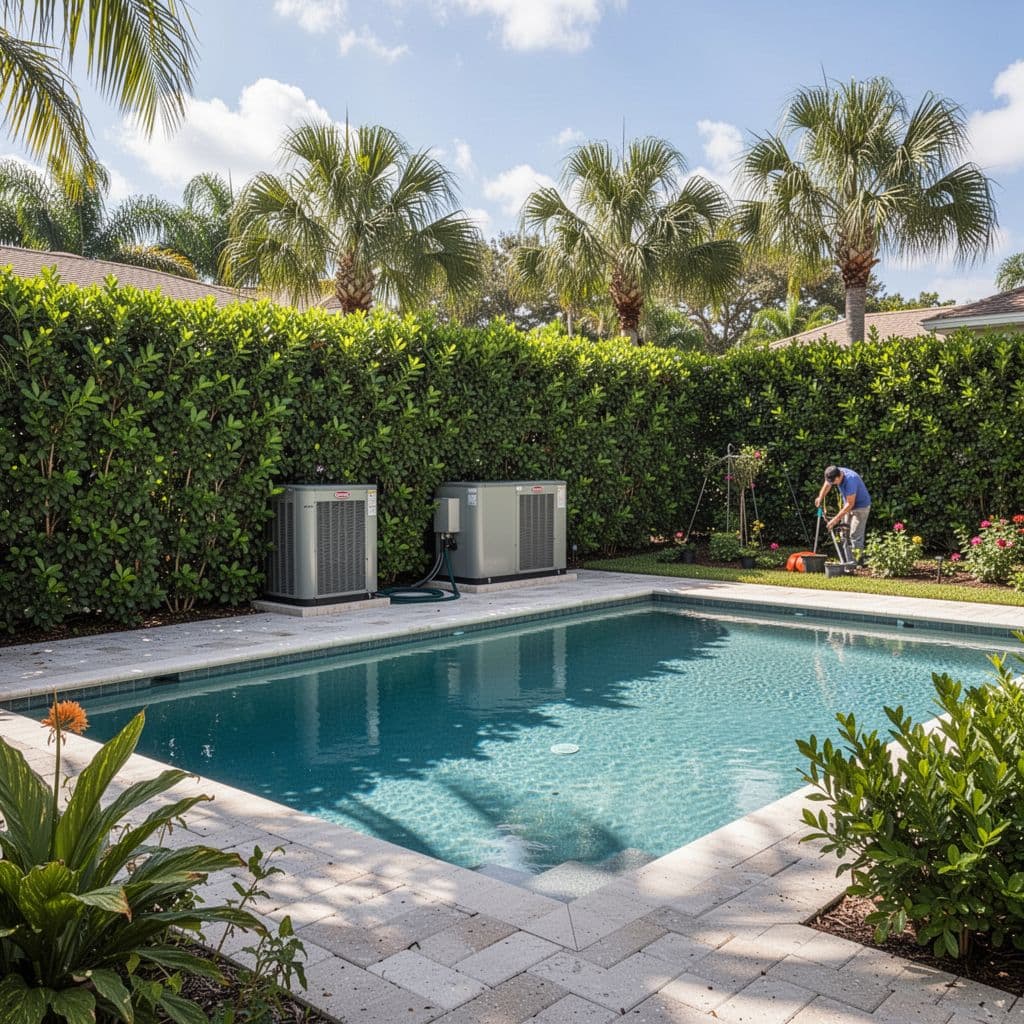
Podocarpus
Podocarpus is one of the strongest choices for pool equipment screening in Cape Coral. It grows in a tight form, trims well, and can be kept narrow if the space is tight. That matters near a pool, because a loose, bulky hedge starts to feel messy fast.
It also works well in full sun and warm weather. For homeowners who want a clean look without a lot of leaf drop, podocarpus is hard to beat. Give it room to breathe, then prune it lightly so it stays dense from top to bottom.
Clusia
Clusia gives you a thicker, leafier wall. The glossy leaves look clean, and the plant holds up well in Florida heat. It suits larger pads or wider planting beds where you need a bold screen.
Clusia does best when it's not crammed against the equipment. Leave enough space for airflow and service access, then let the plant fill in naturally. It's a strong option when you want privacy and a polished look at the same time.
Firebush and dwarf ixora
Firebush brings color without turning the pool deck into a cleanup job. Its flowers attract pollinators, and the plant stays useful as a screen when it gets regular pruning. Dwarf ixora is another good choice for a lower layer, especially if you want color near the front edge of the bed.
These plants work best as part of a mixed screen, not the whole wall. Use them where you want softer edges, then let taller shrubs do the main blocking. That gives the bed more shape and keeps the view from looking flat.
Grasses and small palms that soften the view
A solid hedge can look heavy on its own. Grasses and small palms break that line and make the whole area feel lighter. They also work well when the equipment sits near pavers, since they soften hard edges without taking over the bed.
Muhly grass
Muhly grass is a smart choice when you want motion and texture. Its fine blades move in the wind, so it doesn't feel stiff next to a pool enclosure or equipment pad. In Cape Coral, it fits best in a sunny spot with room to spread a little.
It should not be the only screen if the equipment is visible from the main seating area. Instead, use it in front of shrubs or at the corner of a planting bed. That way it adds softness without doing all the privacy work.
Dwarf palms
If you want a more tropical look, choosing dwarf palms for pool areas can help. A smaller palm gives height and shape without the bulk of a full-size specimen. That matters near equipment, because tall plants can look better than broad ones when space is limited.
Compact palms also pair well with shrubs. They add a resort feel, but they should still sit far enough from the cabinet to keep access open. For a deeper look at fit and form, the guide on choosing dwarf palms for pool areas is worth a look.
What to skip near pool gear
Some plants create more work than privacy. They shed too much, send roots where they don't belong, or make service calls harder than they need to be.
- Queen palms and other large palms can drop old fronds and fruit.
- Bamboo spreads fast and can become hard to control.
- Ficus grows aggressively and can create root issues near hardscape.
- Thorny shrubs, such as bougainvillea, make access awkward around equipment.
A good screen should never block ventilation around the unit. It also shouldn't force a technician to squeeze through branches just to open a panel. If the plant makes maintenance harder, it's in the wrong place.
Keep the screen neat without adding chores
The best screening plants still need basic care. Trim them before they reach the equipment, and keep the bottom open enough for airflow. A dense hedge can look great until it starts holding moisture against metal and concrete.
Pay attention to the ground around the bed too. Regular paver cleaning matters because leaf stains, mulch marks, and fertilizer streaks show up fast beside a pool. Clean pavers make the whole screen look more planned, even when the plants are still filling in.
Some homeowners also use artifical turf in narrow side strips near the screen. That can reduce mowing and keep mud off the deck, but it should stay away from the equipment clearance zone. It works best as a helper, not the main feature.
If the pad, slab, or edge needs repair, start there first. A concrete company should handle cracked or sinking surfaces before you plant around them. Plants can hide a bad view, but they can't fix a damaged base. If your project includes pavers or slab work too, the 2026 Cape Coral poolside landscaping cost guide can help you plan the order of work.
A cleaner pool view starts with the right mix
The best equipment screen is one that looks natural, not forced. In Cape Coral, that usually means evergreen or near-evergreen shrubs, a grass or palm for texture, and enough space left open for service and airflow.
Pick plants for the view they block and the upkeep they avoid. When the landscaping fits the site, the pool area feels calmer, cleaner, and easier to live with.