


Best Cape Coral Plants for Windy Waterfront Yards
How do you keep a waterfront yard in Cape Coral looking tidy when the wind keeps testing every plant? Salt spray, reflected heat, and sandy soil all work against a soft planting plan.
The answer starts with Cape Coral plants that fit the site, not the showroom. The best choices stay upright, handle spray, and still look clean beside a canal, seawall, or lanai.
Start with the conditions, then choose the plants that match them.
What windy waterfront yards need from plants
Wind across open water has room to build speed, so plants on these lots take a harder hit than the same plants inland. Add salt spray and hot afternoon glare from concrete, pavers, or dock surfaces, and the stress climbs fast. Sandy soil drains quickly, which helps after summer rain, but it also means roots lose water sooner.
That mix changes the rules for landscaping. Plants with flexible stems, smaller leaves, waxy foliage, or a compact shape usually hold up better. They bend instead of snapping, and they recover faster after a storm passes through. Tall, brittle shrubs can look great for a month, then come apart after the first rough stretch of weather.
On a waterfront lot, the strongest plants are often the ones that move with the wind instead of fighting it.
Spacing matters just as much as species. A bed packed too tightly can trap heat and hold salt on the leaves longer. A bed with room to breathe looks calmer, dries faster after a blow, and gives each plant a better shot at staying full.
Good waterfront landscaping also needs structure. A mix of tall, medium, and low plants reads better than one flat hedge line. If the yard needs borders or a low retaining edge, a concrete company can help hold the bed shape so mulch and soil stay where they belong.
The Cape Coral plants that hold up best in windy yards
These plants earn their spot because they handle motion, spray, and heat without turning fussy. They also give you different heights, so the yard can look finished instead of crowded.
| Plant | Best place in the yard | Why it works |
|---|---|---|
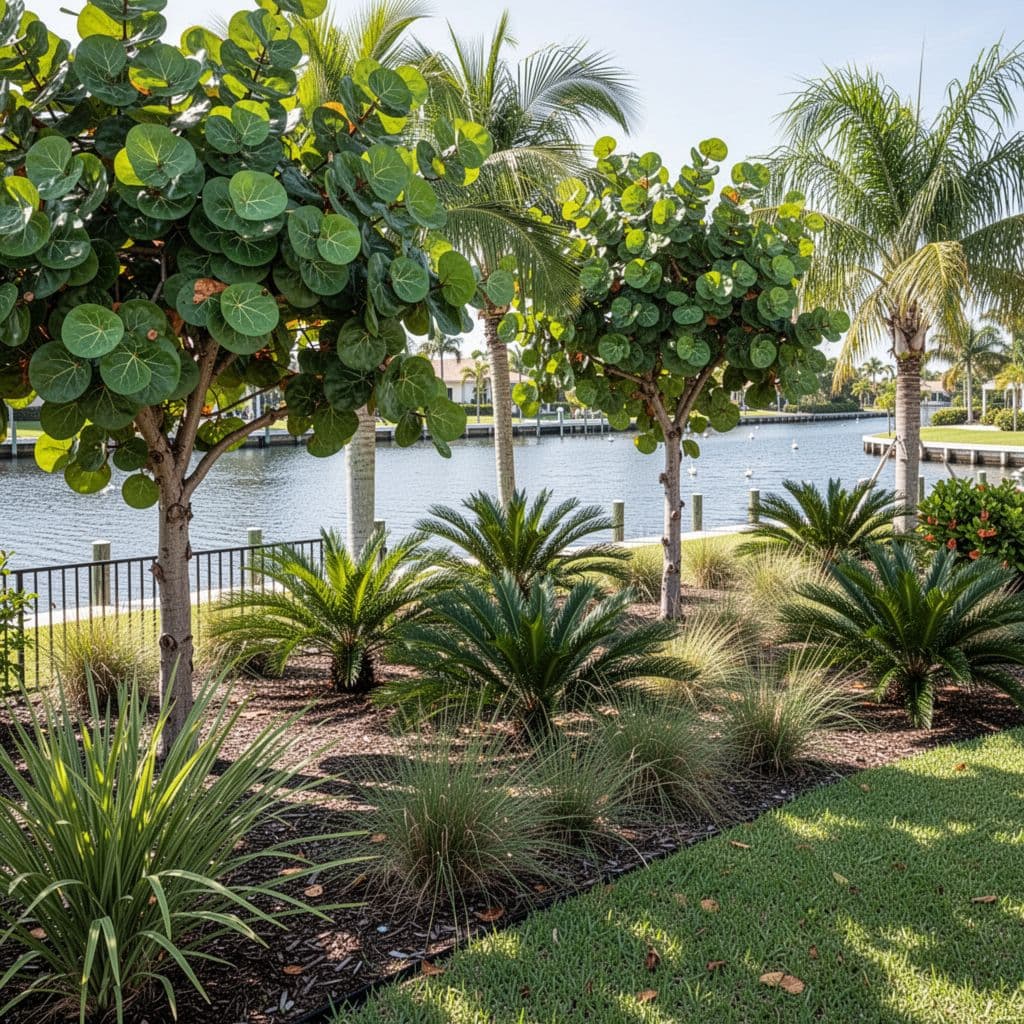
| Sea grape | Outer edge, corner screen, or wide back bed | Thick leaves, strong branching, and a broad form help it block wind and salt spray. Give it room, because it wants to spread. |
| Simpson's stopper | Mid-height hedge near lanais or side yards | Small glossy leaves and dense growth create a neat screen that takes pruning well. It stays cleaner than many broadleaf shrubs in open wind. |
| Cocoplum | Setback fence line or layered hedge bed | It adapts well to coastal soil and can be shaped into a soft, full hedge. It handles repeated trimming without losing its form. |
| Coontie | Low beds, entry pockets, or shaded edges | This slow grower handles heat and dry sand once established. Its compact size works well where you want toughness without height. |
| Silver buttonwood | Bright corners and open, exposed spots | Silvery foliage reflects light and gives the plant a clean look in harsh sun. It is one of the better choices for hot, reflective spaces. |
| Muhly grass | Front edges, bed corners, and lawn transitions | It bends with wind instead of fighting it, and the airy plumes soften hard edges. Mass plantings look better than single clumps. |
Sea grape and silver buttonwood are the strongest choices when the yard feels almost too open. They can take more punishment and still look composed. Simpson's stopper and cocoplum are better when you want a softer screen near a lanai or along a fence. Coontie and muhly grass finish the bed and keep the lower edge from feeling bare.
Beach sunflower is another smart front-edge choice. It stays low, blooms in long stretches of sun, and helps a bed feel finished without blocking a view. In exposed Southwest Florida yards, that kind of soft finish matters as much as height.
The best results come from mixing these plants in layers. A sea grape at the outer edge, a strip of Simpson's stopper, and a low run of muhly grass can look far better than a line of the same shrub. That mix also makes the yard easier to read after a storm, because the shapes still make sense when a few leaves are torn.
Plants that usually struggle on open waterfront lots
A windy lot is a bad place for plants that rely on still air. Thin, oversized leaves tear fast, and weak stems bend for a week before they stay bent. Heavy flowering shrubs can also look ragged once salt spray and dry wind start stripping them.
That doesn't mean every colorful plant is off the list. It means placement matters, and sheltered courtyards can handle choices that would fall apart near the canal. On the edge of the property, though, pick shrubs and grasses that keep a loose, natural shape and don't need constant rescue pruning.
Crowded beds create another problem. When plants sit too close together, air can't move through them well, and salt hangs on the leaves longer. Heat also builds up faster beside patios, driveways, and seawalls. A little open space gives the whole planting bed a better chance to stay healthy and look clean.
Open waterfront lots also punish plants that need heavy hand shaping. If a shrub has to be clipped every few weeks just to stay in bounds, it may not belong in the brightest, windiest part of the yard. Put those plants deeper inside the property, where the wind loses some force.
How to place them near seawalls, lanais, and open lawn
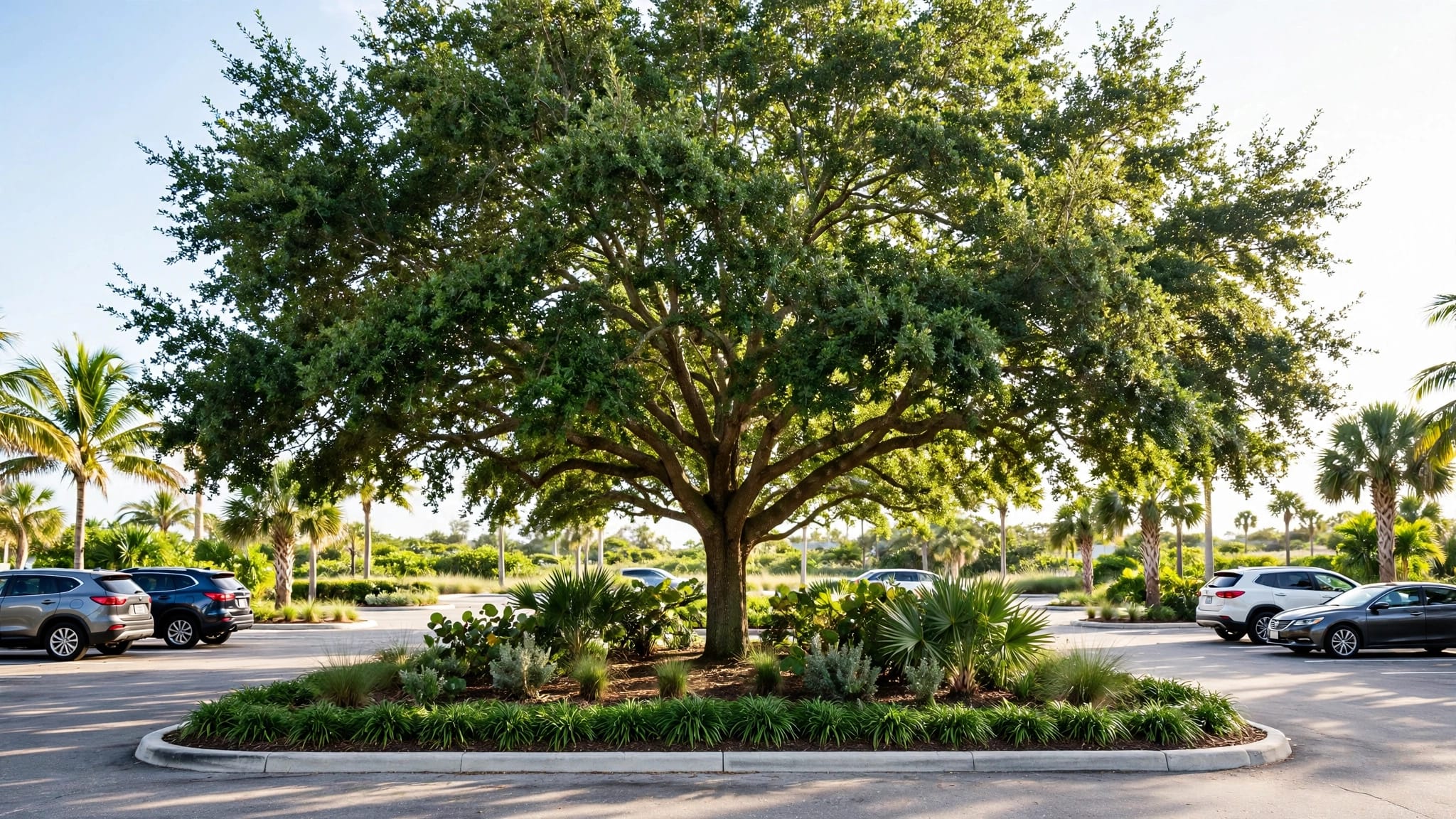
Placement changes everything on a waterfront lot. Near a seawall, set the toughest plants a few feet back so salt spray and splash don't hit the stems every day. Sea grape and silver buttonwood fit those outer spots well, while coontie and muhly grass can sit closer to the front of the bed without crowding the view.
Lanai edges need a different touch. You want enough height to soften the hard lines, but not so much that the space feels boxed in. Simpson's stopper and cocoplum work well there because they can stay narrow and still look full. A custom landscape design and installation plan helps you place the strongest shrubs where they block wind and keep lower beds open near the view.
Open lawn areas need breathing room. If you cram plants too tightly, the yard feels smaller and the wind has more places to catch and break stems. Instead, repeat a few plants in small groups, then leave open spaces between them. That makes the yard look planned, and it also gives you better access for mowing, edging, and storm cleanup.
If the layout includes raised planters, curbs, or a clean edge around a patio, a concrete company can build those hard lines so the planting beds stay neat. Good hardscape support matters on waterfront lots, because heavy rain can wash loose soil fast. It also gives the landscaping a sharper finish, which matters when the yard opens straight to the water.
Maintenance that keeps coastal landscaping clean
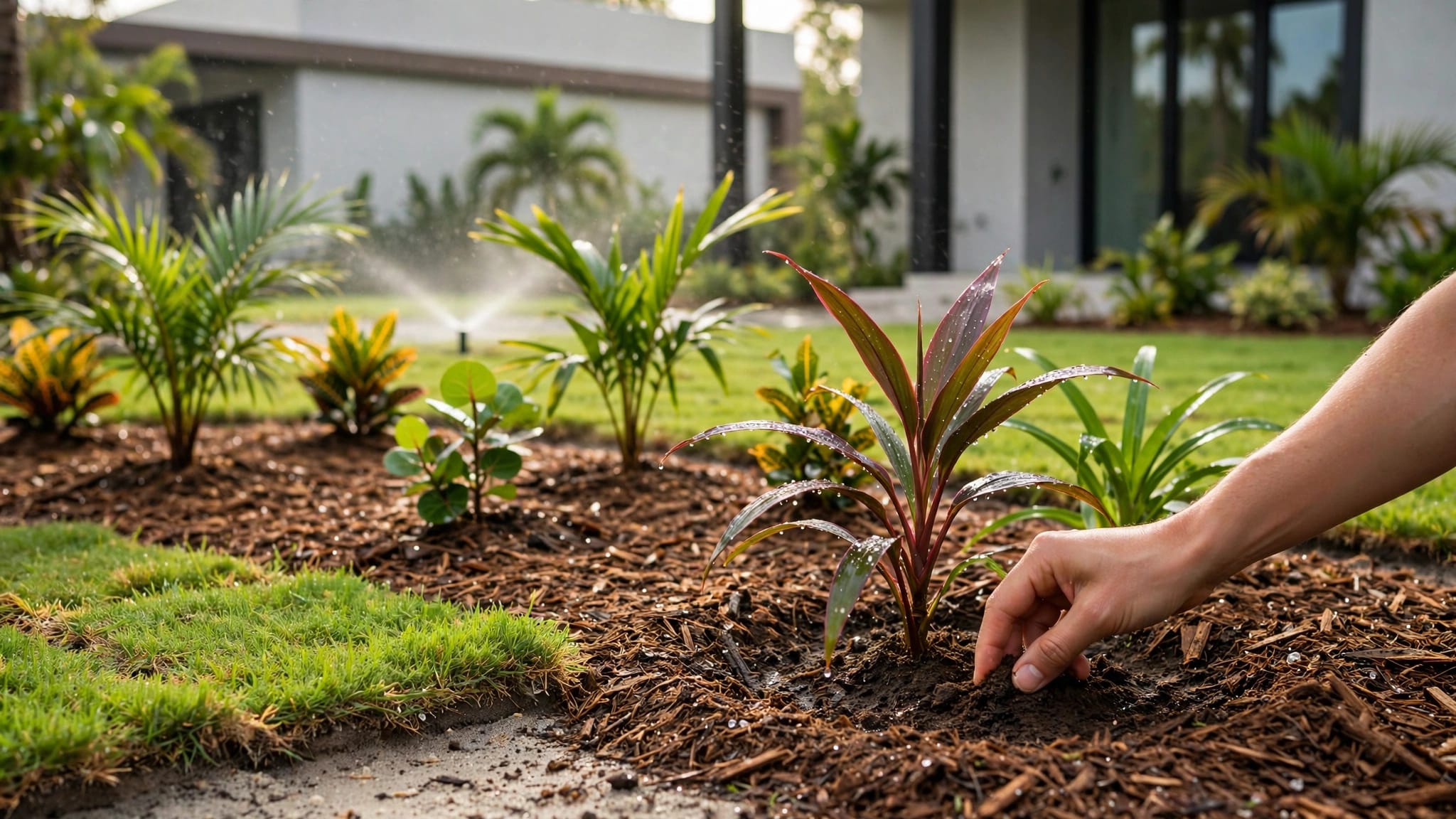
Watering should support roots, not keep the soil soggy. During the first months, water deeply and less often so roots move down into the sand. After plants settle in, most Cape Coral plants need less frequent watering than many homeowners expect. That helps them handle wind and short dry spells better.
Pruning should stay simple. Remove storm damage quickly, then shape the plant only where it is growing too wide or too leggy. Heavy shearing can leave shrubs thin and patchy, which looks rough against a clean lanai or seawall. A light hand keeps the natural shape intact and makes the yard feel calmer.
Cleanup matters more than people think. Salt residue, blown leaves, and sand can make a healthy bed look tired. If your yard has pavers around the patio or driveway, regular paver cleaning keeps the whole space bright and helps the plants stand out instead of getting lost in grime. Mulch also helps, but keep it off trunks and stems so moisture does not sit against the plant.
Some homeowners use artifical turf in narrow side yards or dog runs, then save real planting space for the windier edges. That can work well when the borders are simple and the plant palette stays tight. In other words, the yard looks better when every part has a clear job.
Conclusion
Windy waterfront yards in Cape Coral need plants that can take a hit and still look good. Sea grape, Simpson's stopper, cocoplum, coontie, silver buttonwood, and muhly grass all earn their place because they fit the site.
The best landscaping on these lots does not fight the wind. It bends with it, keeps the structure clean, and stays attractive beside the water long after the afternoon breeze dies down.