


Paver Repair Cost in Cape Coral, FL: 2026 Homeowner Guide
If your pavers are sinking, rocking, or cracking, the first question is usually price. The short answer is simple: paver repair cost in Cape Coral in 2026 often falls between $4 and $8 per square foot. Small repairs may run $100 to $800, while larger areas with base problems can reach $5,000 or more.
That wide spread is normal. In Southwest Florida, heat, heavy rain, settling soil, and coastal exposure can turn a simple reset into a deeper repair. Actual costs vary by paver type, project size, accessibility, base damage, drainage issues, and contractor rates.
What paver repair cost looks like in Cape Coral in 2026
For quick budgeting, use these common ranges.
| Repair size | Typical area | Common 2026 range |
|---|---|---|
| Small | 10 sq ft or less | $100 to $800 |
| Medium | 50 to 200 sq ft | $300 to $2,000 |
| Large | 200+ sq ft | $1,000 to $5,000+ |
Most small jobs involve a few loose, cracked, or sunken pavers. Medium repairs often mean lifting a section, adding base material, compacting it, and resetting the area. Large jobs usually include drainage correction, edge repair, or a partial base rebuild.
Driveways often cost more than patios or walkways because the base has to support vehicles. Material matters too. Standard concrete pavers are usually easier to match than travertine or premium stone, so replacement pieces can cost less.
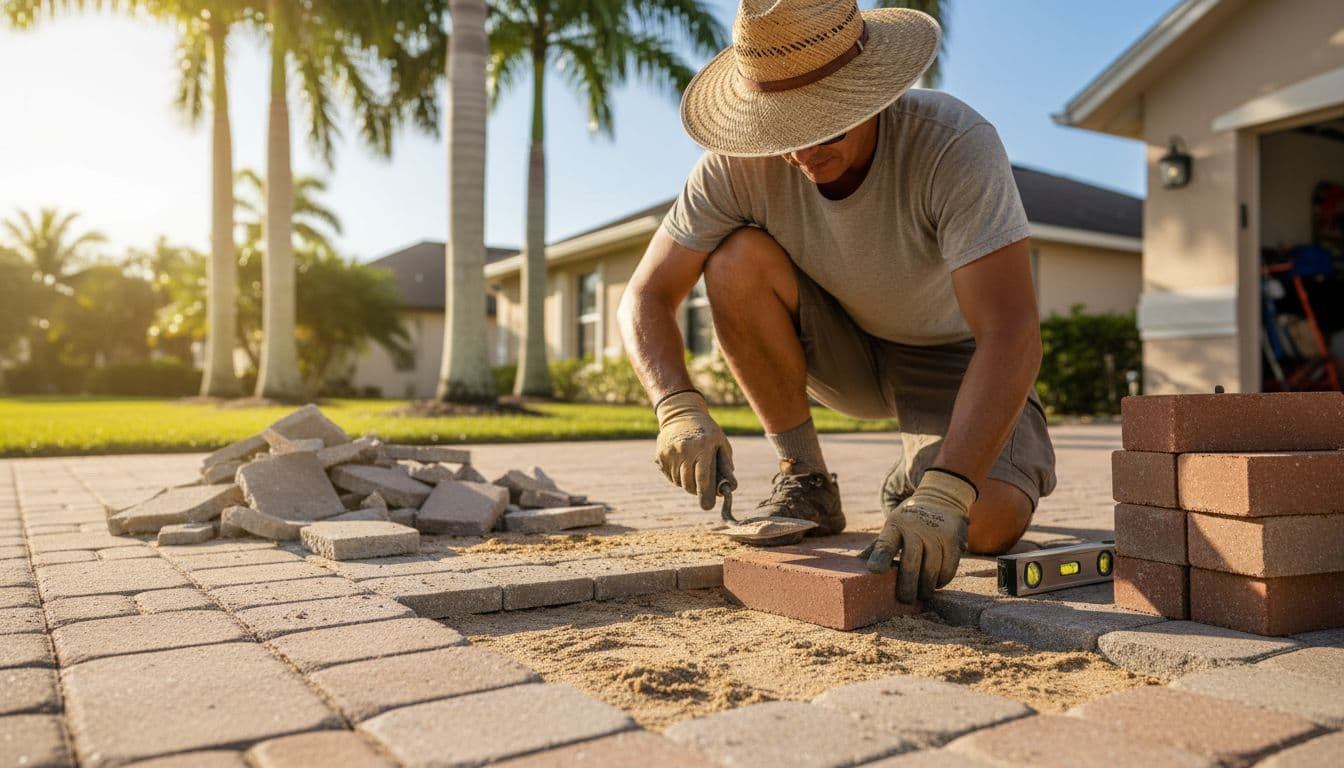
If the damage looks more than cosmetic, reviewing professional paver repair services can help you compare quotes more fairly.
Why Cape Coral repairs can cost more than expected
Cape Coral weather is rough on paver surfaces. Summer storms dump water fast, then the sun bakes the same area a few hours later. That cycle can wash out sand, open joints, and shift the base below. A loose paver often acts like a warning light on a car dashboard, it points to a deeper issue.
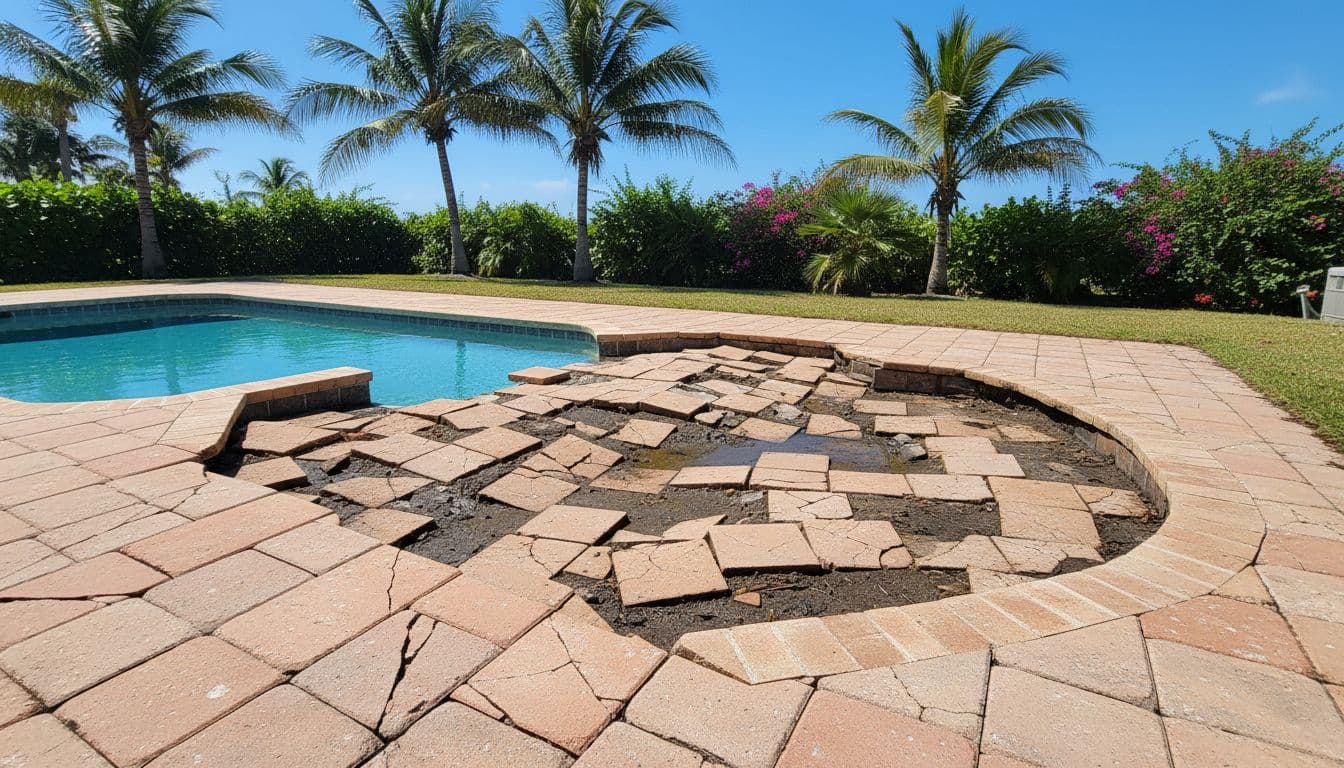
Settling soil is another local factor. Many Cape Coral homes sit on sandy ground that drains fast, but it can also move. Add roof runoff, irrigation overspray, or poor grading, and pavers start to dip. Near pools and lanais, salt air, splash-out, and constant moisture can speed wear.
A few things raise the bill faster than homeowners expect:
- Base damage : Rebuilding the base takes more labor than resetting surface pavers.
- Drainage fixes : Water has to go somewhere, or the repair won't last.
- Tight access : Side yards, pool cages, and screened lanais slow the work.
- Matching older pavers : Faded colors and discontinued styles add time.
A low quote that skips base work can feel cheap now and expensive six months later.
If water keeps pooling near the damaged area, ask about custom drainage solutions for yards. If the pavers meet a slab or driveway apron, a concrete company may also need to check joint cracks or washout.
What should be included in a paver repair quote
A good quote should read like a plan, not a guess. It should say how much area will be lifted, whether broken pavers will be replaced, what base material will be added, and how the crew will re-compact the section. It should also list joint sand, cleanup, and disposal.
For many Cape Coral jobs, the standard scope includes lifting the damaged section, removing bad sand, correcting minor low spots, resetting pavers, adding fresh joint sand, and compacting the surface. Some contractors also level a little beyond the damaged spot so the repair blends in better.
Common add-ons include root removal, drainage trenching, edge restraint replacement, stain treatment, and sealing. That last step matters because a fresh repair can look cleaner than the older pavers around it. In that case, many homeowners also price out local paver cleaning and resealing costs for 2026.
Paver cleaning is usually priced separately, and that's normal. It removes algae, grime, and old residue. It doesn't fix settling, but it can help the repaired area match once the structure is sound.
Real price examples for small, medium, and large jobs
Here's how pricing often looks in real life.
Small repair: A short walkway with six cracked pavers and one sunken corner might cost $150 to $600. That usually covers lifting the section, a little base touch-up, reset work, and fresh joint sand.
Medium repair: A 90-square-foot patio area with uneven spots or minor pooling may run $800 to $2,000. In many cases, the crew lifts more pavers than you expect so the finished grade looks smooth, not patched.
Large repair: A 300-square-foot driveway section with base erosion or edge failure can land between $2,000 and $5,000 or more. If drainage has to be corrected or the base rebuilt deeper, the price climbs fast.
Bundled projects can change the math. For example, if you're already doing landscaping, new irrigation, or a driveway edge update, site access and cleanup may be more efficient. The same goes for yards with artifical turf, planting beds, or decorative borders, where careful edge work helps prevent damage to nearby materials.
How to keep repair costs under control
First, fix movement early. A few rocking pavers are like a loose tooth. Ignore them, and the trouble spreads. Early repairs usually cost less because the base hasn't fully failed yet.
Next, compare quotes line by line. One contractor may price a simple reset. Another may include base rebuild, compaction, and drainage correction. Those are not the same job, even if the square footage matches.
Also, plan around weather. Dry-season scheduling often helps because the base dries faster and crews can compact properly. Summer repairs still happen, but rain delays and wet soil can add labor time.
Finally, think about the whole outdoor area. If you plan to repair concrete, add artifical turf, or refresh landscaping, sequence matters. Doing the work in the right order can cut repeat labor and keep the site cleaner.
Bottom line for Cape Coral homeowners
Cape Coral pavers take a beating from rain, heat, and shifting soil, so repair prices vary for good reason. Still, most homeowners can set a realistic budget by looking closely at base work, drainage, access, and materials. Compare detailed quotes, not just totals, because the real repair is the one that lasts.