


Decorative Rock Installation Cost in Cape Coral, FL (2026 Pricing Guide)
Thinking about swapping mulch for stone, or turning a patchy lawn into a cleaner, lower-water look? In Cape Coral, the decorative rock cost depends on more than the rock itself. Delivery access, sandy soil, drainage, and even HOA rules can swing the total fast.
This guide breaks down real-world price drivers, gives you a simple rock calculator, and includes three itemized budget examples (small bed to full xeriscape). You'll also see when DIY makes sense, and when hiring a pro saves money in the long run.
Why Cape Coral pricing is different (sand, storms, salt, and HOAs)

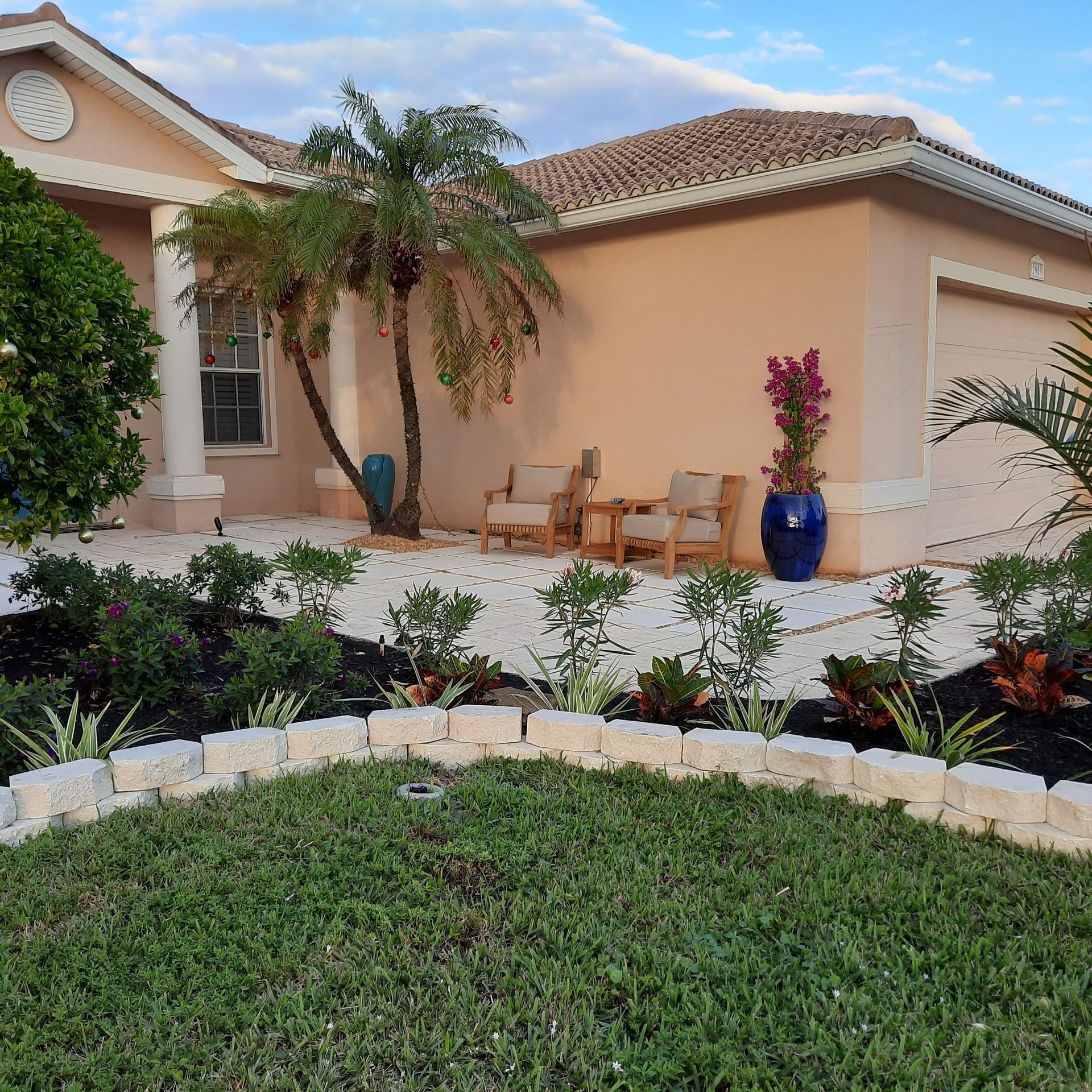
Photo by Marina Leonova
Cape Coral and Lee County yards are usually sandy, sometimes shell-heavy, and often close to canals. That's good for drainage, but it creates its own issues for decorative rock installs.
Sandy soil can "eat" rock over time. Without fabric (or with thin fabric), stone slowly works into the sand. You end up buying top-off rock sooner than expected. Fabric is a small line item, but it protects the look.
Rainy season exposes bad grading. Summer downpours can move smaller rock, especially where downspouts dump water into beds. In those spots, contractors may suggest edging, a small swale, or moving downspouts before rock goes in.
Salt air matters for edging hardware. Near the coast, metal edging can corrode. Many homeowners choose composite, plastic, or concrete edging instead. For context on typical edging costs, see LawnStarter's guide to 2026 landscape edging prices.
HOAs can limit color and size. Some neighborhoods restrict bright white stone, lava rock, or mixed colors. If your HOA requires a specific stone, your "cheap option" might not be allowed. Always check before ordering.
As for rock pricing, local costs vary by type. Recent Cape Coral ranges commonly land around $60 to $170 per ton for many decorative stones, while premium options can run far higher. That spread is why two "same size" projects can have very different totals.
If you're pairing rock with bigger grade changes or borders, it helps to understand drainage planning for hardscaping. This local breakdown of base prep and drainage for hardscaping explains why water management is often where budgets grow.
If water crosses the bed during storms, treat drainage first. Otherwise, you'll pay to re-spread rock again and again.
What you're really paying for (and a simple rock calculator)
Most homeowners focus on material price, but installation cost usually comes from the "supporting cast":
- Rock material (by ton or cubic yard)
- Delivery (distance, truck size, access, minimums)
- Site prep (weed removal, smoothing, minor grading)
- Landscape fabric (helps prevent mixing and weeds)
- Edging (keeps rock from migrating into grass or pavers)
- Labor and equipment (wheelbarrows, skid-steer, compactor when needed)
- Removal and haul-off (old mulch, sod, weeds, debris)
For a national baseline, Homewyse publishes a configurable calculator for landscape rock installation costs. It's not Cape Coral-specific, but it helps you see how labor and prep change totals.
Calculator: square feet to cubic yards and tons (with assumptions)
Use this quick formula to estimate how much rock you need.
Assumptions
- Typical decorative rock depth: 2.5 inches (common for beds)
- Bulk rock weight: about 1.3 to 1.5 tons per cubic yard (varies by stone)
Formula
- Cubic feet = Area (sq ft) × (Depth in inches ÷ 12)
- Cubic yards = Cubic feet ÷ 27
- Tons = Cubic yards × (1.3 to 1.5)
A fast mental shortcut: 1 cubic yard covers about 130 sq ft at 2.5 inches .
Here's a simple reference at 2.5-inch depth:
| Area | Cubic yards (approx.) | Tons (approx.) |
|---|---|---|
| 200 sq ft | 1.5 yd³ | 2.0 to 2.3 tons |
| 800 sq ft | 6.2 yd³ | 8.1 to 9.3 tons |
| 1,500 sq ft | 11.5 yd³ | 15.0 to 17.3 tons |
These ranges help you sanity-check supplier quotes, especially when one bid calls for far more material than another.
Three example budgets for decorative rock installation in Cape Coral
These budgets are planning examples for landscaping in Cape Coral, using common materials and typical site conditions. Your total will change with rock type, access (side gate vs open yard), HOA requirements, drainage fixes, and disposal needs.
Example 1: Small 200 sq ft bed refresh (2.5-inch rock)
| Line item | Estimated range |
|---|---|
| Rock (about 2.0 to 2.3 tons) | $140 to $390 |
| Delivery | $75 to $200 |
| Fabric | $25 to $70 |
| Edging (optional, 40 to 70 ft) | $140 to $600 |
| Prep and install labor | $350 to $900 |
| Removal and haul-off (old mulch, weeds) | $75 to $250 |
| Estimated total | $805 to $2,410 |
Takeaway: On small jobs, delivery and labor can cost more than the rock.
Example 2: 800 sq ft front yard conversion (lawn to rock beds)
| Line item | Estimated range |
|---|---|
| Rock (about 8.1 to 9.3 tons) | $490 to $1,580 |
| Delivery (multiple tons) | $150 to $350 |
| Fabric | $100 to $250 |
| Edging (120 to 220 ft) | $420 to $1,900 |
| Labor and equipment | $1,600 to $3,800 |
| Sod removal and disposal | $400 to $1,200 |
| Minor drainage tweaks (as needed) | $0 to $900 |
| Estimated total | $3,160 to $9,980 |
Takeaway: Conversions get expensive when you add sod removal and long edging runs.
Example 3: 1,500 sq ft full xeriscape-style rock install (multiple zones)
| Line item | Estimated range |
|---|---|
| Rock (about 15.0 to 17.3 tons) | $900 to $2,950 |
| Delivery (larger load, access matters) | $250 to $600 |
| Fabric (heavier grade recommended) | $180 to $500 |
| Edging (220 to 380 ft, mixed types) | $770 to $3,350 |
| Labor and equipment (2 to 4 days) | $3,500 to $8,500 |
| Removal and haul-off (sod, beds, debris) | $900 to $2,500 |
| Drainage and grading allowance | $300 to $2,000 |
| Estimated total | $6,800 to $20,400 |
Takeaway: A full-yard project is mostly labor, removal, and drainage , not just decorative rock cost.
If you want a broader view of how these outdoor upgrades stack up, compare against landscape installation costs in Cape Coral.
DIY vs pro installation: cost, timeline, and how to get accurate quotes
DIY can work for a small bed, especially if access is easy and you're using bagged stone. Still, DIY gets harder fast when you're moving tons of rock. A single cubic yard is heavy, and wheelbarrow trips add up.
DIY: when it makes sense
DIY usually fits if you have:
- Less than 250 sq ft total coverage
- No sod removal
- No grading changes
- A plan for delivery placement (driveway, tarp, or pallets)
Timeline: often one weekend , plus cleanup.
Pro install: what you're buying
Pros earn their keep when the job includes removal, shaping, drainage, and clean borders. They also have equipment for moving bulk material without wrecking your lawn.
Timeline: many projects finish in 1 to 4 days , depending on size and weather. If you want to know what the workdays typically look like, this guide to the landscape installation process in Cape Coral lays out the sequence from prep to final cleanup.
Quote tips that prevent surprises
Aim for 3 bids when possible. Then ask each contractor the same questions:
- What depth are you installing, and how many tons does that equal?
- Is fabric included, and what grade?
- What edging type, and how many linear feet?
- Where will water go in heavy rain?
- What exactly gets removed and hauled off?
Measure smart: sketch beds, break odd shapes into rectangles, then total square footage. Mark sprinkler heads and utilities early so nobody buries access points.
Also think about "neighbor projects." If a concrete company is pouring curbing or a pad soon, schedule rock after the heavy work. If you have a paver driveway or pool deck, plan a final rinse and paver cleaning once the dust settles. Some homeowners even combine rock borders with artifical turf in side yards to cut mud and mowing.
For ongoing planning and design help, see landscape design and installation in Cape Coral.
Conclusion
A good-looking rock bed should feel like a finished floor, not a temporary cover. In Cape Coral, decorative rock cost comes down to material choice, access, proper fabric, and drainage that survives summer storms. Use the calculator to estimate tons, then compare bids line by line so you're not guessing. Once you get the prep right, rock becomes one of the lowest-stress upgrades you can make.