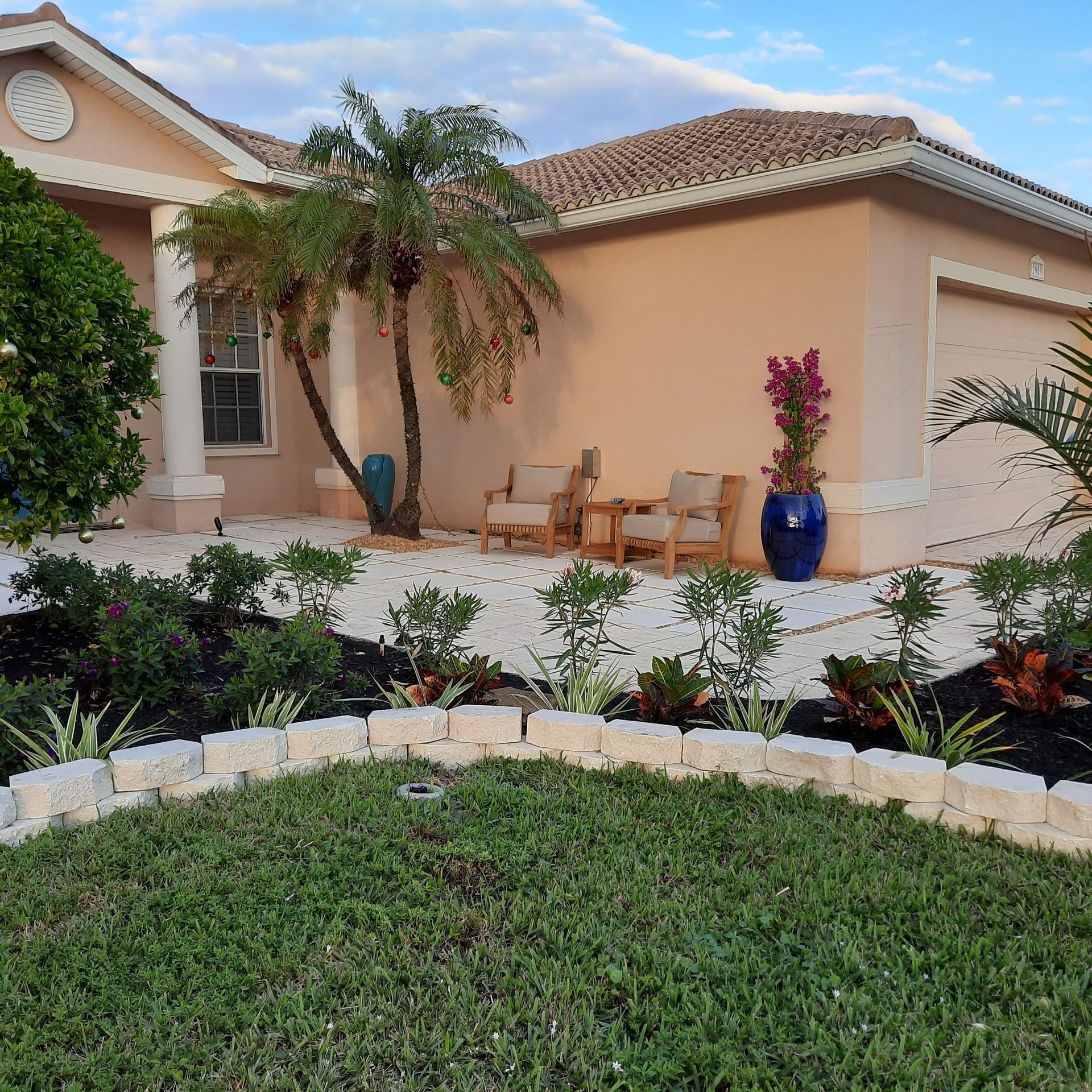



Porcelain Pavers in Cape Coral, FL, Cost per Sq Ft, Slip Grip, Heat, and Base Requirements
If you like the clean look of tile but need something that can handle Cape Coral sun, rain, pool water, and sandy soil, porcelain pavers are worth a serious look. They don’t stain easily, they’re color-stable, and they can be installed a few different ways depending on your site.
The big questions homeowners ask are the right ones: What’s the cost per square foot installed, will it be slick around a pool, will it fry your feet in July, and what kind of base does it really need so it doesn’t rock, crack, or settle?
Porcelain pavers cost per sq ft in Cape Coral (installed) and what’s included
In early 2026, a realistic installed range in Cape Coral is $12 to $25 per sq ft , with materials alone often $8 to $18 per sq ft . Your final number swings based on thickness (2 cm vs 3 cm), cuts (steps, drains, curves), access to the backyard, and how much base work the yard needs.
If you’re collecting bids, start by making sure everyone is pricing the same scope. A “cheap” number usually means something got left out, most often compaction, edge restraint, or drainage corrections. For a full scope of options, see Cape Coral paver installation services.
Here’s how the common line items shake out on a typical Cape Coral project:
| Line item | Typical range (per sq ft) | What changes the price |
|---|---|---|
| Porcelain pavers (material) | $8 to $18 | Brand, finish, thickness, color, order size |
| Delivery and handling | $0.50 to $1.50 | Forklift access, carry distance, stairs, gated yards |
| Demo and disposal (if needed) | $2 to $4 | Removing old concrete, old pavers, hauled weight |
| Base prep (excavation, base, sand) | $3 to $7 | Depth, soil condition, low spots, access |
| Installation labor | $6 to $12 | Pattern complexity, cuts, borders, steps |
| Drainage fixes (spot) | $2 to $6 | Added slope work, channel drains, tie-ins, French drains |
A quick, real-world example: a 450 sq ft patio at $16 per sq ft lands around $7,200 before big drainage or major demolition. Add a new channel drain and re-grading and it’s easy to jump another $1,000 to $3,000.
For broader pricing context on paver installs, compare national ranges like 2026 driveway paver cost averages and base-heavy systems like permeable paver cost factors, then bring it back to what your property needs.
Slip grip in plain English: what to ask for on pool decks
Around a pool, slip resistance isn’t about one magic “non-slip” label. It’s about texture, drainage, and the rating of the surface when it’s wet. Most porcelain uses a metric called DCOF (dynamic coefficient of friction). Think of it like tire traction: higher number, more grip under motion.
- DCOF 0.42 is often treated as a minimum target for wet-use surfaces in many specs.
- For pool decks, entries, and always-wet walk paths, many installers aim higher, often 0.60+ when wet , plus a texture you can feel with your hand.
Some manufacturers also list R-ratings (ramp-style slip testing). In plain terms, R11 or higher is commonly chosen for “constantly wet” areas, while smoother finishes can be fine on covered patios where shoes stay dry.
Best porcelain finish for Cape Coral pool areas
For pool decks, pick a textured, matte, or “grip” finish , not polished. If a sample feels slick when you splash water on it and rub your shoe across it, it’s telling you something.
Also pay attention to the joints. Tiny, tight joints look sharp, but they can reduce drainage between pavers. A good layout plus proper slope does more for safety than chasing a rating number alone.
If you’re remodeling an older deck that already has movement or trip edges, read up on local repair expectations in paver repair costs in Cape Coral, it helps you budget for the “hidden” fixes.
Heat in Southwest Florida: what’s realistic, and how to keep it comfortable
Cape Coral surfaces cook in summer. Even “cool” materials can get hot at 2 pm in July. The good news is porcelain generally runs cooler than standard concrete , and many homeowners notice it’s more tolerable underfoot, especially in lighter colors. Still, don’t expect it to feel like shade on a 95-degree day.
Here’s what actually helps:
- Choose lighter colors : creams, light grays, and sand tones reflect more sun.
- Pick a textured finish : it can reduce that “hot plate” feel compared to smoother faces, and it helps with slip grip too.
- Add shade where it matters : a screen cage, sail shade, pergola, or even a few well-placed palms can change how the whole area feels.
- Plan for bare feet : use outdoor runners near seating, keep flip-flops by the slider, and consider foam-backed mats at the pool steps.
- Use water smartly : light misting can cool a surface fast, but you still need proper slope so you don’t create a slippery film.
If you’re tying the deck into the rest of your landscaping, avoid dark rock mulch right next to the pavers. It radiates heat back at your seating area. Some homeowners mix hardscape with artifical turf bands in side yards to soften glare and reduce mud tracking.
Base requirements in Cape Coral: the build-up matters more than the tile
Porcelain is strong, but it’s not forgiving. If the base flexes, the surface tells on you. The right base depends on how the area will be used.
Typical build-ups (high-level) by application
| Application | Porcelain thickness | Common install approach | Bottom-up build-up (typical) |
|---|---|---|---|
| Patio on grade | 2 cm | Sand-set or mortar-set on slab | Compacted subgrade, compacted crushed base, bedding sand (or concrete slab), then pavers |
| Driveway (only if designed for it) | 3 cm | Heavy-duty base, sometimes mortar-set | Deeper excavation, thicker compacted base, tight edge restraint, then pavers |
| Pool deck remodel over existing slab | 2 cm | Mortar-set or thin-set system | Existing slab (sound, sloped), bond coat/mortar bed, then porcelain, then proper joints |
| Raised pedestal system | 2 cm | Pedestals over stable surface | Stable base or slab, adjustable pedestals, porcelain pavers, open joints for drainage |
Pedestals are a solid option when you want drainage and access under the surface (or you’re dealing with a wonky slab). If you want to see what pedestal systems look like, check out adjustable pedestal paver systems.
A simple step-by-step you should see in the plan
- Measure and confirm slope away from the home (pool areas still need drainage paths).
- Excavate to the right depth for the use, deeper for traffic and bad soils.
- Build the base in lifts , compacting each lift properly (not just “packed by foot”).
- Install edge restraint so the field can’t creep.
- Set pavers flat and consistent , then lock joints as specified.
- Final drainage check , hose test, and clean-up.
Quick checklist when getting quotes
- Exact thickness and finish being installed (2 cm vs 3 cm, grip finish for pools).
- Base depth and material spec , plus how compaction is done.
- Edge restraint details (type, where it’s placed).
- Slope plan and drainage plan , including any channel drains.
- Demo and disposal spelled out in writing.
- Care plan (joint maintenance, stain prevention, and when to schedule paver cleaning).
Red flags that usually become problems later
- No mention of compaction or “we’ll just level the sand.”
- No edge restraint planned.
- Wrong setting materials for the install method (especially over slabs).
- Zero slope near the pool or toward the house.
- “We can fix drainage later” after the pavers are down.
If your yard has standing water, seawall settling, or a slab that’s cracked and moving, bring in a licensed local installer, and when needed, a Florida engineer, before you spend money on a finish surface. For inspiration on what a well-executed install looks like, browse these before and after paver projects.
Conclusion
Porcelain pavers can be a smart upgrade in Cape Coral when you match the finish to the use, plan for heat, and build the base like it matters, because it does. Get quotes that show real line items, not just a single number, and don’t ignore drainage and compaction. If you want the surface to stay flat, safe, and good-looking, the best money you’ll spend is on the base prep and the installer’s process, not just the tile you pick.