


Dry Well Drainage Systems In Cape Coral When They Work And When They Fail
In Cape Coral, water can act like a surprise guest. It shows up fast, stays too long, and always seems to gather in the worst spot. A dry well drainage system can help, but only when the yard conditions support it.
Here's the practical truth for 2026: dry wells can handle normal roof runoff and smaller storms, especially in the drier months. However, they can struggle during summer downpours, hurricane rain bands, and weeks when the water table sits high.
This guide explains what dry wells do best, why they fail here, and how to choose the right fix for your home or rental property.
Dry wells vs. French drains: same goal, different job
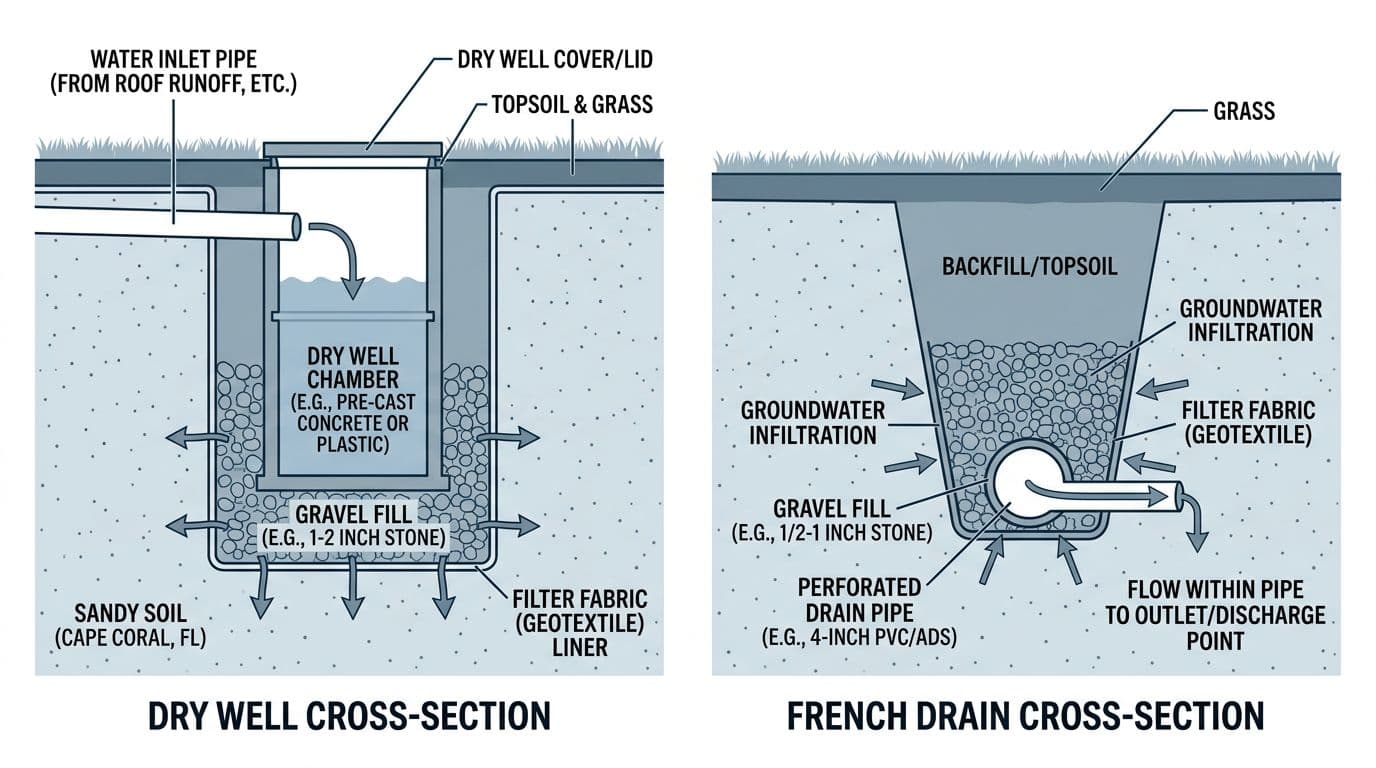 Side-by-side diagram of a dry well and a French drain layout, created with AI.
A dry well is a buried "storage and soak" pit. Water enters through a solid pipe (often from a downspout), fills a chamber or gravel pocket, then slowly seeps into surrounding soil. The key word is infiltration , meaning water moves from the pit into the ground.
A French drain is different. It's a long trench with gravel and a perforated pipe that collects water along its run and carries it away. Think of it as a gutter for your yard's subsurface water. It works best when it can drain to a lower outlet (a swale, a pop-up emitter, or another legal discharge point).
Why this difference matters in Cape Coral
Cape Coral's sandy soils can absorb water well, but the seasonal high water table changes the rules. When groundwater rises, the soil around a dry well can already be full. At that point, the dry well has nowhere to "soak" into. A French drain can also fail if it has no slope or outlet, because it becomes a wet trench that never empties.
If you're planning a broader drainage strategy, correcting slope is often the first domino. This breakdown of yard grading costs for Cape Coral drainage fixes helps you see where regrading fits, and what it tends to cost locally.
When dry well drainage works in Cape Coral (and why it's popular)
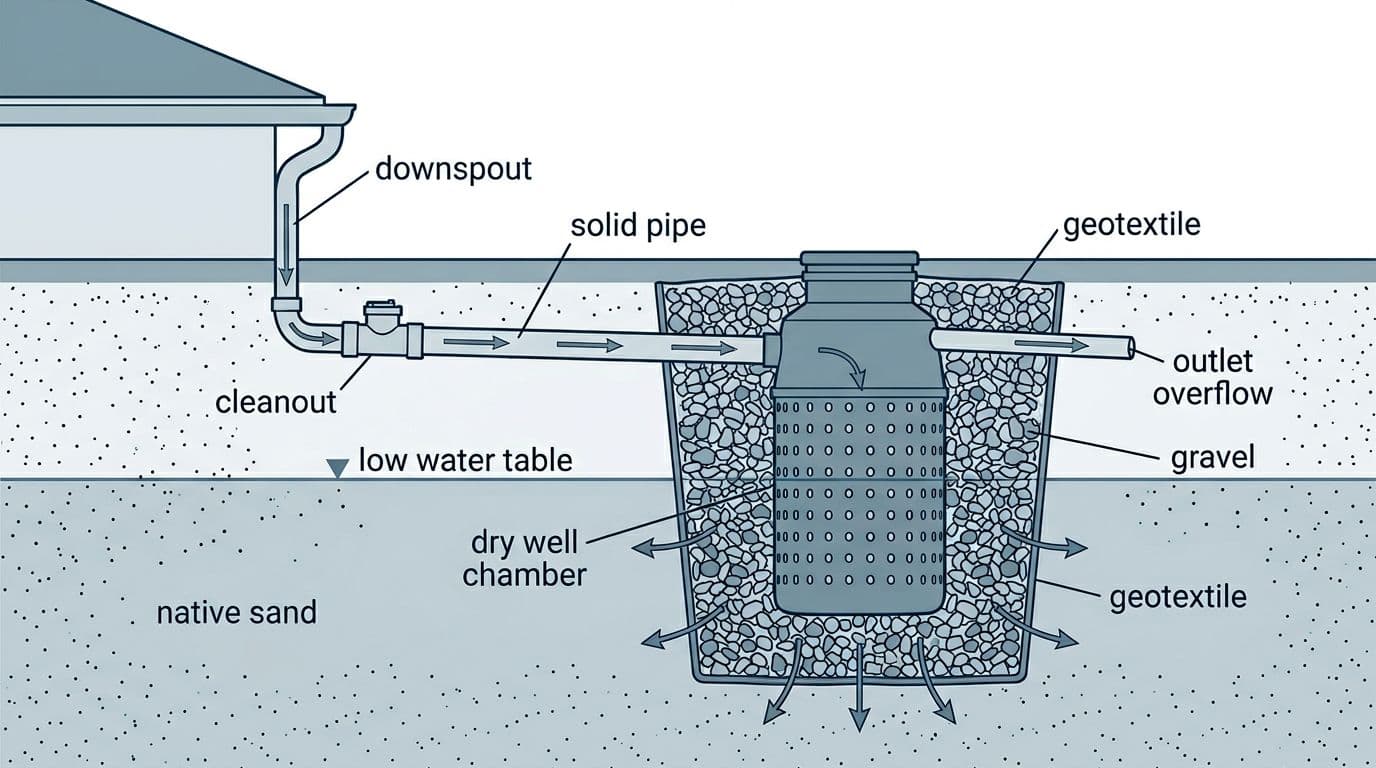 Cutaway view of a working dry well setup tied to a downspout, created with AI.
A dry well can be a smart fix when the problem is focused, like one downspout blasting water into a side yard. In that scenario, you're not trying to drain the whole property, you're just stopping a firehose from carving a trench next to your foundation beds.
Dry wells usually perform best when:
- The soil is sandy and not compacted by heavy equipment.
- The dry well sits above the seasonal high groundwater level most of the year.
- Roof runoff is routed in solid pipe (not a leaky corrugated hose).
- The system includes a cleanout and an overflow path for extreme events.
Early March 2026 has brought mostly light showers locally, which is actually a good time to test. You can run a hose into a downspout adapter for 15 to 30 minutes and see how the system behaves before summer storms arrive.
Dry wells also pair well with clean, finished outdoor upgrades. For example, if you're improving landscaping beds, resetting borders, or planning new walkways, a dry well can hide underground and keep the surface looking neat.
A dry well isn't a magic drain. It's more like a sponge. Once the sponge is saturated, it can't take more water.
When dry wells fail: high water table, clogged soil, and bad overflow plans
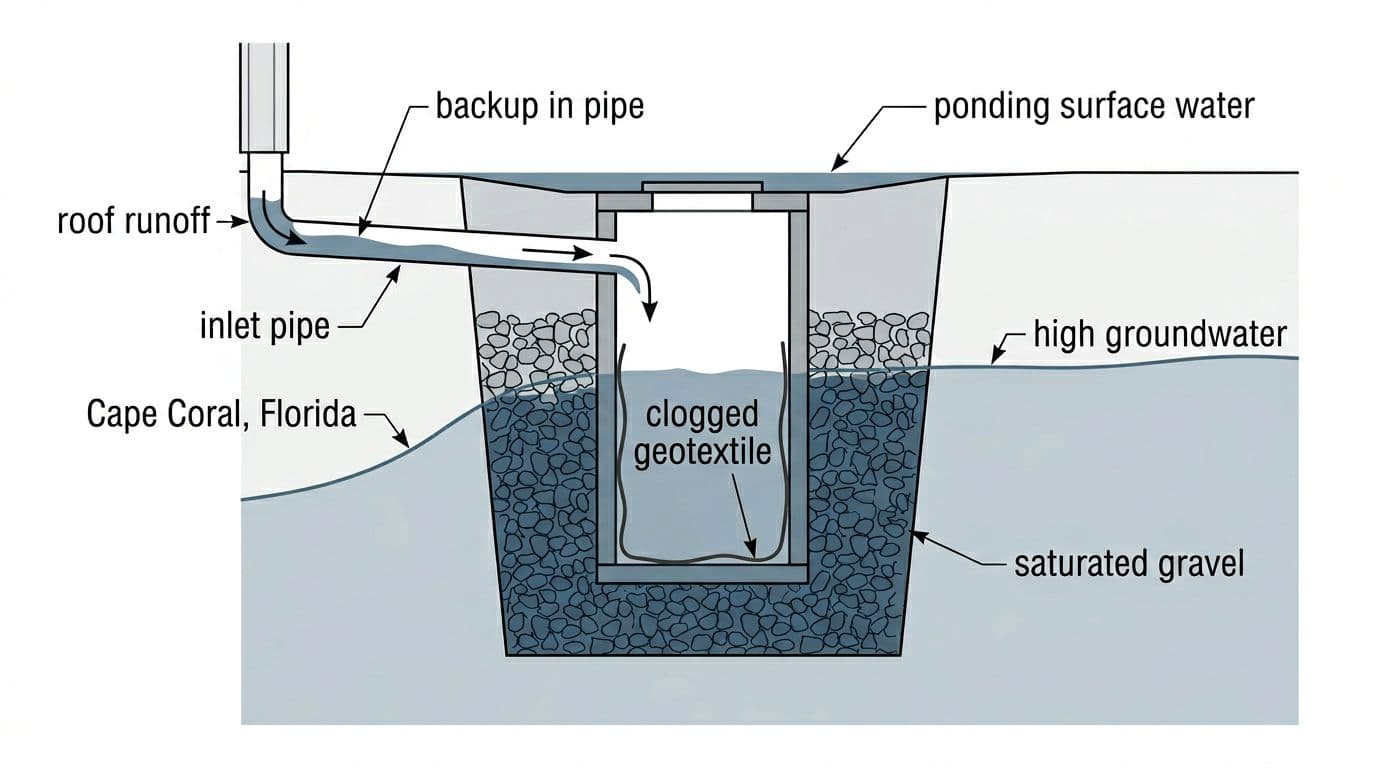 Cutaway view showing a saturated, clogged dry well that can't infiltrate, created with AI.
Most dry well failures in Cape Coral come down to one issue: the pit can't empty fast enough . During a hurricane downpour, or after days of summer rain, groundwater rises and the soil loses its ability to absorb. Now the dry well becomes a buried bucket.
Other common failure causes include:
- Clogged geotextile or soil fines : Sand and silt migrate into gravel, then the system "seals" itself.
- Too small for the roof area : One pit may not keep up with a large roof plane.
- No overflow/bypass : When the dry well fills, water backs up and spills near the house.
- Wrong location : Too close to the slab edge, pool deck, or a low spot that already ponds.
Quick diagnostic flow (symptom → likely cause → fix)
Use this table to narrow the problem before you pay for a full rebuild.
| Symptom you see | Likely cause in Cape Coral | Fix that usually works |
|---|---|---|
| Downspout overflows in heavy rain | Dry well saturated, no overflow | Add overflow line to a legal discharge point, upsizing may be needed |
| Yard stays soggy for days | Water table high, soil compaction | Improve grading and add a discharge-based drain (not just infiltration) |
| Water bubbles up near the pit | Clogged gravel or fabric, blocked inlet | Jet/flush inlet, rebuild with proper fabric and clean stone if clogged |
| Pavers get algae and puddles near edge | Surface pitch wrong, runoff trapped | Regrade edge, add a basin or trench drain, then schedule restoration |
| Water appears near slab or garage | Outlet too close, water following pipe trench | Reroute discharge away from structure, compact backfill correctly |
If you're seeing puddles and slick growth on hardscapes, don't just treat the surface. Drainage causes the mess, then you pay twice with repairs and paver cleaning. This guide on common paver problems in Cape Coral connects the dots between water, shifting bases, and long-term wear.
Choosing dry well drainage vs. better alternatives (plus a simple maintenance plan)
Dry wells make sense when you can infiltrate. If you can't, you need a system that moves water somewhere it's allowed to go. The matrix below helps you pick a direction.
| Your situation | Dry well | French drain | Catch basin + solid pipe | Regrade/swale |
|---|---|---|---|---|
| One downspout floods a side yard | Best fit | Sometimes | Also good | Sometimes |
| Yard is flat and stays saturated in summer | Often fails | Only if it has outlet | Best fit | Best starting point |
| Water collects along pool deck or pavers | Risky | Sometimes | Best fit | Sometimes |
| You need predictable performance in storms | Needs overflow | Needs outlet | Best fit | Helps a lot |
| You want minimal surface disruption | Good | Moderate | Moderate | Higher |
Maintenance schedule that actually helps
Dry wells and drains fail quietly. A simple routine keeps small problems from turning into muddy trenches.
- Monthly (rainy season) : Walk the yard after a storm, look for new low spots and downspout overflow.
- Twice a year (spring and fall) : Flush downspout lines, check cleanouts, clear roof gutters.
- After any hurricane event : Inspect for sand washouts, collapsed trenches, and blocked outlets.
- As needed : If you add artifical turf or new planting beds, confirm water still has a path out.
If you're considering turf in a damp side yard, pay attention to base and drainage details. This guide on artificial turf installation costs in Cape Coral explains why drainage prep often decides whether turf looks great or stays musty.
Safety, legal, and project-coordination cautions in Cape Coral
Drainage work looks simple until it damages something expensive. Keep these guardrails in mind:
- Don't discharge water onto a neighbor's lot, even "just a little." It can become a legal headache fast.
- Avoid sending water under slabs, driveways, and pool decks. Undermining base material causes settling.
- Call for utility locates before digging. Cape Coral lots can have tight utility corridors.
- Check permit requirements before tying into any municipal storm system, and before major drain work near easements.
Coordination matters, too. If a concrete company is replacing a driveway or slab edge, ask for sleeves under concrete before it's poured. That single step can save a future saw cut.
Finally, plan your cleanup in the right order. Do drainage and grading first, then hardscape restoration. If your driveway or lanai needs paver cleaning and resealing costs in 2026, schedule it after the dirt work, not before.
Conclusion
Dry well drainage can work well in Cape Coral when the soil can still absorb water, and the system has a real overflow plan. It tends to fail when groundwater rises, the pit clogs, or the yard never had enough slope in the first place.
If you're dealing with recurring ponding, treat it like a routing problem, not a surface problem. The right mix of grading, collection, and discharge will protect your landscaping , your hardscapes, and your slab for the long haul.